African-ginger
Siphonochilus aethiopicus · Accepted scientific name
Scientific literature: Very Sparse (36 studies) · ★☆☆☆☆
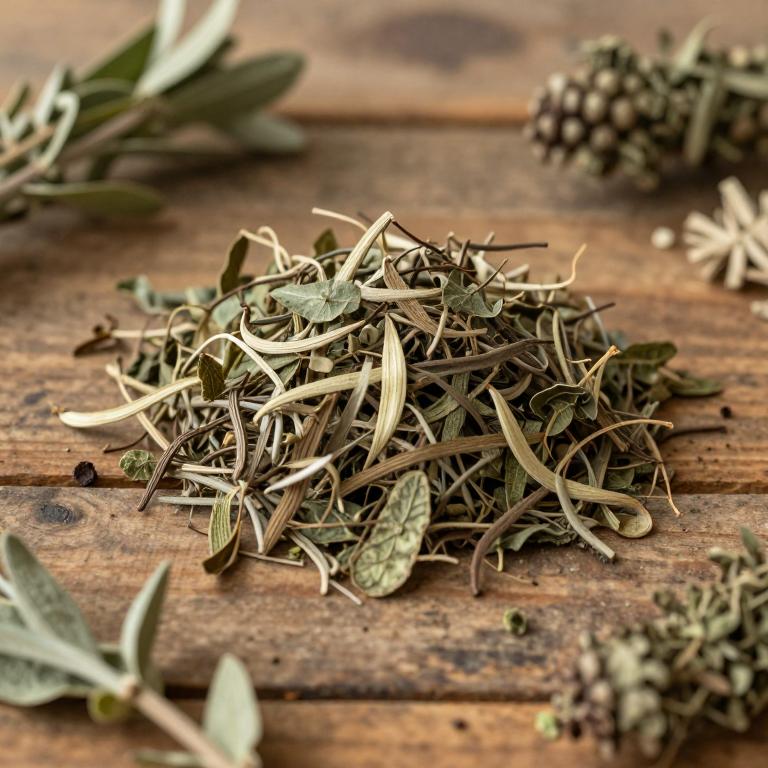
African-ginger, scientifically known as Siphonochilus aethiopicus, is a versatile medicinal plant native to various African regions. Renowned for its potent bioactive compounds, it is traditionally utilized to treat digestive ailments, respiratory issues, and inflammation. This aromatic herb holds significant value in ethnobotany for its diverse therapeutic properties.
Names and Synonyms
Common Names
- African-ginger
- Natal ginger
- Wild ginger
Scientific Names
Accepted name
Siphonochilus aethiopicusSynonyms
- Siphonochilus natalensis
- Kaempferia natalensis
- Kaempferia zambeziaca
- Kaempferia dewevrei
- Cienkowskia aethiopica
- Cienkowskiella aethiopica
- Kaempferia ethelae
- Cienkowskiella evae
- Siphonochilus evae
- Kaempferia evae
- Kaempferia aethiopica
- Kaempferia aethiopica var. angustifolia
- Kaempferia stenopetala
Sources: Wikidata, Catalogue of Life
Taxonomical Classification
This plant belongs to the kingdom Plantae and the phylum Streptophyta, specifically classified under the class Equisetopsida and subclass Magnoliidae. Within the order Zingiberales, it is a member of the Zingiberaceae family. Its formal scientific designation is placed within the genus Siphonochilus, specifically as the species Siphonochilus aethiopicus.
| Rank | Classification |
|---|---|
| Kingdom | Plantae |
| Phylum | Streptophyta |
| Class | Equisetopsida |
| Subclass | Magnoliidae |
| Order | Zingiberales |
| Family | Zingiberaceae |
| Genus | Siphonochilus |
Sources: The World Checklist of Vascular Plants (WCVP)
Distribution
This plant, Siphochilus aethiopicus, is primarily distributed across the region of West Tropical Africa. Specifically, it can be found growing within the borders of Benin. Its presence is also documented in the country of Burkina Faso. Furthermore, the species inhabits parts of Gambia and Ghana. Finally, the geographical range extends into Guinea-Bissau.
| Region | Area |
|---|---|
| West Tropical Africa | Benin |
| West Tropical Africa | Burkina |
| West Tropical Africa | Gambia |
| West Tropical Africa | Ghana |
| West Tropical Africa | Guinea-Bissau |
| West Tropical Africa | Guinea |
| West Tropical Africa | Ivory Coast |
| West Tropical Africa | Mali |
| West Tropical Africa | Nigeria |
| West Tropical Africa | Niger |
Sources: The World Checklist of Vascular Plants (WCVP)
Botanical Identification
Ecology
The ecology of Siphonochilus aethiopicus is defined by its specific altitudinal preferences within its natural habitat, where it thrives within a distinct vertical distribution. This species is primarily found inhabiting landscapes that fall within an elevational range spanning from a minimum of 610 m AMSL to a maximum of 915 m AMSL. This specific range suggests an adaptation to mid-altitude ecological zones, where environmental variables such as temperature, moisture availability, and soil composition are optimized for its growth and medicinal potency.
- Elevational range max:
- 915 m AMSL
- Elevational range min:
- 610 m AMSL
Life history
The life history of Siphonochilus aethiopicus is characterized by a perennial lifecycle, allowing the plant to persist across multiple growing seasons. In terms of its structural development and survival strategy, it is classified as a geophyte, relying on underground storage organs to endure unfavorable environmental conditions. This life form is further categorized under the cryptophyte group, where the vital regenerative parts of the plant remain protected beneath the soil surface during dormant periods.
- Life form :
- geophyte
- Life form :
- cryptophyte
- Lifecycle :
- perennial
Morphology
The morphology of Siphonochilus aethiopicus is characterized by a herbaceous growth form, functioning as a non-woody herb that remains entirely independent, neither acting as a parasite nor an epiphyte. As a terrestrial species, it maintains a self-supporting structure without the need for climbing. The plant typically exhibits a modest stature, with heights ranging from a minimum of 0.15 m to a maximum of 0.44 m, resulting in an average plant height of approximately 0.30 m.
- Aquatic :
- terrestrial
- Climber :
- self-supporting
- Epiphyte :
- terrestrial
- Growth form :
- herb
- Parasite :
- independent
- Plant height max:
- 0.44 m
- Plant height mean:
- 0.302401853 m
- Plant height min:
- 0.15 m
- Woodiness :
- non-woody
Physiology
The physiology of Siphonochilus aethiopicus is characterized by a specialized metabolic framework adapted to the shaded, moist forest floors of its native habitat. The plant utilizes a complex rhizomatous system to store high concentrations of starch and secondary metabolites, which serve as essential energy reserves and chemical defense mechanisms. Its photosynthetic processes are optimized for low-light environments, allowing for efficient carbon assimilation under a dense canopy. Regarding its interaction with soil nutrients and microbial symbiosis, the plant is not a nitrogen fixer, as it lacks the specialized root nodules required to host diazotrophic bacteria for atmospheric nitrogen conversion. Instead, it relies on the decomposition of organic matter in the soil and the uptake of available nitrates and ammonium through its root system to meet its nutritional requirements.
- Nitrogen fixer :
- no
Sources: Global Inventory of Floras and Traits (GIFT)
Plant Parts
Siphonochilus aethiopicus has 1 reported plant parts identified across 1 scientific publications and several other databases that are studied for medicinal purposes. The most consistently reported plant part include rhizome.
| Plant part | Supporting sources | Consensus |
|---|---|---|
| Rhizome | 1 supporting sources | ★☆☆☆☆ |
Rhizome
- Journal of ethnopharmacology
Chemicals
Siphonochilus aethiopicus has 11 reported phytochemicals identified across 1 scientific publications and several other databases. The most consistently reported chemicals include Epicatechin, Eucalyptol, Flavonoids, RUTIN, caffeic acid.
| Chemical | Supporting sources | Consensus |
|---|---|---|
| Epicatechin | 1 supporting sources | ★☆☆☆☆ |
| Eucalyptol | 1 supporting sources | ★☆☆☆☆ |
| Flavonoids | 1 supporting sources | ★☆☆☆☆ |
| RUTIN | 1 supporting sources | ★☆☆☆☆ |
| caffeic acid | 1 supporting sources | ★☆☆☆☆ |
| hesperetin | 1 supporting sources | ★☆☆☆☆ |
| kaempferol | 1 supporting sources | ★☆☆☆☆ |
| naringenin | 1 supporting sources | ★☆☆☆☆ |
| p-Hydroxybenzoic acid | 1 supporting sources | ★☆☆☆☆ |
| protocatechuic acid | 1 supporting sources | ★☆☆☆☆ |
Epicatechin
- African journal of traditional, complementary, and alternative medicines : AJTCAM
Eucalyptol
- Journal of ethnopharmacology
Flavonoids
- Journal of ethnopharmacology
RUTIN
- African journal of traditional, complementary, and alternative medicines : AJTCAM
caffeic acid
- African journal of traditional, complementary, and alternative medicines : AJTCAM
hesperetin
- African journal of traditional, complementary, and alternative medicines : AJTCAM
kaempferol
- African journal of traditional, complementary, and alternative medicines : AJTCAM
naringenin
- African journal of traditional, complementary, and alternative medicines : AJTCAM
p-Hydroxybenzoic acid
- African journal of traditional, complementary, and alternative medicines : AJTCAM
protocatechuic acid
- African journal of traditional, complementary, and alternative medicines : AJTCAM
Activities
Siphonochilus aethiopicus has 2 reported activities identified across 1 scientific publications and several other databases. The most consistently reported activities include Antimicrobial, Antiplasmodial.
| Activity | Supporting sources | Consensus |
|---|---|---|
| Antimicrobial | 1 supporting sources | ★☆☆☆☆ |
| Antiplasmodial | 1 supporting sources | ★☆☆☆☆ |
Antimicrobial
- Journal of ethnopharmacology
Antiplasmodial
- Journal of ethnopharmacology
Conditions
Siphonochilus aethiopicus has 12 reported investigations on conditions identified across 1 scientific publications and several other databases. The most consistently reported conditions include Plasmodium falciparum, allergic reactions, allergies, asthma, cough.
| Condition | Supporting sources | Consensus |
|---|---|---|
| Plasmodium falciparum | 1 supporting sources | ★☆☆☆☆ |
| Allergic reactions | 1 supporting sources | ★☆☆☆☆ |
| Allergies | 1 supporting sources | ★☆☆☆☆ |
| Asthma | 1 supporting sources | ★☆☆☆☆ |
| Cough | 1 supporting sources | ★☆☆☆☆ |
| Coughs | 1 supporting sources | ★☆☆☆☆ |
| Inflammation | 1 supporting sources | ★☆☆☆☆ |
| Influenza | 1 supporting sources | ★☆☆☆☆ |
| Malaria | 1 supporting sources | ★☆☆☆☆ |
| Menstrual pains | 1 supporting sources | ★☆☆☆☆ |
Plasmodium falciparum
- Journal of ethnopharmacology
Allergic reactions
- Journal of ethnopharmacology
Allergies
- Journal of ethnopharmacology
Asthma
- Journal of ethnopharmacology
Cough
- Journal of ethnopharmacology
Coughs
- Journal of ethnopharmacology
Inflammation
- Journal of ethnopharmacology
Influenza
- Journal of ethnopharmacology
Malaria
- Journal of ethnopharmacology
Menstrual pains
- Journal of ethnopharmacology
Preparations
Siphonochilus aethiopicus has 2 reported preparations identified across 1 scientific publications and several other databases. The most consistently reported preparations include dried and powdered S. aethiopicus plant material, ethanolic extracts.
| Preparation | Supporting sources | Consensus |
|---|---|---|
| Dried and powdered s. aethiopicus plant material | 1 supporting sources | ★☆☆☆☆ |
| Ethanolic extracts | 1 supporting sources | ★☆☆☆☆ |
Dried and powdered s. aethiopicus plant material
- Journal of ethnopharmacology
Ethanolic extracts
- Journal of ethnopharmacology