Catchfly
Silene succulenta · Accepted scientific name
Scientific literature: Very Sparse (8 studies) · ★☆☆☆☆
Catchfly, scientifically known as Silene succulenta, is a unique perennial herb valued for its fleshy, moisture-retaining leaves and delicate blooms. Often found in rocky, arid habitats, this resilient plant possesses specialized botanical properties. Its succulent nature offers fascinating insights into medicinal applications and survival strategies within challenging ecological niches.
- Family
- Caryophyllaceae
- Native range
- Europe
- Parts used
- Not available
- Common names
- Succulent Catchfly · Catchfly
- Scientific synonyms
- Not available
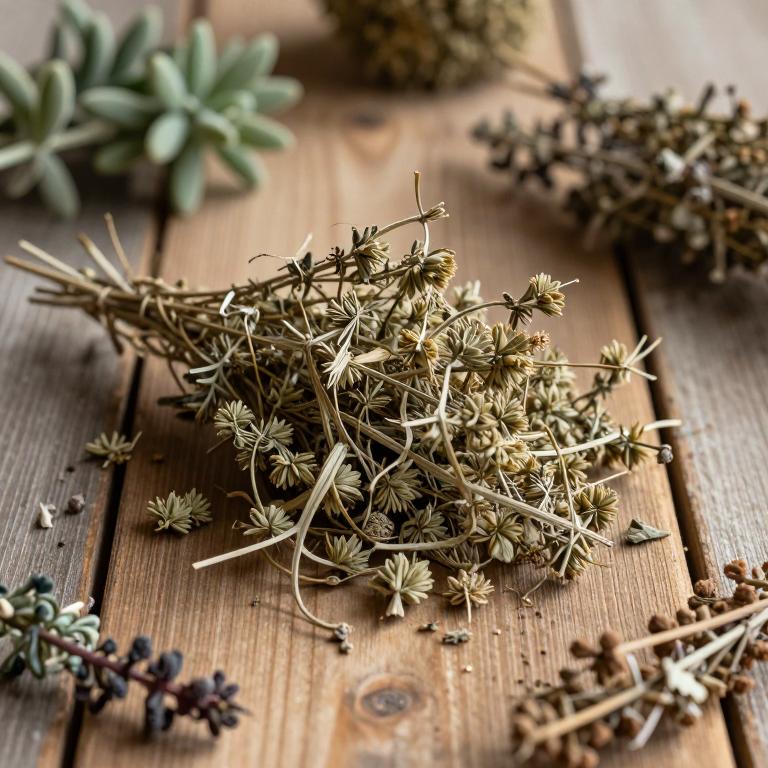
Names and Synonyms
Common Names
- Succulent catchfly
- Catchfly
Scientific Names
Accepted name
Silene succulentaRegional and Traditional Names
French:
- Silène charnu
Sources: Wikidata, Catalogue of Life
Taxonomical Classification
This plant, known as Silene succulenta, belongs to the kingdom Plantae and the phylum Streptophyta. It is classified under the class Equisetopsida and the subclass Magnoliidae, falling within the order Caryophyllales. Finally, it is a member of the family Caryophyllaceae and the genus Silene.
| Rank | Classification |
|---|---|
| Kingdom | Plantae |
| Phylum | Streptophyta |
| Class | Equisetopsida |
| Subclass | Magnoliidae |
| Order | Caryophyllales |
| Family | Caryophyllaceae |
| Genus | Silene |
Sources: The World Checklist of Vascular Plants (WCVP)
Distribution
This plant exhibits a diverse geographical distribution across several Mediterranean regions. In Southwestern Europe, it can be found growing on the islands of Corse and Sardegna. Its range extends into Southeastern Europe, specifically inhabiting the area of Kriti. Additionally, the species is present in Northern Africa, where it is located in Egypt. Finally, its distribution continues through the neighboring North African nation of Libya.
| Region | Area |
|---|---|
| Southwestern Europe | Corse |
| Southwestern Europe | Sardegna |
| Southeastern Europe | Kriti |
| Northern Africa | Egypt |
| Northern Africa | Libya |
| Northern Africa | Tunisia |
| Caucasus | Transcaucasus |
| Western Asia | Lebanon-Syria |
| Western Asia | Palestine |
| Arabian Peninsula | Saudi Arabia |
Sources: The World Checklist of Vascular Plants (WCVP)
Botanical Identification
Life history
The life history of Silene succulenta is characterized by a perennial lifecycle, allowing the plant to persist across multiple growing seasons. It functions as a hemicryptophyte, a life form where the perennating buds are located at the soil surface or just below it, protected by leaf litter or organic debris. This hemicrypto-phyte classification is consistent across its morphological development, ensuring its survival through varying environmental conditions by maintaining its regenerative capacity at the ground level.
- Life form :
- hemicryptophyte
- Lifecycle :
- perennial
Morphology
The morphology of Silene succulenta is characterized by its growth form as a non-woody herb and subshrub, exhibiting a primarily non-woody structure throughout its development. This species functions as an independent organism, showing no parasitic tendencies, and maintains a self-supporting habit rather than acting as a climber. In terms of its ecological niche and moisture preference, the plant is primarily terrestrial, though its physical characteristics allow it to exist across a spectrum that includes semiaquatic and aquatic environments.
- Aquatic :
- terrestrial
- Climber :
- self-supporting
- Growth form :
- herb
- Growth form :
- subshrub
- Parasite :
- independent
- Woodiness :
- non-woody
Physiology
The physiology of Silene succulenta is characterized by a specialized metabolic framework adapted to its specific ecological niche, most notably through its use of the C3 photosynthetic pathway. As a C3 plant, its carbon fixation process occurs entirely within the mesophyll cells via the Calvin cycle, where the enzyme RuBisCO directly captures atmospheric carbon dioxide to produce three-carbon compounds. This physiological strategy indicates that the plant relies on efficient gas exchange and adequate moisture availability to maintain optimal photosynthetic rates, as it lacks the specialized CO2-concentrating mechanisms found in C4 or CAM species. The metabolic efficiency of this C3 pathway is closely tied to the plant's water relations and temperature tolerances, dictating its transpiration patterns and overall carbon assimilation capabilities within its habitat.
- Photosynthetic pathway :
- C3
Sources: Global Inventory of Floras and Traits (GIFT)
Chemicals
Silene succulenta has 1 reported phytochemicals identified across 0 scientific publications and several other databases. The most consistently reported chemicals include betulinic acid.
| Chemical | Supporting sources | Consensus |
|---|---|---|
| betulinic acid | 1 supporting sources | ★☆☆☆☆ |
betulinic acid
- Pharmaceuticals (Basel, Switzerland)
Activities
Silene succulenta has 3 reported activities identified across 0 scientific publications and several other databases. The most consistently reported activities include Antibacterial, Anticancer, Antioxidant.
| Activity | Supporting sources | Consensus |
|---|---|---|
| Antibacterial | 1 supporting sources | ★☆☆☆☆ |
| Anticancer | 1 supporting sources | ★☆☆☆☆ |
| Antioxidant | 1 supporting sources | ★☆☆☆☆ |
Antibacterial
- Pharmaceuticals (Basel, Switzerland)
Anticancer
- RSC advances
Antioxidant
- Immunological investigations
Conditions
Silene succulenta has 4 reported investigations on conditions identified across 0 scientific publications and several other databases. The most consistently reported conditions include breast cancer, inflammation, oxidative stress, urinary tract diseases.
| Condition | Supporting sources | Consensus |
|---|---|---|
| Breast cancer | 1 supporting sources | ★☆☆☆☆ |
| Inflammation | 1 supporting sources | ★☆☆☆☆ |
| Oxidative stress | 1 supporting sources | ★☆☆☆☆ |
| Urinary tract diseases | 1 supporting sources | ★☆☆☆☆ |
Breast cancer
- RSC advances
Inflammation
- Pharmaceuticals (Basel, Switzerland)
Oxidative stress
- Pharmaceuticals (Basel, Switzerland)
Urinary tract diseases
- Pharmaceuticals (Basel, Switzerland)
Preparations
Silene succulenta has 1 reported preparations identified across 0 scientific publications and several other databases. The most consistently reported preparations include plant extracts.
| Preparation | Supporting sources | Consensus |
|---|---|---|
| Plant extracts | 1 supporting sources | ★☆☆☆☆ |
Plant extracts
- Immunological investigations