Mediterranean Catchfly
Silene nocturna · Accepted scientific name
Scientific literature: Very Sparse (2 studies) · ★☆☆☆☆
Mediterranean Catchfly, scientifically known as Silene nocturna, is a captivating nocturnal wildflower native to Mediterranean climates. Renowned for its pale, fragrant blooms that open at dusk, this plant plays a vital role in supporting nighttime pollinators. Its delicate beauty and unique biological rhythms make it a fascinating botanical treasure.
- Family
- Caryophyllaceae
- Native range
- Europe
- Parts used
- Not available
- Common names
- Mediterranean Catchfly · Night Catchfly · 1 more
- Scientific synonyms
- Corone Nocturna
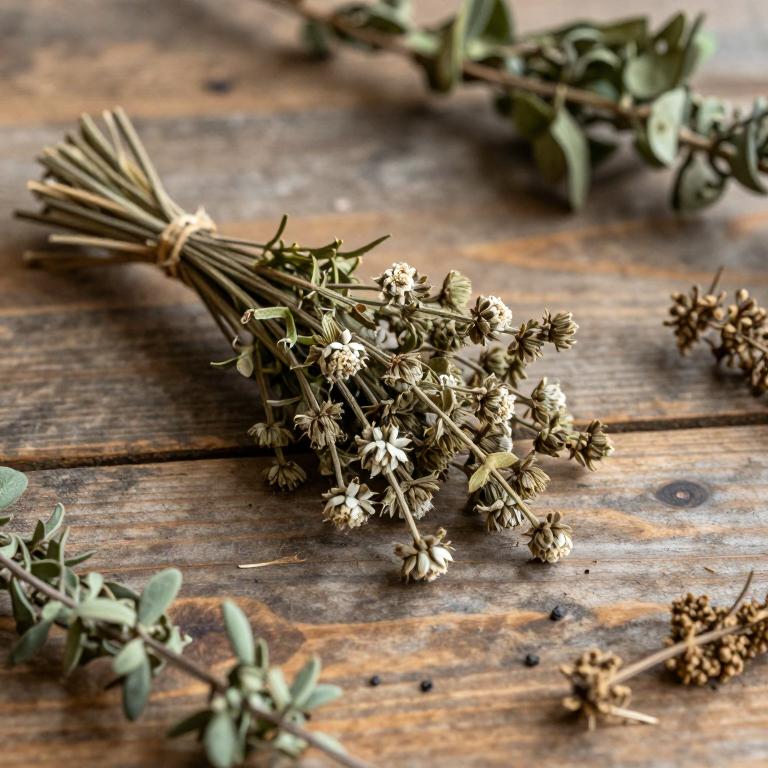
Names and Synonyms
Common Names
- Mediterranean Catchfly
- Night Catchfly
- Night-flowering Catchfly
Scientific Names
Accepted name
Silene nocturnaSynonyms
- Corone nocturna
Regional and Traditional Names
French:
- Silène nocturne
Sources: Wikidata, Catalogue of Life
Taxonomical Classification
This plant belongs to the kingdom Plantae and the phylum Streptophyta, falling under the class Equisetopsida and subclass Magnoliidae. It is further classified within the order Caryophyllales and the family Caryophyllaceae. Ultimately, it is identified by the genus Silene.
| Rank | Classification |
|---|---|
| Kingdom | Plantae |
| Phylum | Streptophyta |
| Class | Equisetopsida |
| Subclass | Magnoliidae |
| Order | Caryophyllales |
| Family | Caryophyllaceae |
| Genus | Silene |
Sources: The World Checklist of Vascular Plants (WCVP)
Distribution
This plant exhibits a diverse geographical distribution across several distinct European regions. In Middle Europe, its presence is specifically noted within Germany. Moving toward the Mediterranean, it can be found across various parts of Southwestern Europe. This includes its occurrence in the Baleares and Corse islands. Additionally, its range extends to the mainland territories of France and Portugal.
| Region | Area |
|---|---|
| Middle Europe | Germany |
| Southwestern Europe | Baleares |
| Southwestern Europe | Corse |
| Southwestern Europe | France |
| Southwestern Europe | Portugal |
| Southwestern Europe | Sardegna |
| Southwestern Europe | Spain |
| Southeastern Europe | Albania |
| Southeastern Europe | Greece |
| Southeastern Europe | Italy |
Sources: The World Checklist of Vascular Plants (WCVP)
Botanical Identification
Ecology
The ecology of Silene nocturna is characterized by its adaptation to coastal environments, specifically thriving in habitats composed of sand and sea. This species occupies a broad altitudinal gradient, ranging from sea level at 0 m AMSL up to a maximum elevation of 1500 m AMSL.
- Elevational range max:
- 1500 m AMSL
- Elevational range min:
- 0 m AMSL
- Habitat :
- sand, sea
Life history
The life history of Silene nocturna is characterized by an annual lifecycle, meaning the plant completes its entire developmental sequence from germination to seed production within a single growing season. As a therophyte, its life form is defined by its strategy of surviving unfavorable periods as ephemeral seeds, allowing it to bypass harsh environmental conditions without maintaining any above-ground vegetative structures. This classification as a therophyte ensures that the plant can rapidly colonize available niches during favorable seasonal windows, relying entirely on its seed bank to ensure continuity across generations.
- Life form :
- therophyte
- Lifecycle :
- annual
Morphology
The morphology of Silene nocturna is characterized by its growth form as a non-woody herb, functioning as both a herb and a forb. This plant exhibits a self-supporting growth habit, meaning it does not require climbing structures, and maintains an erect shoot orientation. It is a terrestrial species, categorized within the terrestrial niche rather than being aquatic or an epiphyte, and it grows as an independent organism without parasitic tendencies. In terms of stature, the plant is relatively diminutive, with a height ranging from a minimum of 0.08 m to a maximum of 0.5 m.
- Aquatic :
- terrestrial
- Climber :
- self-supporting
- Epiphyte :
- terrestrial
- Growth form :
- herb
- Parasite :
- independent
- Plant height max:
- 0.5 m
- Plant height min:
- 0.08 m
- Shoot orientation :
- erect
- Woodiness :
- non-woody
Physiology
The physiology of Silene nocturna is characterized by a C3 photosynthetic pathway, which governs its carbon fixation processes and energy production. The vegetative structure features elliptic leaf forms that serve as the primary sites for gas exchange and light absorption. These leaves exhibit specific morphological dimensions, with a length ranging from a minimum of 1 cm to a maximum of 4 cm. The width of the leaves is similarly constrained, maintaining a minimum dimension of 0.2 cm and reaching a maximum width of 1 cm, ensuring an optimized surface-area-to-volume ratio for its metabolic requirements.
- Leaf form :
- elliptic
- Leaf length max:
- 4 cm
- Leaf length min:
- 1 cm
- Leaf width max:
- 1 cm
- Leaf width min:
- 0.2 cm
- Photosynthetic pathway :
- C3
Reproduction
The reproduction of Silene nocturna is characterized by a specific flowering window that occurs primarily during the month of June, with both the onset and conclusion of the flowering period centered around this time. The plant produces distinctive pink flowers that serve as the precursor to fruit development. Once pollination is successful, the plant develops a capsule-type fruit, which typically measures between 0.7 cm and 1 cm in length. The reproductive cycle concludes with the production of very fine seeds, which maintain a consistent and minimal mass of 0.00012 g, representing the minimum, maximum, and mean seed mass for the species.
- Flower colour :
- pink
- Flowering time :
- Jun
- Fruit length max:
- 1 cm
- Fruit length min:
- 0.7 cm
- Fruit type :
- capsule
- Seed mass mean:
- 0.00012 g
Sources: Global Inventory of Floras and Traits (GIFT)
Activities
Silene nocturna has 1 reported activities identified across 0 scientific publications and several other databases. The most consistently reported activities include Antioxidant.
| Activity | Supporting sources | Consensus |
|---|---|---|
| Antioxidant | 1 supporting sources | ★☆☆☆☆ |
Antioxidant
- Immunological investigations
Conditions
Silene nocturna has 1 reported investigations on conditions identified across 0 scientific publications and several other databases. The most consistently reported conditions include opportunistic infections.
| Condition | Supporting sources | Consensus |
|---|---|---|
| Opportunistic infections | 1 supporting sources | ★☆☆☆☆ |
Opportunistic infections
- Immunopharmacology and immunotoxicology
Preparations
Silene nocturna has 1 reported preparations identified across 0 scientific publications and several other databases. The most consistently reported preparations include plant extracts.
| Preparation | Supporting sources | Consensus |
|---|---|---|
| Plant extracts | 1 supporting sources | ★☆☆☆☆ |
Plant extracts
- Immunological investigations