Ragged Robin
Silene flos-cuculi · Accepted scientific name
Scientific literature: Very Sparse (8 studies) · ★☆☆☆☆
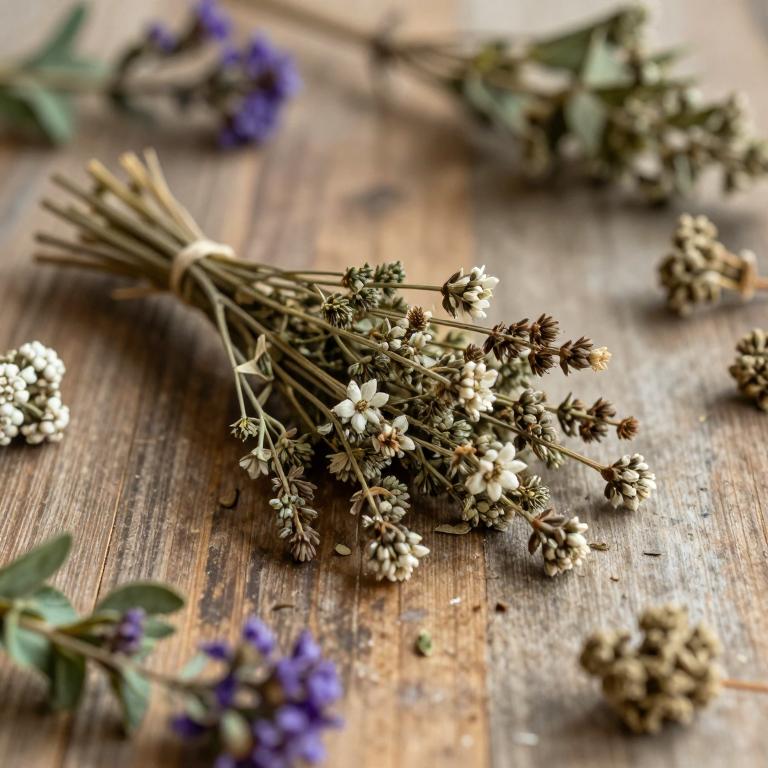
Ragged Robin, scientifically known as Silene flos-cuculi, is a charming perennial wildflower celebrated for its delicate, fringed pink blossoms. While primarily valued for its ornamental beauty in damp meadows, it holds traditional significance in herbal lore, embodying the rustic elegance of wetland ecosystems through its unique, star-shaped floral structure.
Names and Synonyms
Common Names
- Ragged Robin
- Ragged-Robin
- meadow campion
Scientific Names
Accepted name
Silene flos-cuculiSynonyms
- Coronaria flos-cuculi
- Coccyganthe flos-cuculi
- Agrostemma flos-cuculi
- Melandrium flos-cuculi
- Lychnis flos-cuculi
Regional and Traditional Names
German:
- Kuckucks-Lichtnelke
French:
- lychnide fleur-de-coucou
Sources: Wikidata, Catalogue of Life
Taxonomical Classification
This plant belongs to the kingdom Plantae and the phylum Streptophyta, situated within the class Equisetopsida and subclass Magnoliidae. It is classified under the order Caryophyllales and is a member of the family Caryophyllaceae. Specifically, its taxonomic designation falls under the genus Silene.
| Rank | Classification |
|---|---|
| Kingdom | Plantae |
| Phylum | Streptophyta |
| Class | Equisetopsida |
| Subclass | Magnoliidae |
| Order | Caryophyllales |
| Family | Caryophyllaceae |
| Genus | Silene |
Sources: The World Checklist of Vascular Plants (WCVP)
Distribution
This plant exhibits a specific range across the northernmost regions of the European continent. Its distribution begins in Northern Europe, where it can be found growing in Denmark and Finland. It is also documented within the island territories of the Faroe Islands and Iceland. Furthermore, the species extends its reach to include parts of Great Britain. Together, these locations define the primary northern habitats for Silene flos-cuculi.
| Region | Area |
|---|---|
| Northern Europe | Denmark |
| Northern Europe | Finland |
| Northern Europe | Føroyar |
| Northern Europe | Great Britain |
| Northern Europe | Iceland |
| Northern Europe | Ireland |
| Northern Europe | Norway |
| Northern Europe | Sweden |
| Middle Europe | Austria |
| Middle Europe | Belgium |
Sources: The World Checklist of Vascular Plants (WCVP)
Botanical Identification
Ecology
The ecology of Silene flos-cuculi is characterized by its preference for lowland environments, where it typically colonizes moist and nutrient-rich habitats. It is frequently found in damp meadows, marshes, fens, and along the edges of ditches or stream banks, thriving in areas where the water table is relatively high but not permanently inundated. This species favors temperate climates and often occupies semi-natural grasslands or disturbed alluvial soils that provide sufficient moisture to support its herbaceous growth. Its presence is often indicative of undisturbed, damp lowland ecosystems that maintain a specific balance of soil moisture and moderate nutrient availability.
- Habitat :
- Lowland
Life history
The life history of Silene flos-cuculi is characterized by its classification as a perennial plant, allowing it to persist through multiple growing seasons. As a hemicryptophyte, its perennating buds are located at the soil surface, protected by leaf litter or the substrate during unfavorable periods. This life form, specifically categorized under the hemicryptophyte group, dictates its survival strategy, ensuring that the plant can re-emerge annually from its protected buds to complete its reproductive cycle.
- Life form :
- hemicryptophyte
- Lifecycle :
- perennial
Morphology
The morphology of Silene flos-cuculi is characterized by its growth form as a non-woody herb and forb. This terrestrial plant is self-supporting and does not function as a climber or an epiphyte, maintaining an independent lifestyle without parasitic tendencies. The shoots exhibit an erect orientation, reaching a plant height that typically ranges from a minimum of 0.3 m to a maximum of 0.9 m, with an average height of approximately 0.456 m.
- Aquatic :
- terrestrial
- Climber :
- self-supporting
- Epiphyte :
- terrestrial
- Growth form :
- herb
- Growth form :
- forb
- Parasite :
- independent
- Plant height max:
- 0.9 m
- Plant height mean:
- 0.456 m
- Plant height min:
- 0.3 m
- Shoot orientation :
- erect
- Woodiness :
- non-woody
Physiology
The physiology of Silene flos-cuculi is characterized by a C3 photosynthetic pathway, which governs its carbon fixation processes. The plant's foliar morphology is defined by relatively narrow leaves, with a mean width of 1 cm, a value that remains consistent across its minimum and maximum measurements. These leaves exhibit a maximum length of 11 cm and maintain a mean surface area of 9.19 cm². Furthermore, the plant possesses a mean Specific Leaf Area (SLA) of 239.37 cm²/g, reflecting its leaf mass per area and its resource allocation strategy. In terms of nutritional acquisition, the species is classified as non-carnivorous, relying on standard soil-based nutrient uptake rather than insectivory.
- Carnivory :
- non-carnivorous
- Leaf length max:
- 11 cm
- Leaf size mean:
- 9.19 cm²
- Leaf width mean:
- 1 cm
- Photosynthetic pathway :
- C3
- Specific Leaf Area (SLA) mean:
- 239.37 cm²/g
Reproduction
The reproduction of Silene flos-cuculi is characterized by a sexual process, as asexual reproduction is notably absent. The flowering period typically commences in May and concludes in July. This plant relies on biotic pollination syndromes, specifically utilizing insects, with bees identified as a primary pollinator. Interestingly, self-fertilization is absent, indicating a reliance on cross-pollination. Following successful fertilization, the plant develops dry, dehiscent capsules as its fruit type. The resulting seeds are quite small, with a mean mass of approximately 0.0001938335 g (ranging from 0.00017 g to 0.00021 g) and a consistent mean length of 0.8 mm. The seed volume varies slightly between a minimum of 0.14 mm³ and a maximum of 0.16 mm³, with an average of 0.15 mm³. For dispersal, the species employs an anemochorous syndrome, meaning the seeds are dispersed by the wind.
- Dehiscence :
- dehiscent
- Dispersal syndrome :
- anemochorous
- Flowering time :
- May
- Flowering time :
- Jul
- Fruit dryness :
- dry
- Fruit type :
- capsule
- Pollination syndrome :
- insect
- Pollination syndrome :
- bee
- Pollination syndrome :
- biotic
- Reproduction asexual :
- absent
- Seed length mean:
- 0.8 mm
- Seed mass max:
- 0.00021 g
- Seed mass mean:
- 0.0001938335 g
- Seed mass min:
- 0.00017 g
- Seed volume max:
- 0.16 mm³
- Seed volume mean:
- 0.15 mm³
- Seed volume min:
- 0.14 mm³
- Self fertilization :
- absent
Sources: Global Inventory of Floras and Traits (GIFT)
Plant Parts
Silene flos-cuculi has 1 reported plant parts identified across 1 scientific publications and several other databases that are studied for medicinal purposes. The most consistently reported plant part include flower.
| Plant part | Supporting sources | Consensus |
|---|---|---|
| Flower | 1 supporting sources | ★☆☆☆☆ |
Flower
- Plants (Basel, Switzerland)
Chemicals
Silene flos-cuculi has 2 reported phytochemicals identified across 1 scientific publications and several other databases. The most consistently reported chemicals include Flavonoids, polyphenols.
| Chemical | Supporting sources | Consensus |
|---|---|---|
| Flavonoids | 1 supporting sources | ★☆☆☆☆ |
| polyphenols | 1 supporting sources | ★☆☆☆☆ |
Flavonoids
- Plants (Basel, Switzerland)
polyphenols
- Plants (Basel, Switzerland)