Sideroxylon obtusifolium
Sideroxylon obtusifolium · Accepted scientific name
Scientific literature: Very Sparse (20 studies) · ★☆☆☆☆
Sideroxylon obtusifoliuum, scientifically known as Sideroxylon obtusifoilium, is a significant medicinal plant prized for its diverse therapeutic properties. Often found in tropical regions, its leaves and bark are traditionally utilized to treat various ailments, ranging from skin infections to inflammatory conditions, offering valuable insights for modern pharmacological research.
- Family
- Sapotaceae
- Native range
- Northern America
- Parts used
- Leaf
- Common names
- Not available
- Scientific synonyms
- Lyciodes Obtusifolium · Bumelia Obtusifolia Subsp. Typica · 1 more
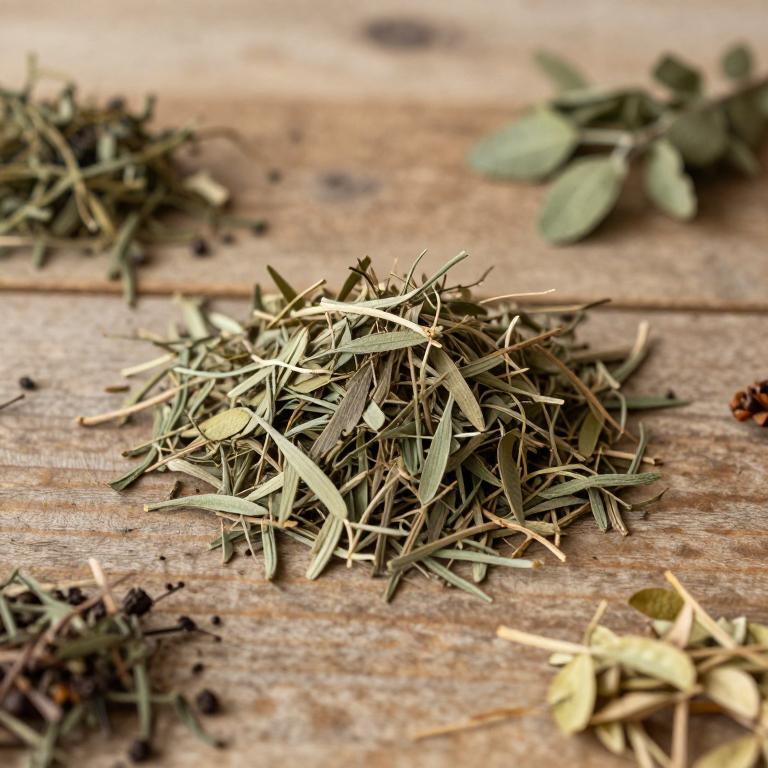
Names and Synonyms
Scientific Names
Accepted name
Sideroxylon obtusifoliumSynonyms
- Lyciodes obtusifolium
- Bumelia obtusifolia subsp. typica
- Bumelia obtusifolia
Regional and Traditional Names
Spanish:
- Guaraniná
Sources: Wikidata, Catalogue of Life
Taxonomical Classification
This plant, known scientifically as Sideroxylon obtusifolium, belongs to the kingdom Plantae and the phylum Streptophyta. It is classified under the class Equisetopsida and the subclass Magnoliidae within the order Ericales. Finally, it is a member of the family Sapotaceae and falls under the genus Sideroxylon.
| Rank | Classification |
|---|---|
| Kingdom | Plantae |
| Phylum | Streptophyta |
| Class | Equisetopsida |
| Subclass | Magnoliidae |
| Order | Ericales |
| Family | Sapotaceae |
| Genus | Sideroxylon |
Sources: The World Checklist of Vascular Plants (WCVP)
Distribution
This plant exhibits a widespread presence across several diverse regions of Mexico. Its distribution includes the central areas of Mexico as well as the Gulf coast region. Furthermore, it can be found throughout the southwest and southeast portions of the country. Moving south from Mexico, the species also extends into the territory of Belize. Consequently, the geographical range of Sideroxylon obtusifolium spans multiple ecological zones from Mexico through Central America.
| Region | Area |
|---|---|
| Mexico | Mexico Central |
| Mexico | Mexico Gulf |
| Mexico | Mexico Southwest |
| Mexico | Mexico Southeast |
| Central America | Belize |
| Central America | Costa Rica |
| Central America | El Salvador |
| Central America | Guatemala |
| Central America | Honduras |
| Central America | Nicaragua |
Sources: The World Checklist of Vascular Plants (WCVP)
Botanical Identification
Ecology
The ecology of Sideroxylon obtusifolium is characterized by its adaptability to diverse and often semi-arid landscapes, primarily thriving within the Caatinga (strictu sensu), Carrasco, and Amazonian Savanna (Savaana Amazônica) habitats. This species exhibits a broad altitudinal distribution, occupying environments ranging from sea level up to a maximum elevation of 1,100 m AMSL. Its presence across these specific biomes indicates a capacity to withstand varying moisture regimes and soil types typical of these transitional and seasonal ecosystems.
- Elevational range max:
- 1100 m AMSL
- Elevational range min:
- 0 m AMSL
- Habitat :
- Caatinga (stricto sensu), Carrasco, Savana Amazônica
Life history
The life history of Sideroxylon obtusifolium is characterized by its status as a perennial organism, allowing it to persist through multiple growing seasons and maintain a stable presence within its ecological niche. In terms of its structural growth strategy, the species is classified as a phanerophyte, specifically exhibiting traits of both phanerophyte and nanophanerophyte life forms. This indicates that its regenerative buds are located on aerial shoots well above the ground, typically organized in a woody architecture that enables it to withstand environmental fluctuations and sustain long-term development.
- Life form :
- phanerophyte
- Lifecycle :
- perennial
Morphology
The morphology of Sideroxylon obtusifolium is characterized by a woody growth form that primarily manifests as a tree, though it can also exhibit a shrub-like habit. This plant is a self-supporting species, meaning it does not function as a climber or a liana, and it grows as an independent organism rather than acting as a parasite. It is a terrestrial plant, lacking any aquatic, semiaquatic, or epiphytic tendencies. In terms of stature, it is a substantial specimen with a mean plant height of approximately 14 m, though it can reach a maximum height of up to 20 m.
- Aquatic :
- terrestrial
- Climber :
- self-supporting
- Epiphyte :
- terrestrial
- Growth form :
- tree
- Growth form :
- shrub
- Parasite :
- independent
- Plant height max:
- 20 m
- Plant height mean:
- 14 m
- Woodiness :
- woody
Physiology
The physiology of Sideroxylon obtusifolium is characterized by specific leaf economics and nutrient acquisition strategies. The plant exhibits a highly consistent Leaf Dry Matter Content (LDMC), with a mean, minimum, and maximum value all recorded at 451.4 mg/g, indicating a stable concentration of structural and non-structural components within its leaf tissue. Complementing this is its Specific Leaf Area (SLA), which maintains a constant value across its observed range, with a mean, minimum, and maximum of 72 cm²/g, reflecting a standardized leaf thickness and density profile. Furthermore, regarding its nutrient cycling capabilities, the species does not function as a nitrogen fixer, relying instead on the uptake of available nitrogen from the soil rather than symbiotic atmospheric fixation.
- Leaf dry matter content (LDMC) mean:
- 451.4 mg/g
- Nitrogen fixer :
- no
- Specific Leaf Area (SLA) min:
- 72 cm²/g
Reproduction
The reproduction of Sideroxylon obtusifolium is characterized by the production of a berry-type fruit that is indehiscent, meaning it does not split open at maturity to release its contents. The fruit maintains a consistent size, with both the mean and the observed range for fruit length measured at 1.3 cm. Within these fruits, the seeds possess a uniform morphology, displaying a mean, minimum, and maximum seed length of 7.837 mm. The seed mass is also highly consistent, with a mean, minimum, and maximum value recorded at 0.09123 g. Following the maturation of the fruit, the plant utilizes a zoochorous dispersal syndrome, relying on animals to aid in the movement and spreading of its seeds to new locations.
- Dehiscence :
- indehiscent
- Dispersal syndrome :
- zoochorous
- Fruit length max:
- 1.3 cm
- Fruit type :
- berry
- Seed length mean:
- 7.837 mm
- Seed mass mean:
- 0.09123 g
Sources: Global Inventory of Floras and Traits (GIFT)
Plant Parts
Sideroxylon obtusifolium has 1 reported plant parts identified across 2 scientific publications and several other databases that are studied for medicinal purposes. The most consistently reported plant part include leaf.
| Plant part | Supporting sources | Consensus |
|---|---|---|
| Leaf | 2 supporting sources | ★☆☆☆☆ |
Leaf
- Planta medica
- Journal of evidence-based integrative medicine
Chemicals
Sideroxylon obtusifolium has 6 reported phytochemicals identified across 2 scientific publications and several other databases. The most consistently reported chemicals include CATECHIN, Condensed Tannins, Flavonoids, Gingerglycolipid A, NMP.
| Chemical | Supporting sources | Consensus |
|---|---|---|
| CATECHIN | 1 supporting sources | ★☆☆☆☆ |
| Condensed Tannins | 1 supporting sources | ★☆☆☆☆ |
| Flavonoids | 1 supporting sources | ★☆☆☆☆ |
| Gingerglycolipid A | 1 supporting sources | ★☆☆☆☆ |
| NMP | 1 supporting sources | ★☆☆☆☆ |
| Saponins | 1 supporting sources | ★☆☆☆☆ |
CATECHIN
- Planta medica
Condensed Tannins
- The journal of contemporary dental practice
Flavonoids
- Planta medica
Gingerglycolipid A
- Planta medica
NMP
- Journal of evidence-based integrative medicine
Saponins
- Planta medica
Activities
Sideroxylon obtusifolium has 3 reported activities identified across 2 scientific publications and several other databases. The most consistently reported activities include Antioxidant, Free-Radical Scavenging, Hypoglycemic.
| Activity | Supporting sources | Consensus |
|---|---|---|
| Antioxidant | 1 supporting sources | ★☆☆☆☆ |
| Free-Radical Scavenging | 1 supporting sources | ★☆☆☆☆ |
| Hypoglycemic | 1 supporting sources | ★☆☆☆☆ |
Antioxidant
- Journal of ethnopharmacology
Free-Radical Scavenging
- Journal of ethnopharmacology
Hypoglycemic
- Phytomedicine : international journal of phytotherapy and phytopharmacology
Conditions
Sideroxylon obtusifolium has 7 reported investigations on conditions identified across 2 scientific publications and several other databases. The most consistently reported conditions include Candida albicans, Streptococcus mutans, Streptococcus oralis, Streptococcus salivarius, inflammation.
| Condition | Supporting sources | Consensus |
|---|---|---|
| Candida albicans | 1 supporting sources | ★☆☆☆☆ |
| Streptococcus mutans | 1 supporting sources | ★☆☆☆☆ |
| Streptococcus oralis | 1 supporting sources | ★☆☆☆☆ |
| Streptococcus salivarius | 1 supporting sources | ★☆☆☆☆ |
| Inflammation | 1 supporting sources | ★☆☆☆☆ |
| Prostate cancer | 1 supporting sources | ★☆☆☆☆ |
| Wound healing | 1 supporting sources | ★☆☆☆☆ |
Candida albicans
- The journal of contemporary dental practice
Streptococcus mutans
- The journal of contemporary dental practice
Streptococcus oralis
- The journal of contemporary dental practice
Streptococcus salivarius
- The journal of contemporary dental practice
Inflammation
- Journal of evidence-based integrative medicine
Prostate cancer
- Journal of ethnopharmacology
Wound healing
- Journal of evidence-based integrative medicine
Preparations
Sideroxylon obtusifolium has 3 reported preparations identified across 2 scientific publications and several other databases. The most consistently reported preparations include Infusions of the bark, Infusions of the leaves, fractions.
| Preparation | Supporting sources | Consensus |
|---|---|---|
| Infusions of the bark | 1 supporting sources | ★☆☆☆☆ |
| Infusions of the leaves | 1 supporting sources | ★☆☆☆☆ |
| Fractions | 1 supporting sources | ★☆☆☆☆ |
Infusions of the bark
- Planta medica
Infusions of the leaves
- Planta medica
Fractions
- Journal of ethnopharmacology