mountain tea
Sideritis · Accepted scientific name
Scientific literature: Very Sparse (14 studies) · ★☆☆☆☆
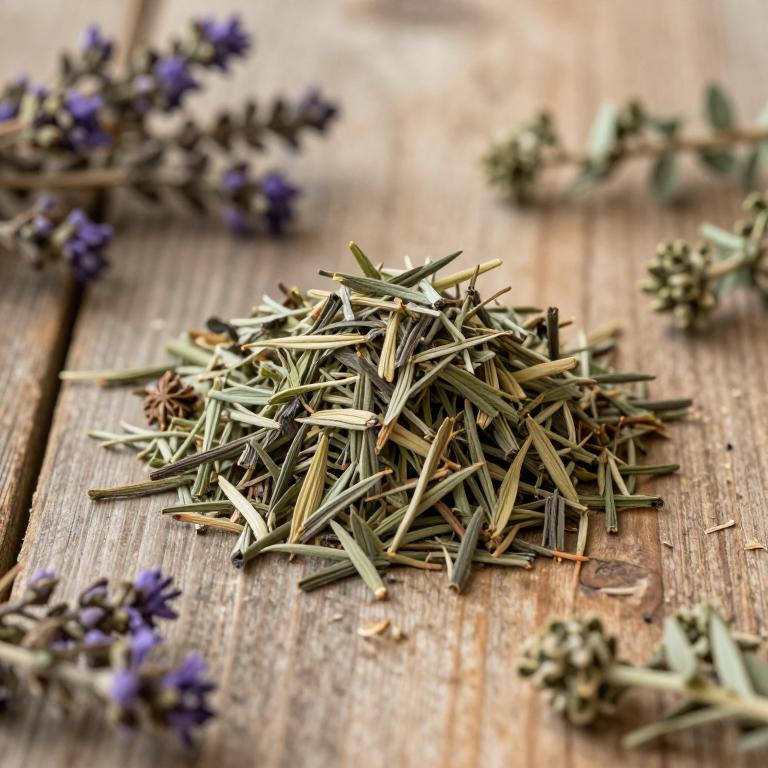
Mountain tea, scientifically known as Sideritis, is a revered herbal remedy native to the Mediterranean. Renowned for its potent antioxidant and anti-inflammatory properties, this aromatic plant is traditionally brewed into a soothing infusion. It is widely used to support respiratory health, boost immunity, and alleviate digestive discomfort naturally.
Names and Synonyms
Common Names
- Ironworts
- Mountain Tea
- Shepherd's Tea
Scientific Names
Accepted name
SideritisSynonyms
- Leucophae
- Cunila
- Navicularia
- Empedoclia
- Fracastora
- Hesiodia
- Burgsdorfia
- Marrubiastrum
Regional and Traditional Names
German:
- Gliedkräuter
- Gliedkraut
- Gliedkräuter
French:
- Crapaudines
Sources: Wikidata, Catalogue of Life
Taxonomical Classification
This plant belongs to the kingdom Plantae and the phylum Streptophyta, falling under the class Equisetopsida and subclass Magnoliidae. Within the order Lamiales and family Lamiaceae, it is classified under the genus Sideritis.
| Rank | Classification |
|---|---|
| Kingdom | Plantae |
| Phylum | Streptophyta |
| Class | Equisetopsida |
| Subclass | Magnoliidae |
| Order | Lamiales |
| Family | Lamiaceae |
| Genus | Sideritis |
Sources: The World Checklist of Vascular Plants (WCVP)
Distribution
This plant is primarily distributed across several regions within Middle Europe. It can be found growing in the mountainous and hilly terrains of Austria. Its presence extends through the central landscapes of Czechia and Slovakia. Furthermore, the species is widely documented across Germany and Hungary. Finally, its geographical range reaches into the alpine territories of Switzerland.
| Region | Area |
|---|---|
| Middle Europe | Austria |
| Middle Europe | Czechia-Slovakia |
| Middle Europe | Germany |
| Middle Europe | Hungary |
| Middle Europe | Switzerland |
| Southwestern Europe | Baleares |
| Southwestern Europe | Corse |
| Southwestern Europe | France |
| Southwestern Europe | Portugal |
| Southwestern Europe | Sardegna |
Sources: The World Checklist of Vascular Plants (WCVP)
Chemicals
Sideritis has 3 reported phytochemicals identified across 0 scientific publications and several other databases. The most consistently reported chemicals include Acteoside, Linearol, Verbascoside.
| Chemical | Supporting sources | Consensus |
|---|---|---|
| Acteoside | 1 supporting sources | ★☆☆☆☆ |
| Linearol | 1 supporting sources | ★☆☆☆☆ |
| Verbascoside | 1 supporting sources | ★☆☆☆☆ |
Acteoside
- Journal of ethnopharmacology
Linearol
- International journal of molecular sciences
Verbascoside
- Journal of ethnopharmacology
Activities
Sideritis has 3 reported activities identified across 0 scientific publications and several other databases. The most consistently reported activities include Cytotoxic, Anticancer, Antioxidant.
| Activity | Supporting sources | Consensus |
|---|---|---|
| Cytotoxic | 2 supporting sources | ★☆☆☆☆ |
| Anticancer | 1 supporting sources | ★☆☆☆☆ |
| Antioxidant | 1 supporting sources | ★☆☆☆☆ |
Cytotoxic
- Molecules (Basel, Switzerland)
- Journal of ethnopharmacology
Anticancer
- Journal of ethnopharmacology
Antioxidant
- Journal of ethnopharmacology
Conditions
Sideritis has 4 reported investigations on conditions identified across 0 scientific publications and several other databases. The most consistently reported conditions include carcinogenesis, cold, inflammation, respiratory diseases.
| Condition | Supporting sources | Consensus |
|---|---|---|
| Carcinogenesis | 1 supporting sources | ★☆☆☆☆ |
| Cold | 1 supporting sources | ★☆☆☆☆ |
| Inflammation | 1 supporting sources | ★☆☆☆☆ |
| Respiratory diseases | 1 supporting sources | ★☆☆☆☆ |
Carcinogenesis
- Journal of ethnopharmacology
Cold
- Daru : journal of Faculty of Pharmacy, Tehran University of Medical Sciences
Inflammation
- Journal of ethnopharmacology
Respiratory diseases
- Daru : journal of Faculty of Pharmacy, Tehran University of Medical Sciences
Preparations
Sideritis has 8 reported preparations identified across 0 scientific publications and several other databases. The most consistently reported preparations include Sideritis extracts, Microwave-Assisted Extraction (MAE) process, Mountain tea "Dağçayı", essential oil, hexanic extracts.
| Preparation | Supporting sources | Consensus |
|---|---|---|
| Sideritis extracts | 2 supporting sources | ★☆☆☆☆ |
| Microwave-assisted extraction (mae) process | 1 supporting sources | ★☆☆☆☆ |
| Mountain tea "dağçayı" | 1 supporting sources | ★☆☆☆☆ |
| Essential oil | 1 supporting sources | ★☆☆☆☆ |
| Hexanic extracts | 1 supporting sources | ★☆☆☆☆ |
| Medicinal decoctions | 1 supporting sources | ★☆☆☆☆ |
| Methanolic extracts | 1 supporting sources | ★☆☆☆☆ |
| Oils | 1 supporting sources | ★☆☆☆☆ |
Sideritis extracts
- Molecules (Basel, Switzerland)
- Journal of ethnopharmacology
Microwave-assisted extraction (mae) process
- Molecules (Basel, Switzerland)
Mountain tea "dağçayı"
- Planta medica
Essential oil
- Phytochemistry
Hexanic extracts
- Journal of chromatography. B, Analytical technologies in the biomedical and life sciences
Medicinal decoctions
- Planta medica
Methanolic extracts
- Journal of chromatography. B, Analytical technologies in the biomedical and life sciences
Oils
- Acta pharmaceutica Hungarica