ironwort
Sideritis raeseri · Accepted scientific name
Scientific literature: Very Sparse (17 studies) · ★☆☆☆☆
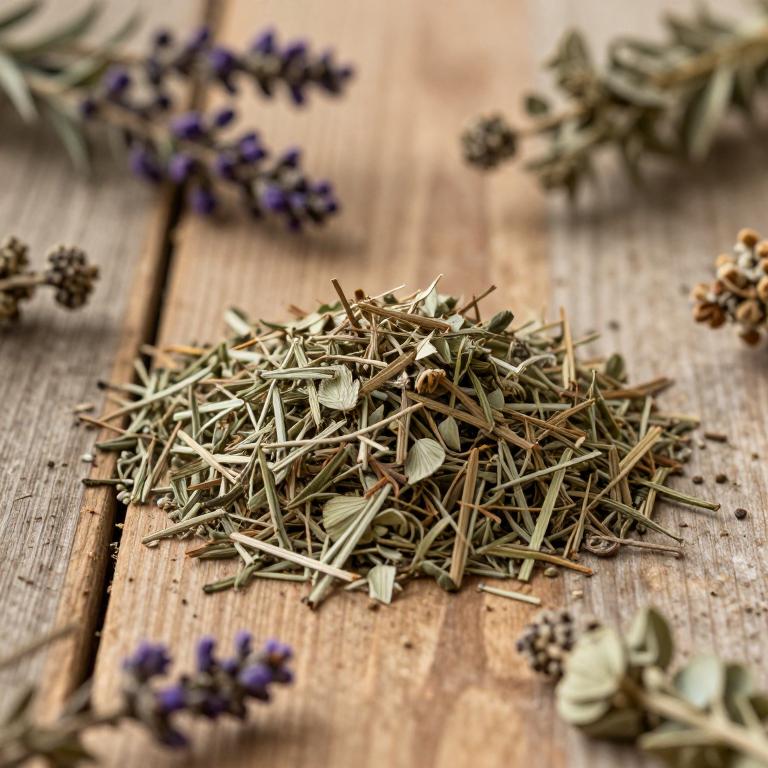
Ironwort, scientifically known as Sideritis razeri, is a resilient perennial herb native to the Mediterranean region. Renowned for its remarkable therapeutic properties, this plant is frequently utilized in traditional medicine to treat respiratory issues and digestive ailments. Its aromatic leaves offer a potent blend of antioxidants and healing compounds.
- Family
- Lamiaceae
- Native range
- Europe
- Parts used
- Not available
- Common names
- Ironwort · Mountain-Tea · 1 more
- Scientific synonyms
- Navicularia Syriaca Subsp. Raeseri
Names and Synonyms
Common Names
- ironwort
- mountain-tea
- shepard's-tea
Scientific Names
Accepted name
Sideritis raeseriSynonyms
- Navicularia syriaca subsp. raeseri
Sources: Wikidata, Catalogue of Life
Taxonomical Classification
This plant, Sideritis raeseri, belongs to the kingdom Plantae and the phylum Streptophyta. It is classified under the class Equisetopsida and the subclass Magnoliidae, falling within the order Lamiales and the family Lamiaceae. Finally, its taxonomic placement is completed within the genus Sideritis.
| Rank | Classification |
|---|---|
| Kingdom | Plantae |
| Phylum | Streptophyta |
| Class | Equisetopsida |
| Subclass | Magnoliidae |
| Order | Lamiales |
| Family | Lamiaceae |
| Genus | Sideritis |
Sources: The World Checklist of Vascular Plants (WCVP)
Distribution
This plant is primarily found within the diverse landscapes of Southeastern Europe. Its natural range includes specific territories located across the Northwest Balkan Peninsula. Within this region, it is also documented to grow throughout Albania. Furthermore, the species maintains a presence in the mountainous or coastal terrains of Greece. Together, these areas define the core geographical distribution of Sideritis raeseri.
| Region | Area |
|---|---|
| Southeastern Europe | Albania |
| Southeastern Europe | Greece |
| Southeastern Europe | NW. Balkan Pen. |
Sources: The World Checklist of Vascular Plants (WCVP)
Botanical Identification
Life history
The life history of Sideritis raeseri is characterized by its classification as a chamaephyte, a growth form where the majority of the plant's photosynthetic organs remain close to the soil surface, often protected by a layer of leaf litter or seasonal debris. Within this life strategy, it specifically exhibits the traits of a chamaephyte (Life_form_1) and a chamaephyte (Life_form_2), indicating its adaptation to Mediterranean environments where low-growing stature helps mitigate the effects of wind and extreme temperature fluctuations. This life form allows the plant to persist through seasonal changes by maintaining its buds just above the ground level, facilitating survival in rocky or arid terrains. Through this specialized growth habit, Sideritis raeseri effectively manages its energy resources and structural integrity, ensuring reproductive success within its specific ecological niche.
- Life form :
- chamaephyte
Morphology
The morphology of Sideritis raeseri is characterized by its growth habit as a self-supporting, non-climbing perennial herb. It is a strictly terrestrial species, lacking any aquatic or semiaquatic adaptations, and it thrives in well-drained soil environments rather than water-saturated habitats. As an independent organism, the plant does not exhibit parasitic behavior, functioning without reliance on a host for nutrients, and it does not possess epiphyte characteristics, meaning it grows directly from the ground rather than attaching to other plants or trees.
- Aquatic :
- terrestrial
- Climber :
- self-supporting
- Epiphyte :
- terrestrial
- Parasite :
- independent
Sources: Global Inventory of Floras and Traits (GIFT)
Chemicals
Sideritis raeseri has 7 reported phytochemicals identified across 0 scientific publications and several other databases. The most consistently reported chemicals include CHLOROGENIC ACID, Flavonoids, Hyp, Hypolaetin, Isoscutellarein.
| Chemical | Supporting sources | Consensus |
|---|---|---|
| CHLOROGENIC ACID | 1 supporting sources | ★☆☆☆☆ |
| Flavonoids | 1 supporting sources | ★☆☆☆☆ |
| Hyp | 1 supporting sources | ★☆☆☆☆ |
| Hypolaetin | 1 supporting sources | ★☆☆☆☆ |
| Isoscutellarein | 1 supporting sources | ★☆☆☆☆ |
| Terpenoids | 1 supporting sources | ★☆☆☆☆ |
| Verbascoside | 1 supporting sources | ★☆☆☆☆ |
CHLOROGENIC ACID
- Molecules (Basel, Switzerland)
Flavonoids
- Molecules (Basel, Switzerland)
Hyp
- Molecules (Basel, Switzerland)
Hypolaetin
- Molecules (Basel, Switzerland)
Isoscutellarein
- Molecules (Basel, Switzerland)
Terpenoids
- Molecules (Basel, Switzerland)
Verbascoside
- Molecules (Basel, Switzerland)
Activities
Sideritis raeseri has 3 reported activities identified across 0 scientific publications and several other databases. The most consistently reported activities include Antitoxic, Cardiodepressant, Vasorelaxant.
| Activity | Supporting sources | Consensus |
|---|---|---|
| Antitoxic | 1 supporting sources | ★☆☆☆☆ |
| Cardiodepressant | 1 supporting sources | ★☆☆☆☆ |
| Vasorelaxant | 1 supporting sources | ★☆☆☆☆ |
Antitoxic
- Biophysical chemistry
Cardiodepressant
- Journal of physiology and pharmacology : an official journal of the Polish Physiological Society
Vasorelaxant
- Journal of physiology and pharmacology : an official journal of the Polish Physiological Society
Conditions
Sideritis raeseri has 3 reported investigations on conditions identified across 0 scientific publications and several other databases. The most consistently reported conditions include Type 2 Diabetes Mellitus, hypotension, vasodilatation.
| Condition | Supporting sources | Consensus |
|---|---|---|
| Type 2 diabetes mellitus | 1 supporting sources | ★☆☆☆☆ |
| Hypotension | 1 supporting sources | ★☆☆☆☆ |
| Vasodilatation | 1 supporting sources | ★☆☆☆☆ |
Type 2 diabetes mellitus
- Biophysical chemistry
Hypotension
- Journal of physiology and pharmacology : an official journal of the Polish Physiological Society
Vasodilatation
- Journal of physiology and pharmacology : an official journal of the Polish Physiological Society
Preparations
Sideritis raeseri has 1 reported preparations identified across 0 scientific publications and several other databases. The most consistently reported preparations include ultrasound-assisted extraction.
| Preparation | Supporting sources | Consensus |
|---|---|---|
| Ultrasound-assisted extraction | 1 supporting sources | ★☆☆☆☆ |
Ultrasound-assisted extraction
- Molecules (Basel, Switzerland)