Sideritis pungens
Sideritis pungens · Accepted scientific name
Scientific literature: Very Sparse (2 studies) · ★☆☆☆☆
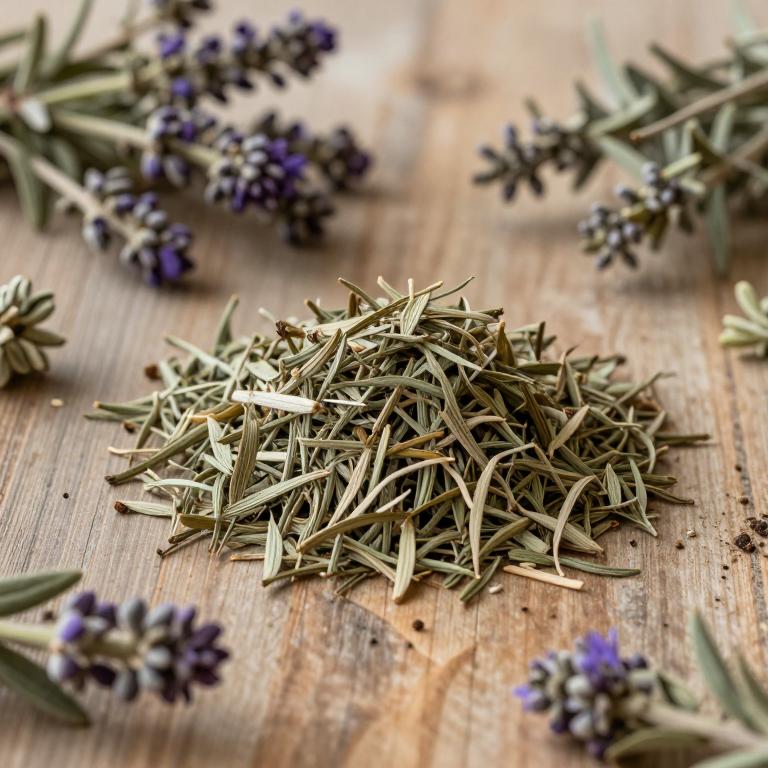
, scientifically known as Sideritis pungens, is a resilient aromatic herb native to the Mediterranean. Often referred to as mountain tea, this plant is celebrated in traditional medicine for its potent antioxidant and anti-inflammatory properties. It is widely used to support respiratory health and bolster the immune system naturally.
- Family
- Lamiaceae
- Native range
- Europe
- Parts used
- Not available
- Common names
- Not available
- Scientific synonyms
- Fracastora Linearifolia · Sideritis Linearifolia Var. Javalambrensis · 5 more
Names and Synonyms
Scientific Names
Accepted name
Sideritis pungensSynonyms
- Fracastora linearifolia
- Sideritis linearifolia var. javalambrensis
- Sideritis pungens subsp. javalambrensis
- Sideritis pungens var. javalambrensis
- Sideritis pungens subsp. vigoi
- Sideritis gudarica
- Sideritis javalambrensis
Sources: Wikidata
Taxonomical Classification
This plant, Sideritis pungens, belongs to the kingdom Plantae and the phylum Streptophyta. It is classified under the class Equisetopsida and the subclass Magnoliidae within the order Lamiales. Finally, it is a member of the family Lamiaceae and the genus Sideritis.
| Rank | Classification |
|---|---|
| Kingdom | Plantae |
| Phylum | Streptophyta |
| Class | Equisetopsida |
| Subclass | Magnoliidae |
| Order | Lamiales |
| Family | Lamiaceae |
| Genus | Sideritis |
Sources: The World Checklist of Vascular Plants (WCVP)
Distribution
This plant is primarily found within the specific geographical region of Southwestern Europe. Within this territory, its presence is most notable in the country of Spain. The species occupies certain ecological niches that allow it to thrive in this particular Mediterranean climate. Consequently, its natural range appears to be quite localized rather than widespread across the continent. Understanding this limited distribution is essential for researchers studying its native habitat.
| Region | Area |
|---|---|
| Southwestern Europe | Spain |
Sources: The World Checklist of Vascular Plants (WCVP)
Botanical Identification
Life history
The life history of Sideritis pungens is characterized by its classification as a chamaephyte, a growth form where the majority of the plant's biomass and regenerative buds are located near or just above the soil surface. Within this life strategy, it functions specifically as a chamaephyte, allowing it to withstand environmental stressors such as wind or grazing by maintaining its vital structures close to the ground. This life form enables the species to thrive in rocky or exposed habitats where maintaining height would be disadvantageous. Throughout its life cycle, the plant utilizes this low-growing habit to optimize resource acquisition while ensuring survival through seasonal changes, relying on its proximity to the substrate to protect its meristematic tissues.
- Life form :
- chamaephyte
Morphology
The morphology of Sideritis pungens is characterized by its growth habit as a self-supporting climber, utilizing its structural integrity to ascend without requiring external hosts for mechanical support. It functions as an independent organism, showing no parasitic tendencies toward other vegetation, and maintains a strictly terrestrial existence rather than growing as an epiphyte.
- Climber :
- self-supporting
- Epiphyte :
- terrestrial
- Parasite :
- independent
Sources: Global Inventory of Floras and Traits (GIFT)
Chemicals
Sideritis pungens has 2 reported phytochemicals identified across 0 scientific publications and several other databases. The most consistently reported chemicals include Labdane F2, Manoyl oxide F1.
| Chemical | Supporting sources | Consensus |
|---|---|---|
| Labdane F2 | 1 supporting sources | ★☆☆☆☆ |
| Manoyl oxide F1 | 1 supporting sources | ★☆☆☆☆ |
Labdane F2
- Planta medica
Manoyl oxide F1
- Planta medica
Preparations
Sideritis pungens has 5 reported preparations identified across 0 scientific publications and several other databases. The most consistently reported preparations include aqueous extracts, hexane anti-inflammatory extracts, hexane extract, hexane extracts, lipid fraction.
| Preparation | Supporting sources | Consensus |
|---|---|---|
| Aqueous extracts | 1 supporting sources | ★☆☆☆☆ |
| Hexane anti-inflammatory extracts | 1 supporting sources | ★☆☆☆☆ |
| Hexane extract | 1 supporting sources | ★☆☆☆☆ |
| Hexane extracts | 1 supporting sources | ★☆☆☆☆ |
| Lipid fraction | 1 supporting sources | ★☆☆☆☆ |
Aqueous extracts
- Journal of ethnopharmacology
Hexane anti-inflammatory extracts
- Planta medica
Hexane extract
- Biological & pharmaceutical bulletin
Hexane extracts
- Journal of ethnopharmacology
Lipid fraction
- Biological & pharmaceutical bulletin