Sideritis incana
Sideritis incana · Accepted scientific name
Scientific literature: Very Sparse (3 studies) · ★☆☆☆☆
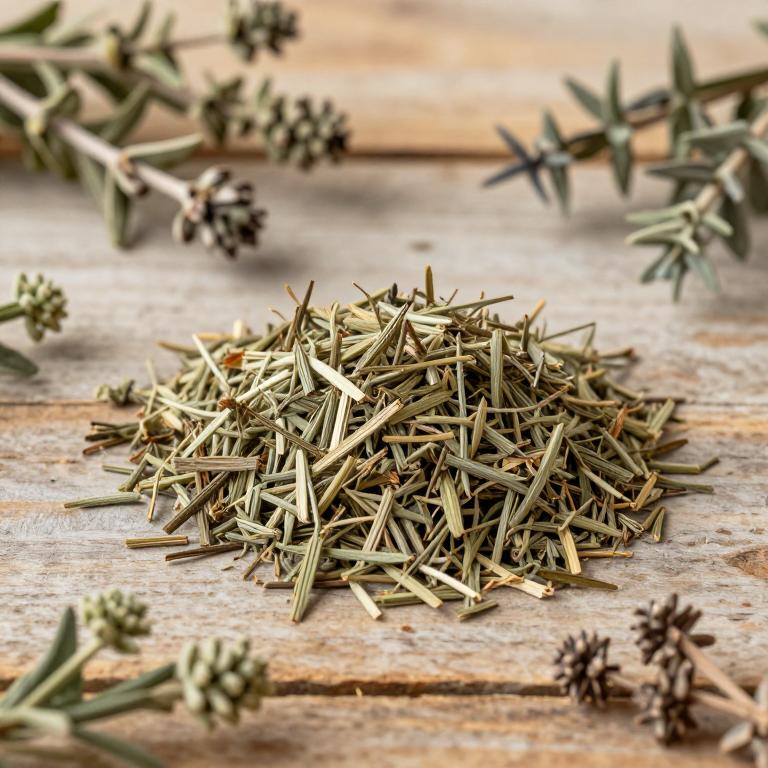
Sideritis incana, scientifically known as Sideritis incana, is a resilient perennial herb native to the Mediterranean region. Often referred to as "mountain tea," this aromatic plant is prized in traditional medicine for its potent antioxidant, anti-inflammatory, and antimicrobial properties, frequently brewed into soothing herbal infusions to support digestive health.
- Family
- Lamiaceae
- Native range
- Europe
- Parts used
- Not available
- Common names
- Not available
- Scientific synonyms
- Not available
Names and Synonyms
Scientific Names
Accepted name
Sideritis incanaSources: Wikidata, Catalogue of Life
Taxonomical Classification
This plant belongs to the kingdom Plantae and is classified under the phylum Streptophyta and the class Equisetopsida. Within the subclass Magnoliidae, it is organized into the order Lamiales and the family Lamiaceae. Finally, its specific taxonomic identity is defined by the genus Sideritis.
| Rank | Classification |
|---|---|
| Kingdom | Plantae |
| Phylum | Streptophyta |
| Class | Equisetopsida |
| Subclass | Magnoliidae |
| Order | Lamiales |
| Family | Lamiaceae |
| Genus | Sideritis |
Sources: The World Checklist of Vascular Plants (WCVP)
Distribution
This plant is primarily distributed across the Mediterranean region, spanning both Europe and Africa. In Southwestern Europe, its presence is specifically noted within the borders of Spain. Moving across the sea to Northern Africa, the species is widely found in Algeria. It also maintains a significant population throughout the territory of Morocco. Finally, its geographical range extends further east to include the country of Tunisia.
| Region | Area |
|---|---|
| Southwestern Europe | Spain |
| Northern Africa | Algeria |
| Northern Africa | Morocco |
| Northern Africa | Tunisia |
Sources: The World Checklist of Vascular Plants (WCVP)
Botanical Identification
Ecology
The ecology of Sideritis incana is characterized by its preference for specific montane and sub-montane habitats, typically thriving in rocky, well-drained terrains such as limestone crevices, cliffs, and sparse shrublands. This species is adapted to Mediterranean-type climates, exhibiting significant resilience to seasonal droughts and intense solar radiation through its morphological adaptations, such as dense, silvery trichomes that reduce transpiration. Its distribution is closely tied to altitude, occupying a distinct vertical niche within its ecosystem; while it can be found across various levels, it maintains an elevational range with a calculated mean of 942 m AMSL. This positioning allows it to interact with specific microclimates that balance temperature fluctuations and moisture availability, playing a role in the stabilization of rocky soils and providing resources within its specialized ecological niche.
- Elevational range mean:
- 942 m AMSL
Life history
The life history of Sideritis incana is characterized by a perennial lifecycle, allowing the plant to persist through multiple growing seasons. Morphologically, it is classified as a chamaephyte, a life form where the majority of the plant's regenerative buds are located close to or just above the soil surface. This specific growth habit, consistent across its life form classifications, enables the species to withstand varying environmental conditions by maintaining its vital structures near the ground level.
- Life form :
- chamaephyte
- Lifecycle :
- perennial
Morphology
The morphology of Sideritis incana is characterized by a growth form that functions as a subshrub and a herb, exhibiting a non-woody structure. It is a terrestrial plant that grows as an independent organism, meaning it does not function as a parasite. Regarding its structural habit, the plant acts as a self-supporting climber, utilizing its growth pattern to navigate its environment without reliance on a host.
- Climber :
- self-supporting
- Epiphyte :
- terrestrial
- Growth form :
- herb
- Growth form :
- subshrub
- Parasite :
- independent
- Woodiness :
- non-woody
Reproduction
The reproduction of Sideritis incana is characterized by the production of extremely lightweight seeds, which exhibit a uniform mass with a mean, maximum, and minimum value of 0.0016 g. This minimal seed mass is a critical factor in its reproductive strategy, as it facilitates a specific dispersal syndrome identified as anemochorous. By producing these fine, light seeds, the plant relies primarily on wind currents to transport its offspring across the landscape, ensuring effective colonization of suitable habitats.
- Dispersal syndrome :
- anemochorous
- Seed mass mean:
- 0.0016 g
Sources: Global Inventory of Floras and Traits (GIFT)
Activities
Sideritis incana has 2 reported activities identified across 0 scientific publications and several other databases. The most consistently reported activities include Antibacterial, Antioxidant.
| Activity | Supporting sources | Consensus |
|---|---|---|
| Antibacterial | 1 supporting sources | ★☆☆☆☆ |
| Antioxidant | 1 supporting sources | ★☆☆☆☆ |
Antibacterial
- Chemistry & biodiversity
Antioxidant
- Chemistry & biodiversity
Preparations
Sideritis incana has 1 reported preparations identified across 0 scientific publications and several other databases. The most consistently reported preparations include extracts.
| Preparation | Supporting sources | Consensus |
|---|---|---|
| Extracts | 1 supporting sources | ★☆☆☆☆ |
Extracts
- Chemistry & biodiversity