Seseli foliosum
Seseli foliosum · Accepted scientific name
Scientific literature: Very Sparse (8 studies) · ★☆☆☆☆
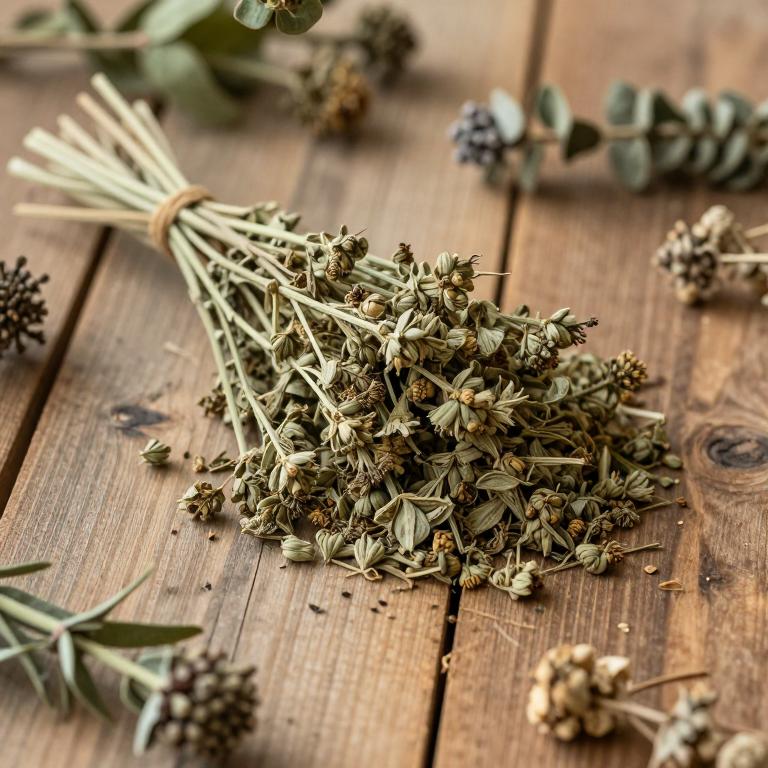
Seseli foliosum, scientifically known as Seseli foliosum, is a delicate perennial herb belonging to the Apiaceae family. Found typically in rocky, mountainous habitats, it is characterized by its distinctive foliage and fine, umbellifer flowers. While lesser-known, this plant holds significant botanical interest for its unique ecological niche.
- Family
- Apiaceae
- Native range
- Asia-Temperate
- Parts used
- Root · Seed
- Common names
- Not available
- Scientific synonyms
- Silaus Foliosus · Silaum Foliosum
Names and Synonyms
Scientific Names
Accepted name
Seseli foliosumSynonyms
- Silaus foliosus
- Silaum foliosum
Sources: Wikidata
Taxonomical Classification
This plant belongs to the kingdom Plantae and is classified under the phylum Streptophyta and the class Equisetopsida. Within the subclass Magnoliidae, it is organized under the order Apiales and the family Apiaceae. Finally, it is specifically identified by the genus Seseli.
| Rank | Classification |
|---|---|
| Kingdom | Plantae |
| Phylum | Streptophyta |
| Class | Equisetopsida |
| Subclass | Magnoliidae |
| Order | Apiales |
| Family | Apiaceae |
| Genus | Seseli |
Sources: The World Checklist of Vascular Plants (WCVP)
Distribution
This plant exhibits a specific and somewhat limited geographical range across certain mountainous regions. Its primary distribution can be found within the Caucasus, particularly throughout the Transcaucasus area. Additionally, it is documented to grow within the territory of Western Asia. Specifically, the species is known to inhabit parts of Türkiye. These locations highlight the plant's preference for the unique ecological niches found in these specific territories.
| Region | Area |
|---|---|
| Caucasus | Transcaucasus |
| Western Asia | Türkiye |
Sources: The World Checklist of Vascular Plants (WCVP)
Botanical Identification
Ecology
The ecology of Seseli foliosum is characterized by its preference for high-altitude environments, specifically thriving within mountainous regions. It is typically found colonizing stony places, where it occupies niches defined by rocky substrates and rugged terrain. This preference for lithic or montane habitats suggests an adaptation to well-drained, mineral-rich soils often associated with alpine or subalpine ecosystems.
- Habitat :
- mountains, stony places
Life history
The life history of Seseli foliosum is characterized by its nature as a perennial plant, meaning it persists through multiple growing seasons rather than completing its life cycle in a single year. Throughout its existence, the plant undergoes a recurring seasonal cycle where it establishes a robust root system to support its growth and survival during dormant periods. As a perennial species, it avoids the complete die-back seen in annuals, allowing it to accumulate energy and resources over time, which often leads to increased structural complexity and reproductive capacity in subsequent years. This longevity enables the plant to inhabit stable environments where it can establish long-term presence within its ecological niche.
- Lifecycle :
- perennial
Morphology
The morphology of Seseli foliosum is characterized by its growth form as a non-woody herb. The plant typically reaches a height ranging from a minimum of 0.3 m to a maximum of 0.75 m.
- Growth form :
- herb
- Plant height max:
- 0.75 m
- Plant height min:
- 0.3 m
- Woodiness :
- non-woody
Reproduction
The reproduction of Seseli foliosum is characterized by a specific seasonal flowering period that dictates its reproductive cycle. The plant initiates its flowering process during the month of June, marking the beginning of its reproductive phase. This flowering period continues through the subsequent month, eventually reaching its conclusion in July. This relatively concentrated window of anthesis ensures that the plant's reproductive efforts are synchronized with specific environmental conditions typical of the early summer months.
- Flowering time :
- Jun
- Flowering time :
- Jul
Sources: Global Inventory of Floras and Traits (GIFT)
Plant Parts
Seseli foliosum has 2 reported plant parts identified across 2 scientific publications and several other databases that are studied for medicinal purposes. The most consistently reported plant part include root, seed.
| Plant part | Supporting sources | Consensus |
|---|---|---|
| Root | 1 supporting sources | ★☆☆☆☆ |
| Seed | 1 supporting sources | ★☆☆☆☆ |
Root
- Molecules (Basel, Switzerland)
Seed
- Molecules (Basel, Switzerland)
Activities
Seseli foliosum has 4 reported activities identified across 2 scientific publications and several other databases. The most consistently reported activities include Antimicrobial, Antioxidant, Anxiolytic, Cytotoxic.
| Activity | Supporting sources | Consensus |
|---|---|---|
| Antimicrobial | 1 supporting sources | ★☆☆☆☆ |
| Antioxidant | 1 supporting sources | ★☆☆☆☆ |
| Anxiolytic | 1 supporting sources | ★☆☆☆☆ |
| Cytotoxic | 1 supporting sources | ★☆☆☆☆ |
Antimicrobial
- Molecules (Basel, Switzerland)
Antioxidant
- Molecules (Basel, Switzerland)
Anxiolytic
- Molecules (Basel, Switzerland)
Cytotoxic
- Molecules (Basel, Switzerland)
Conditions
Seseli foliosum has 2 reported investigations on conditions identified across 2 scientific publications and several other databases. The most consistently reported conditions include Candida glabrata, Staphylococcus aureus.
| Condition | Supporting sources | Consensus |
|---|---|---|
| Candida glabrata | 1 supporting sources | ★☆☆☆☆ |
| Staphylococcus aureus | 1 supporting sources | ★☆☆☆☆ |
Candida glabrata
- Molecules (Basel, Switzerland)
Staphylococcus aureus
- Molecules (Basel, Switzerland)