bigpod sesbania
Sesbania herbacea · Accepted scientific name
Scientific literature: Very Sparse (2 studies) · ★☆☆☆☆
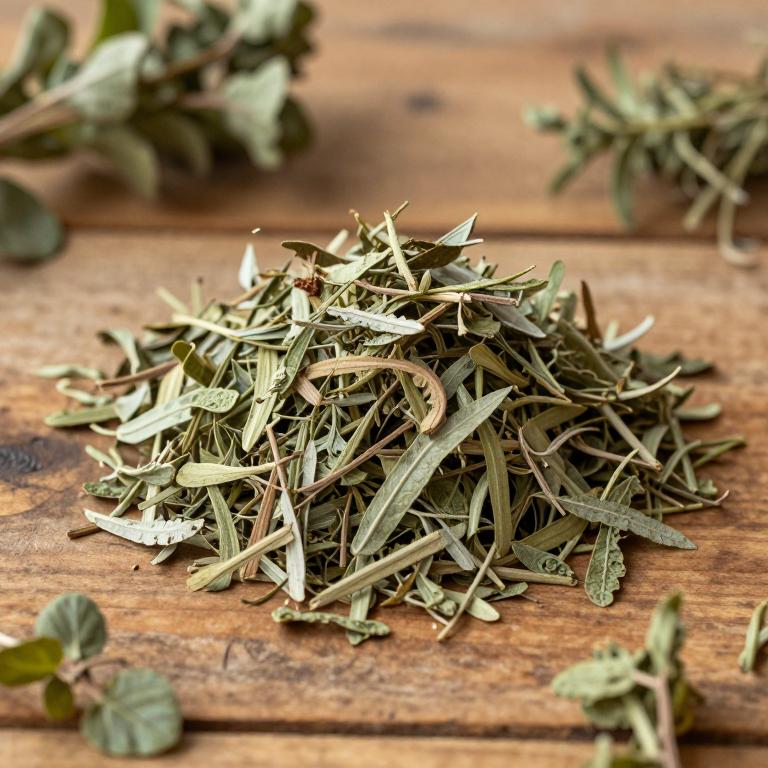
Bigpod sesbania, scientifically known as Sesbania herbacea, is a versatile medicinal herb valued in traditional wellness practices. Primarily found in tropical regions, this plant offers significant therapeutic potential. It is widely recognized for its antioxidant properties and its ability to support digestive health and manage various inflammatory conditions naturally.
Names and Synonyms
Common Names
- Colorado riverhemp
- bigpod sesbania
- Colorado river-hemp
- Danglepod
- Pencilpod Sesbania
- bagpod sesbania
- coffee weed
- Egyptian River-Hemp
- Peatree
Scientific Names
Accepted name
Sesbania herbaceaSynonyms
- Sesbania exaltata
- Darwinia exaltata
- Emerus herbaceus
- Cytisus tetragonus
- Emerus sesban var. occidentalis
- Sesbania emerus
- Sesbania macrocarpa var. picta
- Sesbania occidentalis var. multijuga
- Sesbania sonorae
- Sesbania occidentalis var. pubescens
- Sesbania cassioides
- Aeschynomene emerus
- Coronilla occidentalis
Regional and Traditional Names
Spanish:
- baiquillo
- baiguiyo
- Cáñamo de río
- baiguiyo
- baiquillo
French:
- sesbanie à gros fruits
Sources: Wikidata, Catalogue of Life
Taxonomical Classification
This plant, Sesbania herbacea, belongs to the kingdom Plantae and the phylum Streptophyta. Within the class Equisetopsida and subclass Magnoliidae, it is classified under the order Fabales and the family Fabaceae. It is specifically identified by its genus, Sesbania.
| Rank | Classification |
|---|---|
| Kingdom | Plantae |
| Phylum | Streptophyta |
| Class | Equisetopsida |
| Subclass | Magnoliidae |
| Order | Fabales |
| Family | Fabaceae |
| Genus | Sesbania |
Sources: The World Checklist of Vascular Plants (WCVP)
Distribution
This plant exhibits a broad geographical distribution spanning several distinct regions across the Eurasian continent. In Middle Europe, its presence can be observed within the borders of Belgium. Moving toward Eastern Europe, the species is found throughout Ukraine and across Central European Russia. Its range extends significantly further east into the Russian Far East, specifically within the Primorye region. Finally, the distribution reaches into Eastern Asia, where the plant is established in Japan.
| Region | Area |
|---|---|
| Middle Europe | Belgium |
| Eastern Europe | Central European Russia |
| Eastern Europe | Ukraine |
| Russian Far East | Primorye |
| Eastern Asia | Japan |
| Eastern Asia | Kazan-retto |
| North-Central U.S.A. | Illinois |
| Southwestern U.S.A. | Arizona |
| Southwestern U.S.A. | California |
| South-Central U.S.A. | New Mexico |
Sources: The World Checklist of Vascular Plants (WCVP)
Botanical Identification
Ecology
The ecology of Sesbania herbacea is characterized by its adaptability to diverse topographical settings, ranging from sea level up to an elevation of 1000 m AMSL. It is primarily found inhabiting the Cerrado (lato sensu) ecosystem, where it thrives within the specific soil and climatic conditions inherent to this biome. This broad elevational range allows the species to occupy various ecological niches across a vertical gradient, while its association with the Cerrado habitat dictates its role within these complex tropical savanna landscapes.
- Elevational range max:
- 1000 m AMSL
- Elevational range min:
- 0 m AMSL
- Habitat :
- Cerrado (lato sensu)
Life history
The life history of Sesbania herbacea is characterized by an annual lifecycle, meaning it completes its entire developmental process from seed germination to seed production within a single growing season. As an annual herb, it exhibits rapid growth patterns to capitalize on favorable environmental conditions, typically progressing through vegetative development and flowering phases with high efficiency. This synchronized life cycle ensures that the plant reaches reproductive maturity quickly, allowing it to disperse seeds before the onset of unfavorable seasonal changes. Following the successful production and dispersal of seeds, the individual plant expires, leaving the next generation to emerge from the soil during the subsequent favorable period.
- Lifecycle :
- annual
Morphology
The morphology of Sesbania herbacea is characterized by its classification as a herb and a forb, exhibiting a growth form that is fundamentally self-supporting rather than acting as a liana, vine, or climbing plant. While its habitat can span aquatic, semiaquatic, and terrestrial environments, it is fundamentally a terrestrial species that does not function as an epiphyte, whether in an obligatory, facultative, or hemi-epiphytic capacity. The plant maintains an independent life cycle, lacking any obligatory or facultative parasitic tendencies. Its structural integrity is defined by variable woodiness, allowing it to transition between non-woody and woody states depending on environmental conditions and developmental stages.
- Aquatic :
- terrestrial
- Climber :
- self-supporting
- Epiphyte :
- terrestrial
- Growth form :
- herb
- Growth form :
- forb
- Parasite :
- independent
- Woodiness :
- variable
Physiology
The physiology of Sesbania herbacea is fundamentally defined by its carbon assimilation strategy, utilizing a C3 photosynthetic pathway. This metabolic process involves the direct fixation of atmospheric carbon dioxide by the enzyme RuBisCO within the mesophyll cells, leading to the initial formation of a three-carbon compound, 3-phosphoglycerate. As a C3 plant, its physiological efficiency is highly dependent on environmental conditions, particularly temperature and water availability, as it is susceptible to photorespiration when stomatal conductance decreases. The plant's energy production and biomass accumulation are driven by this light-dependent and light-independent cycle, which governs its growth rate and nutrient distribution throughout its herbaceous structure.
- Photosynthetic pathway :
- C3
Reproduction
The reproduction of Sesbania herbacea is characterized by the production of fruit in the form of a pod, which is a dehiscent structure, meaning it opens at maturity to release its contents. The seeds produced by this species exhibit a relatively small mass, with a measured mean seed mass of 0.009803 g. There is notable variation in individual seed size, with the seed mass ranging from a minimum of 0.00578 g to a maximum of 0.0178 g. Regarding the movement of its progeny, the plant utilizes an unspecialized dispersal syndrome, indicating that its seeds are not strictly adapted to a single specific vector but rather rely on general environmental or biological processes for distribution.
- Dehiscence :
- dehiscent
- Dispersal syndrome :
- unspecialized
- Fruit type :
- pod
- Seed mass max:
- 0.0178 g
- Seed mass mean:
- 0.009803 g
- Seed mass min:
- 0.00578 g
Sources: Global Inventory of Floras and Traits (GIFT)
Chemicals
Sesbania herbacea has 1 reported phytochemicals identified across 0 scientific publications and several other databases. The most consistently reported chemicals include Uricase.
| Chemical | Supporting sources | Consensus |
|---|---|---|
| Uricase | 1 supporting sources | ★☆☆☆☆ |
Uricase
- Histochemistry