false sesame
Sesamum sesamoides · Accepted scientific name
Scientific literature: Very Sparse (5 studies) · ★☆☆☆☆
False sesame, scientifically known as Sesamum sesamoide, is a resilient medicinal herb prized in traditional wellness practices. Belonging to the Pedaliaceae family, this plant offers significant therapeutic potential. Often utilized for its unique phytochemical properties, it serves as a valuable natural resource for addressing various health concerns globally.
- Family
- Pedaliaceae
- Native range
- Africa
- Parts used
- Leaf
- Common names
- False Sesame
- Scientific synonyms
- Ceratotheca Melanosperma · Ceratotheca Sesamoides Var. Grandiflora · 6 more
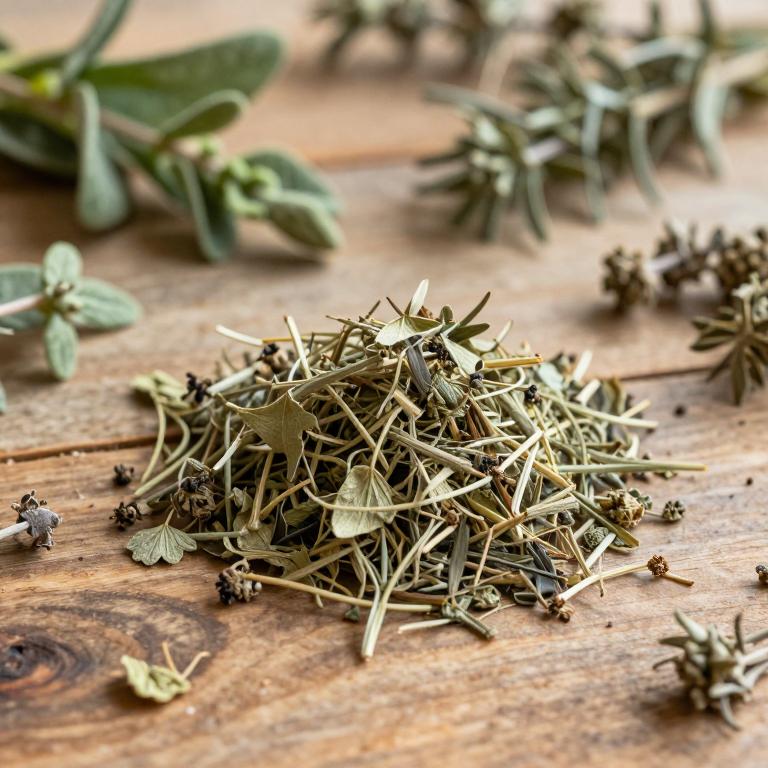
Names and Synonyms
Common Names
- false sesame
Scientific Names
Accepted name
Sesamum sesamoidesSynonyms
- Ceratotheca melanosperma
- Ceratotheca sesamoides var. grandiflora
- Ceratotheca sesamoides f. latifolia
- Ceratotheca sesamoides var. melanoptera
- Ceratotheca sesasmoides var. baoulensis
- Ceratotheca sesamoides
- Ceratotheca sesamoides var. baoulensis
- Sesamum heudelotii
Regional and Traditional Names
French:
- boungou
- faux sésame
Sources: Wikidata, Catalogue of Life
Taxonomical Classification
This plant belongs to the kingdom Plantae and is classified under the phylum Streptophyta and the class Equisetopsida. Within the subclass Magnoliidae, it is further organized into the order Lamiales and the family Pedaliaceae. Finally, its taxonomic identity is defined by the genus Sesamum.
| Rank | Classification |
|---|---|
| Kingdom | Plantae |
| Phylum | Streptophyta |
| Class | Equisetopsida |
| Subclass | Magnoliidae |
| Order | Lamiales |
| Family | Pedaliaceae |
| Genus | Sesamum |
Sources: The World Checklist of Vascular Plants (WCVP)
Distribution
This plant, Sesamum sesamoides, is primarily distributed across the West Tropical Africa region. Its presence is specifically documented within the borders of Benin. Furthermore, it can be found growing in the landscapes of Burkina and Gambia. The species also extends its range into the country of Ghana. Finally, its geographical reach includes the territory of Guinea-Bissau.
| Region | Area |
|---|---|
| West Tropical Africa | Benin |
| West Tropical Africa | Burkina |
| West Tropical Africa | Gambia |
| West Tropical Africa | Ghana |
| West Tropical Africa | Guinea-Bissau |
| West Tropical Africa | Guinea |
| West Tropical Africa | Ivory Coast |
| West Tropical Africa | Liberia |
| West Tropical Africa | Mali |
| West Tropical Africa | Mauritania |
Sources: The World Checklist of Vascular Plants (WCVP)
Botanical Identification
Ecology
The ecology of Sesamum sesamoides is characterized by a highly specific altitudinal niche, as the species is primarily found within a narrow vertical distribution. It thrives within an elevational range that begins at 900 m AMSL and extends to a maximum of 1000 m AMSL. This restricted elevational belt suggests that the plant is adapted to the specific environmental gradients, such as temperature regimes and atmospheric pressure, found within this 100-meter window. Such specialized habitat requirements indicate that its survival is closely linked to the particular climatic stability and soil conditions unique to these mid-to-high altitude zones.
- Elevational range max:
- 1000 m AMSL
- Elevational range min:
- 900 m AMSL
Life history
The life history of Sesamum sesamoides is characterized by an annual lifecycle, meaning the organism completes its entire developmental sequence—from germination and vegetative growth to flowering and seed production—within a single growing season. As a therophyte, its life form is defined by its strategy of surviving unfavorable environmental conditions through the production of seeds, which remain dormant until favorable conditions trigger a new generation. This biological strategy allows the plant to exploit seasonal resources efficiently, relying on its ephemeral presence to maintain population continuity before returning to a seed stage.
- Life form :
- therophyte
- Lifecycle :
- annual
Morphology
The morphology of Sesamum sesamoides is characterized by its growth form as a non-woody herb. As a terrestrial species, it does not exhibit aquatic or semiaquatic tendencies, nor does it function as an epiphyte. The plant is an independent organism, meaning it does not act as a parasite, and it is entirely self-supporting rather than being a liana, vine, or any other type of climber. In terms of stature, it reaches a maximum plant height of approximately 1.2 m, with a mean height also recorded at 1.2 m.
- Aquatic :
- terrestrial
- Climber :
- self-supporting
- Epiphyte :
- terrestrial
- Growth form :
- herb
- Parasite :
- independent
- Plant height mean:
- 1.2 m
- Woodiness :
- non-woody
Physiology
The physiology of Sesamum sesamoides is characterized by its metabolic processes and nutrient acquisition strategies, which are fundamental to its growth and development. Unlike many members of the Fabaceae family, this species does not function as a nitrogen fixer; it lacks the specialized symbiotic relationship with rhizobia bacteria required to convert atmospheric nitrogen into usable forms, meaning it is not a nitrogen fixer and relies instead on the uptake of nitrates and ammonium from the soil. The plant exhibits a robust photosynthetic capacity, utilizing C3 metabolic pathways to convert light energy into chemical energy, supporting the rapid accumulation of biomass and the synthesis of complex lipids within its seeds. Its physiological regulation is highly sensitive to water availability and soil nutrient profiles, particularly phosphorus and nitrogen levels, which dictate its reproductive success and the oil content of its seeds. Furthermore, the plant employs various physiological mechanisms to manage osmotic stress and maintain cellular integrity during fluctuating environmental conditions.
- Nitrogen fixer :
- no
Reproduction
The reproduction of Sesamum sesamoides is characterized by a biological mechanism where self-fertilization is present, ensuring the continuation of the species through autogamy. The resulting progeny are contained within seeds that exhibit a highly consistent and precise mass profile. The seed mass follows a very narrow range, with a minimum mass of 0.00134 g and a maximum mass of 0.00135 g, resulting in a calculated mean seed mass of 0.001345 g. This uniformity in seed weight suggests a stabilized reproductive output optimized for the plant's specific ecological niche.
- Seed mass max:
- 0.00135 g
- Seed mass mean:
- 0.001345 g
- Seed mass min:
- 0.00134 g
- Self fertilization :
- present
Sources: Global Inventory of Floras and Traits (GIFT)
Plant Parts
Sesamum sesamoides has 1 reported plant parts identified across 1 scientific publications and several other databases that are studied for medicinal purposes. The most consistently reported plant part include leaf.
| Plant part | Supporting sources | Consensus |
|---|---|---|
| Leaf | 1 supporting sources | ★☆☆☆☆ |
Leaf
- Journal of ethnopharmacology
Activities
Sesamum sesamoides has 4 reported activities identified across 1 scientific publications and several other databases. The most consistently reported activities include Antibacterial, Antidiabetic, Antiplasmodial, Antiviral.
| Activity | Supporting sources | Consensus |
|---|---|---|
| Antibacterial | 1 supporting sources | ★☆☆☆☆ |
| Antidiabetic | 1 supporting sources | ★☆☆☆☆ |
| Antiplasmodial | 1 supporting sources | ★☆☆☆☆ |
| Antiviral | 1 supporting sources | ★☆☆☆☆ |
Antibacterial
- Journal of ethnopharmacology
Antidiabetic
- Journal of ethnopharmacology
Antiplasmodial
- Journal of ethnopharmacology
Antiviral
- Journal of ethnopharmacology
Preparations
Sesamum sesamoides has 1 reported preparations identified across 1 scientific publications and several other databases. The most consistently reported preparations include Methanolic extracts.
| Preparation | Supporting sources | Consensus |
|---|---|---|
| Methanolic extracts | 1 supporting sources | ★☆☆☆☆ |
Methanolic extracts
- Pakistan journal of biological sciences : PJBS