Sesamum radiatum
Sesamum radiatum · Accepted scientific name
Scientific literature: Very Sparse (16 studies) · ★☆☆☆☆
Sesamum radixatum, scientifically known as Sesamum radixatum, is a versatile medicinal plant belonging to the Pedaliaceae family. Renowned for its diverse therapeutic properties, this species is frequently utilized in traditional medicine to treat various ailments, offering significant phytochemical benefits and contributing to the growing field of ethnopharmacology.
- Family
- Pedaliaceae
- Native range
- Africa
- Parts used
- Seed
- Common names
- Not available
- Scientific synonyms
- Sesamopteris Radiata · Sesamum Biapiculatum · 3 more
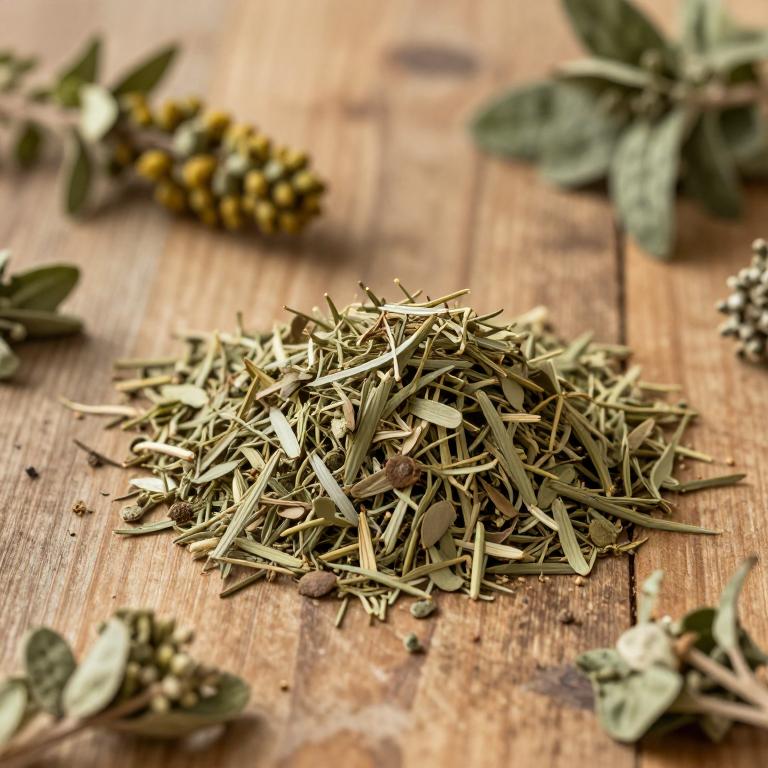
Names and Synonyms
Scientific Names
Accepted name
Sesamum radiatumSynonyms
- Sesamopteris radiata
- Sesamum biapiculatum
- Sesamum mombanzense
- Sesamum talbotii
- Sesamum thonneri
Sources: Wikidata, Catalogue of Life
Taxonomical Classification
This plant belongs to the kingdom Plantae and is classified within the phylum Streptophyta and the class Equisetopsida. Following the subclass Magnoliidae, it is organized under the order Lamiales and the family Pedaliaceae. Ultimately, it is identified by the genus Sesamum.
| Rank | Classification |
|---|---|
| Kingdom | Plantae |
| Phylum | Streptophyta |
| Class | Equisetopsida |
| Subclass | Magnoliidae |
| Order | Lamiales |
| Family | Pedaliaceae |
| Genus | Sesamum |
Sources: The World Checklist of Vascular Plants (WCVP)
Distribution
This plant exhibits a specific geographical distribution that spans across both Macaronesia and West Tropical Africa. Within the Macaronesian islands, its presence is noted in Cape Verde. Moving into West Tropical Africa, the species can be found inhabiting various regions including Benin and Burkina. Furthermore, the plant extends its range through the coastal and inland territories of Gambia. Finally, its distribution reaches as far as Ghana, illustrating its presence across multiple West African nations.
| Region | Area |
|---|---|
| Macaronesia | Cape Verde |
| West Tropical Africa | Benin |
| West Tropical Africa | Burkina |
| West Tropical Africa | Gambia |
| West Tropical Africa | Ghana |
| West Tropical Africa | Guinea-Bissau |
| West Tropical Africa | Guinea |
| West Tropical Africa | Ivory Coast |
| West Tropical Africa | Liberia |
| West Tropical Africa | Mali |
Sources: The World Checklist of Vascular Plants (WCVP)
Botanical Identification
Ecology
The ecology of Sesamum radiatum is fundamentally characterized by its preference for open vegetation, where it thrives in environments with high light availability and minimal canopy competition. This species typically occupies disturbed or semi-arid landscapes, settling in areas where the ground cover is sparse, allowing it to establish itself within grassy openings or scrublands. By inhabiting these open niches, the plant optimizes its exposure to solar radiation, which is critical for its metabolic processes and reproductive success. The lack of dense overhead foliage in its preferred habitat ensures that it can access the necessary resources to sustain its growth cycles within these specific ecological zones.
- Habitat :
- open vegetation
Life history
The life history of Sesamum radiatum is characterized by an annual lifecycle, meaning the plant completes its entire developmental process from germination to seed production within a single growing season. In terms of its botanical life form, it is classified as a therophyte, a strategy where the plant survives unfavorable environmental conditions primarily through dormant seeds, allowing the vegetative structure to perish at the end of the season while ensuring the next generation awaits optimal conditions.
- Life form :
- therophyte
- Lifecycle :
- annual
Morphology
The morphology of Sesamum radiatum is characterized by its growth form as a non-woody herb. The plant is strictly terrestrial in its ecological habit, functioning as an independent organism rather than an epiphyte or parasite. As a self-supporting species, it does not exhibit climbing tendencies such as liana or vine behaviors. In terms of stature, the plant reaches a maximum height of 1.2 m, with an average height of approximately 0.80 m.
- Aquatic :
- terrestrial
- Climber :
- self-supporting
- Epiphyte :
- terrestrial
- Growth form :
- herb
- Parasite :
- independent
- Plant height max:
- 1.2 m
- Plant height mean:
- 0.8048037065 m
- Woodiness :
- non-woody
Physiology
The physiology of Sesamum radiatum is characterized by its metabolic processes and nutrient acquisition strategies, particularly regarding its interaction with soil chemistry. In terms of its symbiotic capabilities, the plant does not function as a nitrogen fixer; it lacks the specialized root nodules and the necessary symbiotic relationship with nitrogen-fixing bacteria, such as Rhizobium, required to convert atmospheric nitrogen into bioavailable forms. Consequently, its physiological growth and development are heavily dependent on the availability of exogenous nitrogen sources within the soil profile. The plant's metabolic pathways are geared toward the efficient uptake of nitrates and ammonium from the substrate to support its cellular functions, protein synthesis, and overall biomass production.
- Nitrogen fixer :
- no
Reproduction
Reproduction in Sesamum radiatum is characterized by specific physiological and morphological traits, most notably the capacity for self-fertilization, which is present within the species. The reproductive output is defined by its seed characteristics, where the seed mass is remarkably consistent across observed samples. Quantitative data indicates that the seed mass maintains a uniform value, with a mean, maximum, and minimum all recorded at 0.00185 g. This lack of variance in seed mass suggests a highly stabilized reproductive strategy regarding the energy investment per individual seed.
- Seed mass mean:
- 0.00185 g
- Self fertilization :
- present
Sources: Global Inventory of Floras and Traits (GIFT)
Plant Parts
Sesamum radiatum has 1 reported plant parts identified across 1 scientific publications and several other databases that are studied for medicinal purposes. The most consistently reported plant part include seed.
| Plant part | Supporting sources | Consensus |
|---|---|---|
| Seed | 1 supporting sources | ★☆☆☆☆ |
Seed
- Brazilian journal of biology = Revista brasleira de biologia
Chemicals
Sesamum radiatum has 4 reported phytochemicals identified across 1 scientific publications and several other databases. The most consistently reported chemicals include Lignans, Sesamol, Sesamolin, sesamin.
| Chemical | Supporting sources | Consensus |
|---|---|---|
| Lignans | 1 supporting sources | ★☆☆☆☆ |
| Sesamol | 1 supporting sources | ★☆☆☆☆ |
| Sesamolin | 1 supporting sources | ★☆☆☆☆ |
| sesamin | 1 supporting sources | ★☆☆☆☆ |
Lignans
- African journal of traditional, complementary, and alternative medicines : AJTCAM
Sesamol
- African journal of traditional, complementary, and alternative medicines : AJTCAM
Sesamolin
- African journal of traditional, complementary, and alternative medicines : AJTCAM
sesamin
- African journal of traditional, complementary, and alternative medicines : AJTCAM
Activities
Sesamum radiatum has 1 reported activities identified across 1 scientific publications and several other databases. The most consistently reported activities include Bacteriostatic.
| Activity | Supporting sources | Consensus |
|---|---|---|
| Bacteriostatic | 1 supporting sources | ★☆☆☆☆ |
Bacteriostatic
- Brazilian journal of biology = Revista brasleira de biologia
Conditions
Sesamum radiatum has 4 reported investigations on conditions identified across 1 scientific publications and several other databases. The most consistently reported conditions include Bacillus cereus, Candida albicans, Escherichia coli, Staphylococcus aureus.
| Condition | Supporting sources | Consensus |
|---|---|---|
| Bacillus cereus | 1 supporting sources | ★☆☆☆☆ |
| Candida albicans | 1 supporting sources | ★☆☆☆☆ |
| Escherichia coli | 1 supporting sources | ★☆☆☆☆ |
| Staphylococcus aureus | 1 supporting sources | ★☆☆☆☆ |
Bacillus cereus
- Brazilian journal of biology = Revista brasleira de biologia
Candida albicans
- Brazilian journal of biology = Revista brasleira de biologia
Escherichia coli
- Brazilian journal of biology = Revista brasleira de biologia
Staphylococcus aureus
- Brazilian journal of biology = Revista brasleira de biologia
Preparations
Sesamum radiatum has 1 reported preparations identified across 1 scientific publications and several other databases. The most consistently reported preparations include plant seeds powder.
| Preparation | Supporting sources | Consensus |
|---|---|---|
| Plant seeds powder | 1 supporting sources | ★☆☆☆☆ |
Plant seeds powder
- Brazilian journal of biology = Revista brasleira de biologia