Senna velutina
Senna velutina · Accepted scientific name
Scientific literature: Very Sparse (7 studies) · ★☆☆☆☆
, scientifically known as Senna velutina, is a remarkable medicinal shrub native to specific tropical regions. Renowned for its potent bioactive compounds, this plant is traditionally utilized for its powerful laxative properties. Understanding its chemical profile is essential for exploring its potential roles in modern pharmacological developments and herbal medicine.
- Family
- Fabaceae
- Native range
- Southern America
- Parts used
- Leaf · Root
- Common names
- Not available
- Scientific synonyms
- Cassia Velutina · Cassia Dysophylla
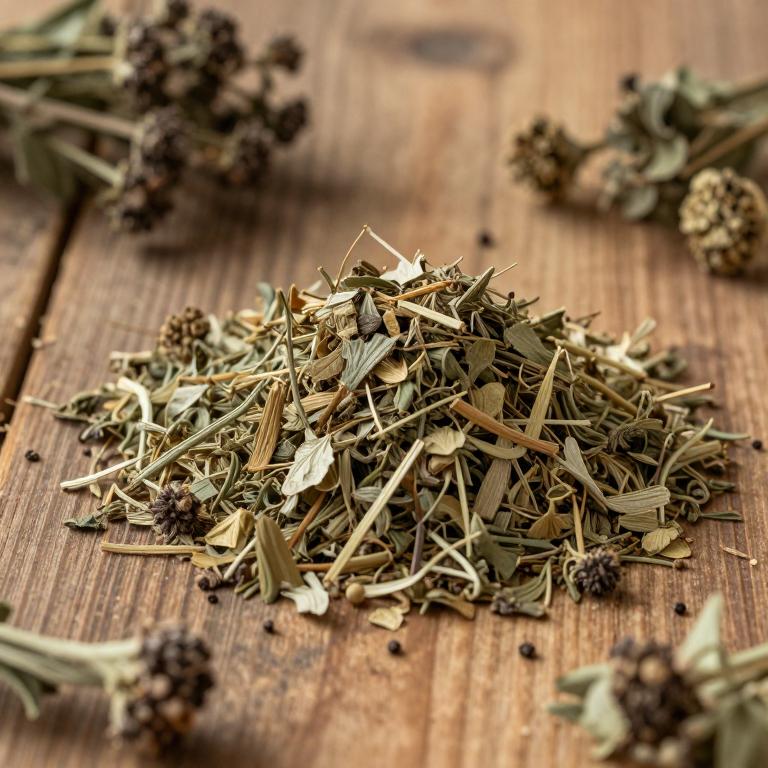
Names and Synonyms
Scientific Names
Accepted name
Senna velutinaSynonyms
- Cassia velutina
- Cassia dysophylla
Sources: Wikidata
Taxonomical Classification
This plant belongs to the kingdom Plantae and the phylum Streptophyta, falling under the class Equisetopsida and subclass Magnoliidae. Within the order Fabales, it is classified under the family Fabaceae. Finally, it is identified by the genus Senna, specifically as the species Senna velutina.
| Rank | Classification |
|---|---|
| Kingdom | Plantae |
| Phylum | Streptophyta |
| Class | Equisetopsida |
| Subclass | Magnoliidae |
| Order | Fabales |
| Family | Fabaceae |
| Genus | Senna |
Sources: The World Checklist of Vascular Plants (WCVP)
Distribution
This plant exhibits a diverse presence across several regions of the South American continent. In Northern South America, its distribution includes the countries of Guyana and Venezuela. Moving toward the western part of the continent, the species can also be found in Bolivia. Within Brazil, it is widely spread throughout the Northeast region. Additionally, the plant is documented to grow within the West-Central area of Brazil.
| Region | Area |
|---|---|
| Northern South America | Guyana |
| Northern South America | Venezuela |
| Western South America | Bolivia |
| Brazil | Brazil West-Central |
| Brazil | Brazil Northeast |
| Brazil | Brazil Southeast |
| Brazil | Brazil North |
| Southern South America | Paraguay |
Sources: The World Checklist of Vascular Plants (WCVP)
Botanical Identification
Ecology
The ecology of Senna velutina is characterized by its preference for the Cerrado (latu sensu) biome, where it integrates into the complex structural and biological diversity of this tropical savanna ecosystem. This species is adapted to low-altitude environments, occupying an elevational range that begins at sea level (0 m AMSL) and extends up to a maximum of 500 m AMSL. Within these specific altitudinal limits, the plant thrives under the environmental conditions typical of the Cerrado, which often include seasonal rainfall patterns and nutrient-limited soils.
- Elevational range max:
- 500 m AMSL
- Elevational range min:
- 0 m AMSL
- Habitat :
- Cerrado (lato sensu)
Life history
The life history of Senna velutina is characterized by its classification as a perennial species, allowing it to persist in its environment over multiple growing seasons. As a perennial, the plant does not complete its life cycle in a single season like annuals or two seasons like biennials; instead, it maintains a continuous presence, often developing robust root systems that support repeated vegetative growth and flowering cycles. This longevity enables the plant to adapt to seasonal fluctuations and establish a stable footprint within its ecological niche, contributing to its long-term survival and reproductive success through successive years.
- Lifecycle :
- perennial
Morphology
The morphology of Senna velutina is characterized by its growth form as a woody shrub, exhibiting a self-supporting structure that reaches a maximum plant height of approximately 3 meters. As a terrestrial species, it does not function as an aquatic, semiaquatic, or epiphytic plant, maintaining an independent existence without being an obligatory or facultative parasite. Its growth habit is strictly self-supporting rather than acting as a liana, vine, or climber, and it develops a distinct woody composition throughout its stems.
- Aquatic :
- terrestrial
- Climber :
- self-supporting
- Epiphyte :
- terrestrial
- Growth form :
- tree
- Growth form :
- shrub
- Parasite :
- independent
- Plant height max:
- 3 m
- Woodiness :
- woody
Sources: Global Inventory of Floras and Traits (GIFT)
Plant Parts
Senna velutina has 2 reported plant parts identified across 2 scientific publications and several other databases that are studied for medicinal purposes. The most consistently reported plant part include leaf, root.
| Plant part | Supporting sources | Consensus |
|---|---|---|
| Leaf | 1 supporting sources | ★☆☆☆☆ |
| Root | 1 supporting sources | ★☆☆☆☆ |
Leaf
- Oxidative medicine and cellular longevity
Root
- Pharmaceuticals (Basel, Switzerland)
Chemicals
Senna velutina has 4 reported phytochemicals identified across 2 scientific publications and several other databases. The most consistently reported chemicals include Epicatechin, Epigallocatechin, Flavonoids, RUTIN.
| Chemical | Supporting sources | Consensus |
|---|---|---|
| Epicatechin | 1 supporting sources | ★☆☆☆☆ |
| Epigallocatechin | 1 supporting sources | ★☆☆☆☆ |
| Flavonoids | 1 supporting sources | ★☆☆☆☆ |
| RUTIN | 1 supporting sources | ★☆☆☆☆ |
Epicatechin
- Oxidative medicine and cellular longevity
Epigallocatechin
- Oxidative medicine and cellular longevity
Flavonoids
- Oxidative medicine and cellular longevity
RUTIN
- Oxidative medicine and cellular longevity
Conditions
Senna velutina has 1 reported investigations on conditions identified across 2 scientific publications and several other databases. The most consistently reported conditions include melanoma.
| Condition | Supporting sources | Consensus |
|---|---|---|
| Melanoma | 1 supporting sources | ★☆☆☆☆ |
Melanoma
- Pharmaceuticals (Basel, Switzerland)
Preparations
Senna velutina has 2 reported preparations identified across 2 scientific publications and several other databases. The most consistently reported preparations include ethanol extract, extract of the roots.
| Preparation | Supporting sources | Consensus |
|---|---|---|
| Ethanol extract | 1 supporting sources | ★☆☆☆☆ |
| Extract of the roots | 1 supporting sources | ★☆☆☆☆ |
Ethanol extract
- Oxidative medicine and cellular longevity
Extract of the roots
- Pharmaceuticals (Basel, Switzerland)