Munzungu
Senna singueana · Accepted scientific name
Scientific literature: Very Sparse (31 studies) · ★☆☆☆☆
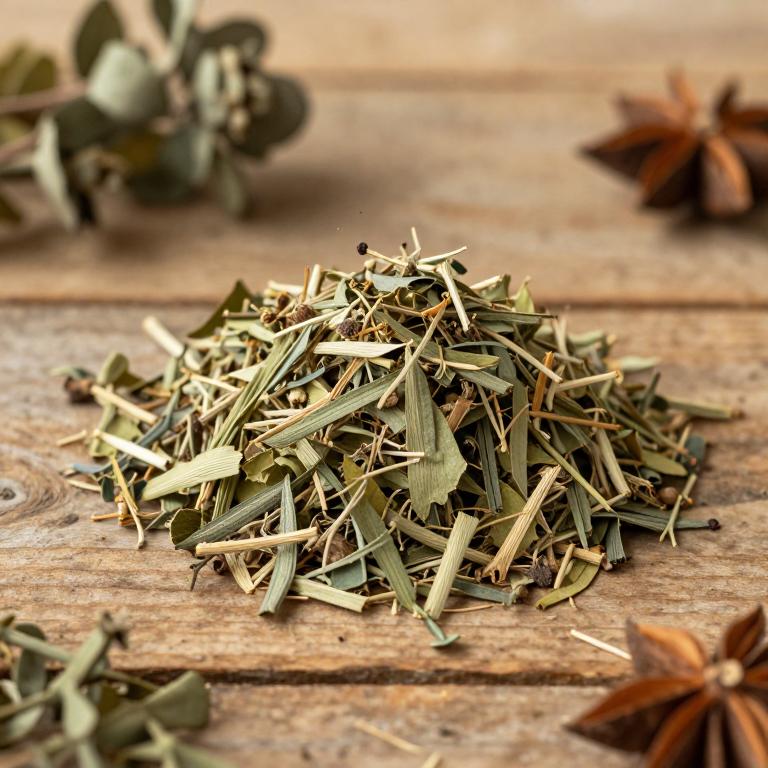
Munzungu, scientifically known as Senna singueana, is a versatile medicinal shrub native to tropical Africa. Renowned for its therapeutic properties, it is widely utilized in traditional medicine to treat digestive issues, skin ailments, and inflammatory conditions. This resilient plant offers significant pharmacological potential for modern healthcare and holistic wellness.
Names and Synonyms
Common Names
- Munzungu
- Scrambled-Egg Tree
- Sticky Pod
- Winter Senna
- wild cassia
Scientific Names
Accepted name
Senna singueanaSynonyms
- Cassia singueana var. flavescens
- Cassia singueana var. glabra
- Cassia sabak
- Cassia singueana
- Cassia goratensis var. flavescens
- Cassia goratensis var. glabra
- Cassia tettensis
- Cassia goratensis var. kethulleana
- Cassia zanzibarensis
- Cassia singueana var. kethulleana
- Cassia goratensis
- Cassia kethulleana
Sources: Wikidata, Catalogue of Life
Taxonomical Classification
This plant belongs to the kingdom Plantae within the phylum Streptophyta and the class Equisetopsida. It is further classified under the subclass Magnoliidae in the order Fabales. Finally, it is a member of the family Fabaceae and is identified by the genus Sennia.
| Rank | Classification |
|---|---|
| Kingdom | Plantae |
| Phylum | Streptophyta |
| Class | Equisetopsida |
| Subclass | Magnoliidae |
| Order | Fabales |
| Family | Fabaceae |
| Genus | Senna |
Sources: The World Checklist of Vascular Plants (WCVP)
Distribution
This plant is primarily distributed across the West Tropical Africa region. Within this geographical zone, it can be found growing in the country of Benin. It is also widely documented as occurring throughout Burkina Faso. Furthermore, the species extends its range into Ghana and the Ivory Coast. Finally, its natural habitat includes the territory of Mali.
| Region | Area |
|---|---|
| West Tropical Africa | Benin |
| West Tropical Africa | Burkina |
| West Tropical Africa | Ghana |
| West Tropical Africa | Ivory Coast |
| West Tropical Africa | Mali |
| West Tropical Africa | Nigeria |
| West Tropical Africa | Niger |
| West Tropical Africa | Senegal |
| West-Central Tropical Africa | Burundi |
| West-Central Tropical Africa | Central African Republic |
Sources: The World Checklist of Vascular Plants (WCVP)
Botanical Identification
Ecology
The ecology of Senna singueana is characterized by its adaptability to diverse landscapes, thriving primarily in bushed or wooded grasslands, dry or coastal bushland, and riverine environments. This species occupies a specific altitudinal niche, with its elevational range spanning from a minimum of 1100 m AMSL to a maximum of 1950 m AMSL.
- Elevational range max:
- 1950 m AMSL
- Elevational range min:
- 1100 m AMSL
- Habitat :
- bushed or wooded grassland, dry or coastal bushland, also riverine
Life history
The life history of Senna singueana is characterized by its existence as a perennial plant, allowing it to persist in its ecosystem over multiple growing seasons. As a phanerophyte, it maintains its buds well above the ground, typically developing into a woody shrub or small tree that can withstand seasonal environmental shifts. This species exhibits a deciduous nature, shedding its foliage periodically, which is often an adaptive strategy to manage water loss during dry periods. Its structural classification as a phanerophyte further reinforces its growth habit of investing in permanent, elevated woody structures that support its long-term survival and reproductive cycles.
- Deciduousness :
- deciduous
- Life form :
- phanerophyte
- Lifecycle :
- perennial
Morphology
The morphology of Senna singueana is characterized by its robust growth form, specifically classified as a woody tree. This species is a terrestrial plant that functions as an independent organism, neither acting as a parasite nor as an epiphyte. As a self-supporting structure, it does not exhibit climbing behavior. The plant's stature varies significantly depending on environmental conditions, with a minimum height of 1 m and a mean height of approximately 5 m, though it can reach a maximum height of up to 9.14 m.
- Aquatic :
- terrestrial
- Climber :
- self-supporting
- Epiphyte :
- terrestrial
- Growth form :
- tree
- Parasite :
- independent
- Plant height max:
- 9.144111192 m
- Plant height mean:
- 5 m
- Plant height min:
- 1 m
- Woodiness :
- woody
Physiology
The physiology of Senna singueana is characterized by a C3 photosynthetic pathway, which dictates its carbon fixation mechanism and metabolic efficiency under varying environmental conditions. As a member of the Fabaceae family, it follows the standard C3 cycle where CO2 is fixed directly by the enzyme RuBisCO, making its photosynthetic rate highly dependent on moisture availability and light intensity. Despite its taxonomic classification within a family well-known for symbiotic relationships, this specific species is not a nitrogen fixer, meaning it does not possess the physiological capacity to form symbiotic associations with rhizobia for atmospheric nitrogen fixation. Consequently, its growth and physiological vigor are heavily reliant on the availability of nitrogenous compounds within the soil matrix.
- Nitrogen fixer :
- no
- Photosynthetic pathway :
- C3
Reproduction
The reproduction of Senna singueana is characterized by a biotic pollination syndrome, primarily driven by insect activity, with bees serving as a key pollinator group. Following successful fertilization, the plant develops its fruit in the form of a pod. This fruit is classified as dehiscence-type, meaning it splits open at maturity to facilitate seed dispersal. The seeds produced by the plant exhibit varying sizes, with a recorded minimum seed mass of 0.04118 g and a maximum seed mass of 0.10973 g, resulting in a mean seed mass of approximately 0.0678 g.
- Dehiscence :
- dehiscent
- Fruit type :
- pod
- Pollination syndrome :
- insect
- Pollination syndrome :
- bee
- Pollination syndrome :
- biotic
- Seed mass max:
- 0.10973 g
- Seed mass mean:
- 0.0678 g
- Seed mass min:
- 0.04118 g
Sources: Global Inventory of Floras and Traits (GIFT)
Plant Parts
Senna singueana has 3 reported plant parts identified across 5 scientific publications and several other databases that are studied for medicinal purposes. The most consistently reported plant part include leaf, root, stem.
| Plant part | Supporting sources | Consensus |
|---|---|---|
| Leaf | 2 supporting sources | ★☆☆☆☆ |
| Root | 2 supporting sources | ★☆☆☆☆ |
| Stem | 1 supporting sources | ★☆☆☆☆ |
Leaf
- Acta poloniae pharmaceutica
- Journal of ethnopharmacology
Root
- Acta poloniae pharmaceutica
- Evidence-based complementary and alternative medicine : eCAM
Stem
- Acta poloniae pharmaceutica
Chemicals
Senna singueana has 7 reported phytochemicals identified across 5 scientific publications and several other databases. The most consistently reported chemicals include Anthraquinones, Fatty acids, Flavonoids, Phenols, Saponins.
| Chemical | Supporting sources | Consensus |
|---|---|---|
| Anthraquinones | 1 supporting sources | ★☆☆☆☆ |
| Fatty acids | 1 supporting sources | ★☆☆☆☆ |
| Flavonoids | 1 supporting sources | ★☆☆☆☆ |
| Phenols | 1 supporting sources | ★☆☆☆☆ |
| Saponins | 1 supporting sources | ★☆☆☆☆ |
| Tannins | 1 supporting sources | ★☆☆☆☆ |
| triterpenoids | 1 supporting sources | ★☆☆☆☆ |
Anthraquinones
- Phytochemical analysis : PCA
Fatty acids
- Acta poloniae pharmaceutica
Flavonoids
- Evidence-based complementary and alternative medicine : eCAM
Phenols
- Evidence-based complementary and alternative medicine : eCAM
Saponins
- Evidence-based complementary and alternative medicine : eCAM
Tannins
- Evidence-based complementary and alternative medicine : eCAM
triterpenoids
- Acta poloniae pharmaceutica
Activities
Senna singueana has 5 reported activities identified across 5 scientific publications and several other databases. The most consistently reported activities include Antibacterial, Antifungal, Anticancer, Antimalarial, Antioxidant.
| Activity | Supporting sources | Consensus |
|---|---|---|
| Antibacterial | 2 supporting sources | ★☆☆☆☆ |
| Antifungal | 2 supporting sources | ★☆☆☆☆ |
| Anticancer | 1 supporting sources | ★☆☆☆☆ |
| Antimalarial | 1 supporting sources | ★☆☆☆☆ |
| Antioxidant | 1 supporting sources | ★☆☆☆☆ |
Antibacterial
- Heliyon
- Phytochemical analysis : PCA
Antifungal
- Heliyon
- Phytochemical analysis : PCA
Anticancer
- Phytochemical analysis : PCA
Antimalarial
- Heliyon
Antioxidant
- Heliyon
Conditions
Senna singueana has 7 reported investigations on conditions identified across 5 scientific publications and several other databases. The most consistently reported conditions include cancer, Snakebite envenomation, bilharzia, epilepsy, malaria.
| Condition | Supporting sources | Consensus |
|---|---|---|
| Cancer | 2 supporting sources | ★☆☆☆☆ |
| Snakebite envenomation | 1 supporting sources | ★☆☆☆☆ |
| Bilharzia | 1 supporting sources | ★☆☆☆☆ |
| Epilepsy | 1 supporting sources | ★☆☆☆☆ |
| Malaria | 1 supporting sources | ★☆☆☆☆ |
| Typhoid | 1 supporting sources | ★☆☆☆☆ |
| Ulcer | 1 supporting sources | ★☆☆☆☆ |
Cancer
- Heliyon
- Anti-cancer agents in medicinal chemistry
Snakebite envenomation
- Evidence-based complementary and alternative medicine : eCAM
Bilharzia
- Heliyon
Epilepsy
- Heliyon
Malaria
- Heliyon
Typhoid
- Heliyon
Ulcer
- Heliyon
Preparations
Senna singueana has 2 reported preparations identified across 5 scientific publications and several other databases. The most consistently reported preparations include methanol extract of leaves, roots.
| Preparation | Supporting sources | Consensus |
|---|---|---|
| Methanol extract of leaves | 1 supporting sources | ★☆☆☆☆ |
| Roots | 1 supporting sources | ★☆☆☆☆ |
Methanol extract of leaves
- Journal of ethnopharmacology
Roots
- Evidence-based complementary and alternative medicine : eCAM