Senna silvestris
Senna silvestris · Accepted scientific name
Scientific literature: Very Sparse (3 studies) · ★☆☆☆☆
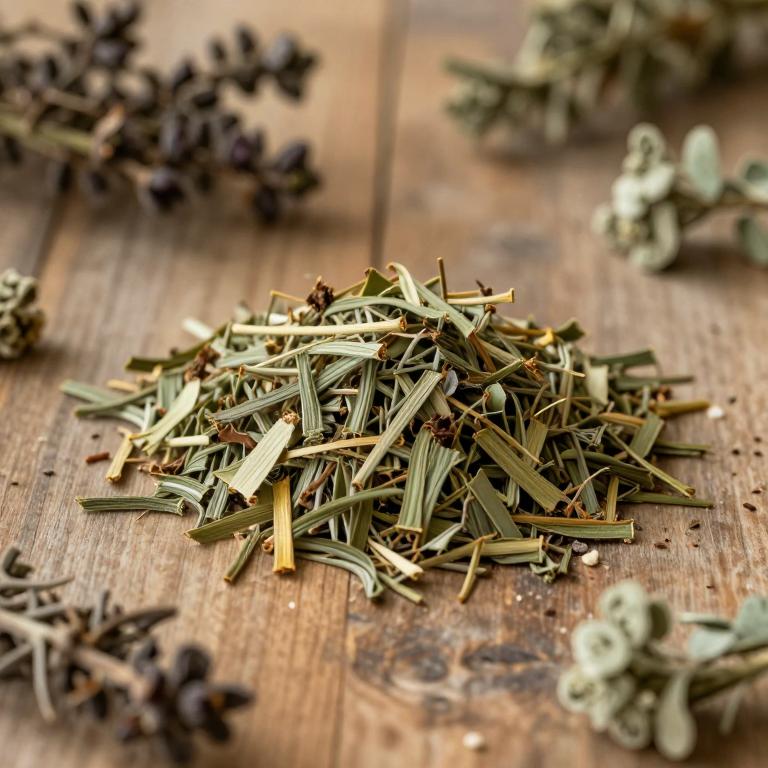
Senna silvestris, scientifically known as Senna silvestris, is a robust medicinal shrub valued for its potent therapeutic properties. Primarily recognized for its powerful laxative effects, it contains natural anthraquinones. This plant is frequently utilized in traditional medicine to treat digestive ailments and support overall gastrointestinal health and detoxification.
- Family
- Fabaceae
- Native range
- Southern America
- Parts used
- Leaf
- Common names
- Not available
- Scientific synonyms
- Cassia Silvestris
Names and Synonyms
Scientific Names
Accepted name
Senna silvestrisSynonyms
- Cassia silvestris
Sources: Wikidata, Catalogue of Life
Taxonomical Classification
This plant belongs to the kingdom Plantae and the phylum Streptophyta, falling under the class Equisetopsida and subclass Magnoliidae. Within the order Fabales, it is classified under the family Fabaceae. Finally, its specific taxonomic placement is within the genus Senna.
| Rank | Classification |
|---|---|
| Kingdom | Plantae |
| Phylum | Streptophyta |
| Class | Equisetopsida |
| Subclass | Magnoliidae |
| Order | Fabales |
| Family | Fabaceae |
| Genus | Senna |
Sources: The World Checklist of Vascular Plants (WCVP)
Distribution
This plant exhibits a broad geographical distribution across several regions of the South American continent. In the northern part of the continent, it can be found inhabiting the territories of Guyana, Suriname, and Venezuela. Moving toward the western side of the continent, the species also establishes itself within the borders of Colombia. Additionally, its presence extends further south into the western region of Bolivia. Together, these locations highlight the diverse environmental range of Senna silvestris.
| Region | Area |
|---|---|
| Northern South America | Guyana |
| Northern South America | Suriname |
| Northern South America | Venezuela |
| Western South America | Bolivia |
| Western South America | Colombia |
| Western South America | Peru |
| Brazil | Brazil West-Central |
| Brazil | Brazil Northeast |
| Brazil | Brazil Southeast |
| Brazil | Brazil North |
Sources: The World Checklist of Vascular Plants (WCVP)
Botanical Identification
Ecology
The ecology of Sennat silvestris is characterized by its presence in high-altitude forest environments, specifically within the Bosque alto habitat. This species demonstrates a broad vertical distribution across various landscapes, occupying an elevational range that begins at sea level (0 m AMSL) and extends up to a maximum altitude of 1300 m AMSL.
- Elevational range max:
- 1300 m AMSL
- Elevational range min:
- 0 m AMSL
- Habitat :
- Bosque alto
Life history
The life history of Senna silvestris is characterized by its status as a perennial plant, allowing it to persist in its environment through multiple growing seasons. As a perennial species, it avoids the complete die-off experienced by annuals, instead establishing a robust presence that enables it to undergo repeated cycles of vegetative growth and reproductive flowering. This long-term survival strategy allows the plant to adapt to seasonal fluctuations and invest energy into a stable root system, which supports its continued development and ability to produce seeds over several years.
- Lifecycle :
- perennial
Morphology
The morphology of Sennna silvestris is characterized by a woody structure that can manifest in both tree and shrub growth forms. It is a self-supporting plant that does not function as a climber, liana, or vine, and it grows as an independent organism without parasitic tendencies. The species is strictly terrestrial, lacking aquatic or epiphytic habits. In terms of scale, the plant exhibits significant vertical development, reaching a mean height of approximately 10 m, with a maximum potential height of up to 12 m.
- Aquatic :
- terrestrial
- Climber :
- self-supporting
- Epiphyte :
- terrestrial
- Growth form :
- tree
- Growth form :
- shrub
- Parasite :
- independent
- Plant height max:
- 12 m
- Plant height mean:
- 10 m
- Woodiness :
- woody
Physiology
The physiology of Senna silvestris is characterized by a C3 photosynthetic pathway, meaning it utilizes the Calvin cycle to fix carbon dioxide through the enzyme RuBisCO, which is typical for many members of the Fabaceae family inhabiting temperate to subtropical environments. In terms of nutrient acquisition, this species is not a nitrogen fixer, as it lacks the specialized symbiotic relationship with rhizobia bacteria required to convert atmospheric nitrogen into usable forms within its root system. Consequently, its growth and metabolic processes are heavily dependent on the availability of nitrates and ammonium present in the soil substrate.
- Nitrogen fixer :
- no
- Photosynthetic pathway :
- C3
Reproduction
The reproduction of Sennas silvestris is characterized by a biotic pollination syndrome, indicating that the plant relies on living organisms rather than abiotic factors to facilitate the transfer of pollen. This reproductive process is primarily driven by insect pollination, which manifests through multiple specialized interactions within the ecosystem. Specifically, the plant utilizes generalist and specialist insect vectors, involving a diverse array of pollinators such as bees, beetles, ants, butterflies, moths, and flies to ensure successful fertilization. By engaging these various insect groups, the plant optimizes its chances of genetic exchange through a robust biotic mechanism.
- Pollination syndrome :
- insect
- Pollination syndrome :
- biotic
Sources: Global Inventory of Floras and Traits (GIFT)
Plant Parts
Senna silvestris has 1 reported plant parts identified across 1 scientific publications and several other databases that are studied for medicinal purposes. The most consistently reported plant part include leaf.
| Plant part | Supporting sources | Consensus |
|---|---|---|
| Leaf | 1 supporting sources | ★☆☆☆☆ |
Leaf
- Plants (Basel, Switzerland)
Chemicals
Senna silvestris has 1 reported phytochemicals identified across 1 scientific publications and several other databases. The most consistently reported chemicals include Salsolinol.
| Chemical | Supporting sources | Consensus |
|---|---|---|
| Salsolinol | 1 supporting sources | ★☆☆☆☆ |
Salsolinol
- Plants (Basel, Switzerland)
Conditions
Senna silvestris has 1 reported investigations on conditions identified across 1 scientific publications and several other databases. The most consistently reported conditions include Hepatitis B Virus.
| Condition | Supporting sources | Consensus |
|---|---|---|
| Hepatitis b virus | 1 supporting sources | ★☆☆☆☆ |
Hepatitis b virus
- Plants (Basel, Switzerland)
Preparations
Senna silvestris has 1 reported preparations identified across 1 scientific publications and several other databases. The most consistently reported preparations include hydro-alcoholic extracts.
| Preparation | Supporting sources | Consensus |
|---|---|---|
| Hydro-alcoholic extracts | 1 supporting sources | ★☆☆☆☆ |
Hydro-alcoholic extracts
- Plants (Basel, Switzerland)