Senna podocarpa
Senna podocarpa · Accepted scientific name
Scientific literature: Very Sparse (4 studies) · ★☆☆☆☆
Sennat podocarpa, scientifically known as Senna podocarpa, is a significant medicinal shrub valued in traditional herbal practices. Native to tropical regions, this plant is primarily recognized for its potent laxative properties. It contains bioactive compounds that effectively stimulate digestive health, making it a vital resource in botanical medicine.
- Family
- Fabaceae
- Native range
- Africa
- Parts used
- Leaf
- Common names
- Not available
- Scientific synonyms
- Cassia Podocarpa · Cassia Afzeliana
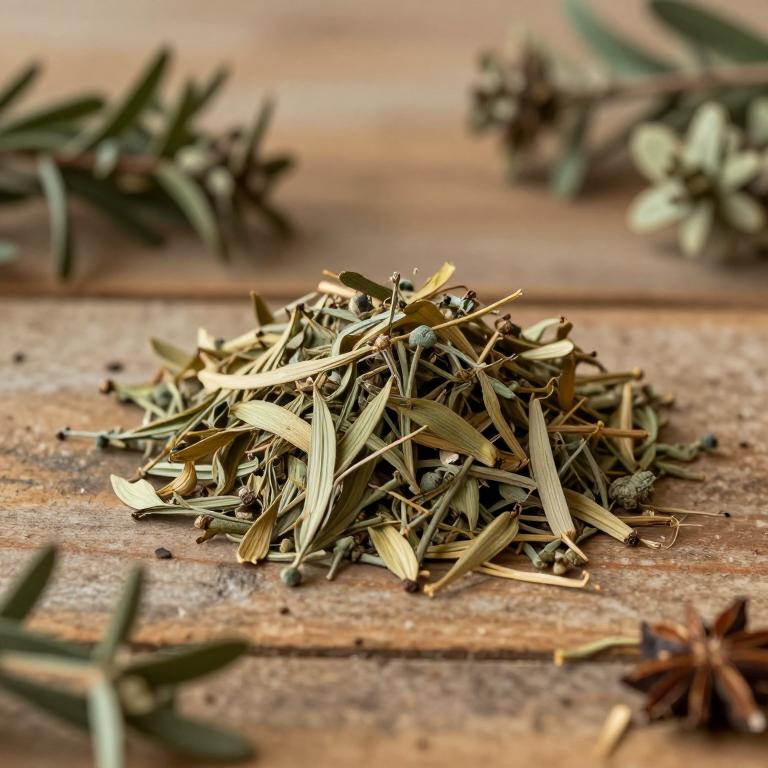
Names and Synonyms
Scientific Names
Accepted name
Senna podocarpaSynonyms
- Cassia podocarpa
- Cassia afzeliana
Sources: Wikidata
Taxonomical Classification
This plant belongs to the kingdom Plantae and is classified under the phylum Streptophyta and class Equisetopsida. Within the subclass Magnoliidae, it is organized under the order Fabales and the family Fabaceae. Finally, its specific taxonomic identity is established within the genus Senna.
| Rank | Classification |
|---|---|
| Kingdom | Plantae |
| Phylum | Streptophyta |
| Class | Equisetopsida |
| Subclass | Magnoliidae |
| Order | Fabales |
| Family | Fabaceae |
| Genus | Senna |
Sources: The World Checklist of Vascular Plants (WCVP)
Distribution
This plant is primarily found across several countries in the West Tropical Africa region. Its geographical range includes documented occurrences within the nation of Benin. Additionally, it can be located in Burkina and the Gambia. The species also extends its distribution into Ghana. Finally, its presence is noted within the borders of Guinea-Bissau.
| Region | Area |
|---|---|
| West Tropical Africa | Benin |
| West Tropical Africa | Burkina |
| West Tropical Africa | Gambia |
| West Tropical Africa | Ghana |
| West Tropical Africa | Guinea-Bissau |
| West Tropical Africa | Guinea |
| West Tropical Africa | Ivory Coast |
| West Tropical Africa | Liberia |
| West Tropical Africa | Mali |
| West Tropical Africa | Nigeria |
Sources: The World Checklist of Vascular Plants (WCVP)
Botanical Identification
Life history
The life history of Senna podocarpa is characterized by its status as a perennial species, allowing it to persist in its environment through multiple growing seasons. Structurally, the plant is classified as a phanerophyte, specifically exhibiting both phanerophyte and nanophanerophyte growth forms, which indicates that its perennating buds are located well above the ground on aerial shoots. This life strategy enables the plant to maintain a robust presence within its ecological niche, utilizing its perennial nature to endure seasonal variations while maintaining its elevated photosynthetic structures.
- Life form :
- phanerophyte
- Lifecycle :
- perennial
Morphology
The morphology of Senna podocarpa is characterized by its growth form as a woody shrub, which maintains an independent existence as a non-parasitic plant. This species is strictly terrestrial, lacking any epiphytic or aquatic tendencies. In terms of stature, it is a self-supporting plant that reaches an average height of 3.5 m, with a maximum recorded height of approximately 4.57 m. Its structure is defined by its woody nature, providing the necessary stability for its upright, self-supporting growth habit.
- Aquatic :
- terrestrial
- Climber :
- self-supporting
- Epiphyte :
- terrestrial
- Growth form :
- shrub
- Parasite :
- independent
- Plant height max:
- 4.572055596 m
- Plant height mean:
- 3.5 m
- Woodiness :
- woody
Physiology
The physiology of Senna podocarpa is characterized by a C3 photosynthetic pathway, which involves the direct fixation of carbon dioxide through the Calvin cycle without the specialized carbon-concentrating mechanisms found in C4 or CAM plants. This metabolic process typically occurs during daylight hours, utilizing the enzyme RuBisCO to facilitate carbon assimilation. Furthermore, this species does not function as a nitrogen fixer, meaning it lacks the symbiotic relationship with diazotrophic bacteria required to convert atmospheric nitrogen into biologically available forms, instead relying on the uptake of nitrates and ammonium from the surrounding soil substrate.
- Nitrogen fixer :
- no
- Photosynthetic pathway :
- C3
Reproduction
The reproduction of Senna podocarpa is characterized by the development of specialized fruit structures and specific seed dispersal mechanisms. The plant produces fruit in the form of a pod, which serves as the protective vessel for its progeny. These fruits are inherently dehiscent, meaning they split open at maturity to facilitate the release of the seeds. The seeds produced by this species exhibit a highly consistent mass, with a recorded mean, maximum, and minimum value of 0.03694 g, indicating a uniform seed size during the reproductive cycle.
- Dehiscence :
- dehiscent
- Fruit type :
- pod
- Seed mass mean:
- 0.03694 g
Sources: Global Inventory of Floras and Traits (GIFT)
Plant Parts
Senna podocarpa has 1 reported plant parts identified across 1 scientific publications and several other databases that are studied for medicinal purposes. The most consistently reported plant part include leaf.
| Plant part | Supporting sources | Consensus |
|---|---|---|
| Leaf | 1 supporting sources | ★☆☆☆☆ |
Leaf
- West African journal of pharmacology and drug research
Activities
Senna podocarpa has 1 reported activities identified across 1 scientific publications and several other databases. The most consistently reported activities include Laxative.
| Activity | Supporting sources | Consensus |
|---|---|---|
| Laxative | 2 supporting sources | ★☆☆☆☆ |
Laxative
- African journal of medicine and medical sciences
- Journal of pharmaceutical and biomedical analysis
Preparations
Senna podocarpa has 2 reported preparations identified across 1 scientific publications and several other databases. The most consistently reported preparations include dried, suspension of the powdered leaf.
| Preparation | Supporting sources | Consensus |
|---|---|---|
| Dried | 1 supporting sources | ★☆☆☆☆ |
| Suspension of the powdered leaf | 1 supporting sources | ★☆☆☆☆ |
Dried
- West African journal of pharmacology and drug research
Suspension of the powdered leaf
- West African journal of pharmacology and drug research