Senna marilandica
Senna marilandica · Accepted scientific name
Scientific literature: Very Sparse (20 studies) · ★☆☆☆☆
, scientifically known as Senna marilandica, is a versatile medicinal plant valued in traditional herbalism. Renowned for its potent purgative properties, it is primarily used to treat constipation and digestive irregularities. This botanical specimen offers significant therapeutic potential, serving as a natural remedy for enhancing gastrointestinal health and detoxification.
- Family
- Not available
- Native range
- Europe
- Parts used
- Not available
- Common names
- Not available
- Scientific synonyms
- Not available
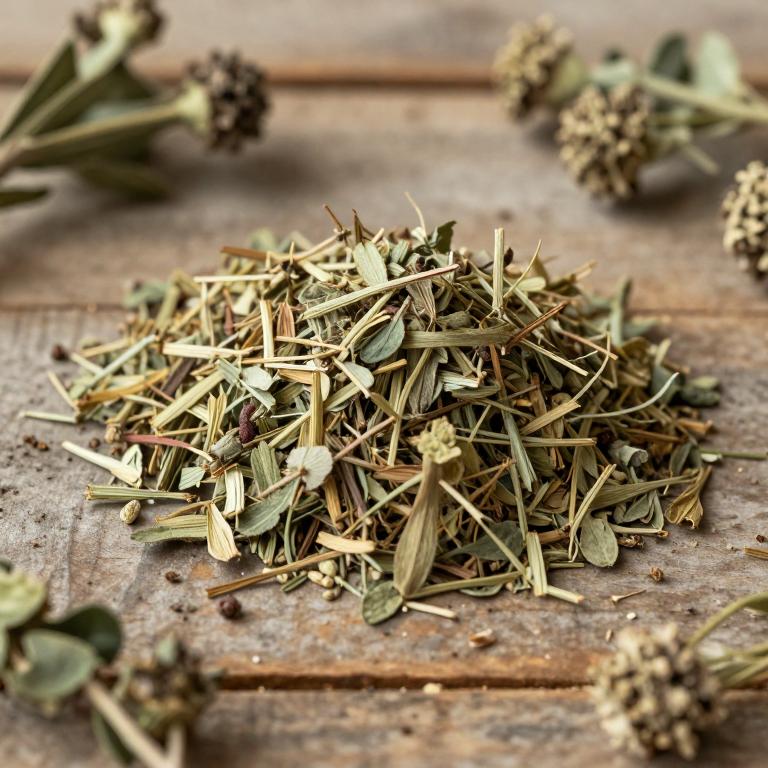
Names and Synonyms
Scientific Names
Accepted name
Senna marilandicaDistribution
This plant exhibits a diverse geographical distribution spanning multiple continents. In Middle Europe, it can be found growing within the borders of Germany. Its range extends into Northern Africa, specifically documented in Libya. Within the Caucasus region, the species is present throughout the Transcaucasus. Finally, in North-Central U.S.A., it is established in the states of Illinois and Iowa.
| Region | Area |
|---|---|
| Middle Europe | Germany |
| Northern Africa | Libya |
| Caucasus | Transcaucasus |
| North-Central U.S.A. | Illinois |
| North-Central U.S.A. | Iowa |
| North-Central U.S.A. | Kansas |
| North-Central U.S.A. | Missouri |
| North-Central U.S.A. | Nebraska |
| North-Central U.S.A. | Oklahoma |
| North-Central U.S.A. | Wisconsin |
Sources: The World Checklist of Vascular Plants (WCVP)
Botanical Identification
Ecology
The ecology of Senna mariandlica is characterized by its adaptability to various environments, though it is frequently observed within the managed landscapes of a garden. In these anthropogenic habitats, the plant thrives under controlled conditions where soil composition and moisture levels are often optimized, allowing it to establish robust populations. While it can exist in more natural settings, its presence in garden ecosystems suggests a tolerance for cultivated soils and a capacity to integrate into ornamental or medicinal plantings. This ecological flexibility enables the species to flourish in diverse microclimates provided by human intervention, utilizing the stability of garden environments to support its growth cycles.
- Habitat :
- garden
Life history
The life history of Senna mariandlica is characterized by its nature as a perennial species, allowing the plant to persist through multiple growing seasons. As a perennial, it establishes a stable presence within its ecological niche, often exhibiting a lifecycle that can be variable depending on environmental conditions and resource availability. This longevity enables the plant to undergo repeated cycles of vegetative growth and reproductive phases, contributing to its long-term survival and ability to colonize suitable habitats over time.
- Lifecycle :
- perennial
Morphology
The morphology of Senna mariandica is characterized by its classification as both a herb and a forb, displaying a non-woody structure throughout its development. The plant exhibits a self-supporting climbing habit rather than being an obligatory or facultative climber. In terms of stature, it typically reaches an average height of 2 meters, though its maximum height is recorded at 1 meter depending on environmental conditions and growth stage.
- Climber :
- self-supporting
- Growth form :
- herb
- Growth form :
- forb
- Plant height max:
- 1 m
- Plant height mean:
- 2 m
- Woodiness :
- non-woody
Physiology
The physiology of Senna mariandica is characterized by its specialized metabolic processes, most notably its utilization of the C3 photosynthetic pathway. Under this mechanism, the plant fixes atmospheric carbon dioxide through the Calvin cycle, using the enzyme RuBisCO to catalyze the initial carboxylation of ribulose-1,5-bisphosphate into 3-phosphoglycerate. This C3 pathway dictates the plant's water-use efficiency and gas exchange dynamics, as it is susceptible to photorespiration when stomata close under high temperature or water stress. Beyond its carbon fixation strategy, the plant's physiological framework supports the synthesis of bioactive secondary metabolites, including anthraquinone derivatives, which are integrated into its metabolic pathways. This complex interplay of carbon assimilation and specialized metabolite production defines its growth patterns and environmental adaptability.
- Photosynthetic pathway :
- C3
Reproduction
The reproduction of Senna mariandica is characterized by a specific seasonal flowering window and distinct seed morphology. The flowering period typically begins in July and concludes in August, though the timing can be variable across different environments. Following successful pollination, the plant produces seeds with a highly consistent mass profile. The average seed mass is approximately 0.02092375 g, with individual seed weights ranging from a minimum of 0.01794 g to a maximum of 0.0232 g.
- Flowering time :
- Jul
- Flowering time :
- Aug
- Seed mass max:
- 0.0232 g
- Seed mass mean:
- 0.02092375 g
- Seed mass min:
- 0.01794 g
Sources: Global Inventory of Floras and Traits (GIFT)
Chemicals
Senna marilandica has 4 reported phytochemicals identified across 0 scientific publications and several other databases. The most consistently reported chemicals include Anthraquinones, Chrysophanol, EO, Physcion.
| Chemical | Supporting sources | Consensus |
|---|---|---|
| Anthraquinones | 1 supporting sources | ★☆☆☆☆ |
| Chrysophanol | 1 supporting sources | ★☆☆☆☆ |
| EO | 1 supporting sources | ★☆☆☆☆ |
| Physcion | 1 supporting sources | ★☆☆☆☆ |
Anthraquinones
- Dr. Duke
Chrysophanol
- Dr. Duke
EO
- Dr. Duke
Physcion
- Dr. Duke
Activities
Senna marilandica has 16 reported activities identified across 0 scientific publications and several other databases. The most consistently reported activities include Antibacterial, Antilithic, Antiseptic, Bird-Repellent, Calcium-Antagonist.
| Activity | Supporting sources | Consensus |
|---|---|---|
| Antibacterial | 1 supporting sources | ★☆☆☆☆ |
| Antilithic | 1 supporting sources | ★☆☆☆☆ |
| Antiseptic | 1 supporting sources | ★☆☆☆☆ |
| Bird-Repellent | 1 supporting sources | ★☆☆☆☆ |
| Calcium-Antagonist | 1 supporting sources | ★☆☆☆☆ |
| Candidicide | 1 supporting sources | ★☆☆☆☆ |
| Carcinogenic | 1 supporting sources | ★☆☆☆☆ |
| Cathartic | 1 supporting sources | ★☆☆☆☆ |
| Hemostat | 1 supporting sources | ★☆☆☆☆ |
| Laxative | 1 supporting sources | ★☆☆☆☆ |
Antibacterial
- Dr. Duke
Antilithic
- Dr. Duke
Antiseptic
- Dr. Duke
Bird-Repellent
- Dr. Duke
Calcium-Antagonist
- Dr. Duke
Candidicide
- Dr. Duke
Carcinogenic
- Dr. Duke
Cathartic
- Dr. Duke
Hemostat
- Dr. Duke
Laxative
- Dr. Duke