Senna lindheimeriana
Senna lindheimeriana · Accepted scientific name
Scientific literature: Very Sparse (19 studies) · ★☆☆☆☆
Scientifically known as Senna lindheimeriana, is a distinctive shrub native to the Americas, belonging to the Fabaceae family. Renowned for its vibrant yellow blooms, this medicinal plant contains bioactive anthraquinones. It is primarily utilized in traditional medicine for its potent laxative properties and to support digestive health and regularity.
- Family
- Not available
- Native range
- Northern America
- Parts used
- Not available
- Common names
- Not available
- Scientific synonyms
- Not available
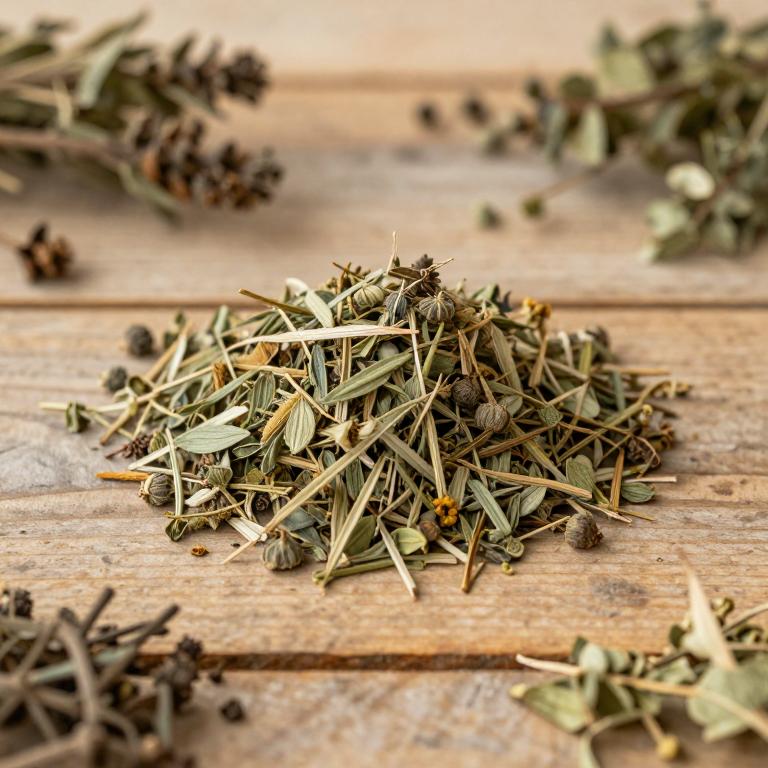
Names and Synonyms
Scientific Names
Accepted name
Senna lindheimerianaDistribution
This plant is primarily distributed across specific regions of North America. In the Southwestern United States, it can be found growing within the state of Arizona. Its range extends into the South-Central United States, specifically covering parts of New Mexico and Texas. Moving into Mexico, the species is present in the Northeast region of the country. Additionally, it is located throughout the Gulf area of Mexico.
| Region | Area |
|---|---|
| Southwestern U.S.A. | Arizona |
| South-Central U.S.A. | New Mexico |
| South-Central U.S.A. | Texas |
| Mexico | Mexico Northeast |
| Mexico | Mexico Gulf |
| Mexico | Mexico Northwest |
Sources: The World Checklist of Vascular Plants (WCVP)
Botanical Identification
Life history
The life history of Senna lindheimeriana is characterized by its status as a perennial species, although its growth patterns can exhibit variable tendencies depending on environmental conditions. As a perennial, the plant is capable of persisting through multiple growing seasons, establishing a robust presence in its native habitats. This longevity allows it to undergo successive reproductive cycles, contributing to the stability of its population over time. While it maintains a perennial lifecycle, the plant's development may fluctuate, sometimes displaying characteristics that align with shorter life cycles in response to seasonal shifts or resource availability.
- Lifecycle :
- perennial
Morphology
The morphology of Senna lindheimeriana is characterized by a growth form that functions as a woody shrub and a herbaceous forb, displaying a structural habit that is primarily self-supporting rather than acting as an obligatory or facultative climber. It does not exhibit liana or vine characteristics, as it maintains a self-supporting stature. In terms of its ecological niche and habit, the plant is terrestrial in nature, lacking any obligatory or facultative epiphytic tendencies and remaining independent rather than behaving as a parasite. Its physical constitution is defined by a woody structure, distinguishing it from purely non-woody herbaceous species.
- Aquatic :
- terrestrial
- Climber :
- self-supporting
- Epiphyte :
- terrestrial
- Growth form :
- shrub
- Growth form :
- forb
- Parasite :
- independent
- Woodiness :
- woody
Physiology
The physiology of Sennna lindheimeriana is characterized by a metabolic framework governed by the C3 photosynthetic pathway, where carbon fixation occurs via the enzyme RuBisCO within the mesophyll cells. This pathway involves the direct fixation of atmospheric CO2 into three-carbon molecules, a process that dictates the plant's water-use efficiency and its adaptive responses to varying environmental light intensities and temperatures. As a C3 plant, its gas exchange processes are highly sensitive to photorespiration, particularly under conditions of high heat or water stress, which influences its overall carbon assimilation rate and biomass accumulation. The physiological regulation of its secondary metabolites, most notably the anthraquinone glycosides, is intricately linked to its metabolic cycles and environmental stressors, influencing the plant's biochemical profile during different stages of growth.
- Photosynthetic pathway :
- C3
Reproduction
Reproduction in Senna lindheimeriana is characterized by the production of small, specialized seeds that exhibit specific weight variations. The seed mass within a population fluctuates within a precise range, with a recorded minimum mass of 0.00735 g and a maximum mass of 0.00991 g. When considering the collective output of the plant, the seed mass reaches a mean value of 0.008486667 g. These quantitative metrics reflect the energetic investment the plant allocates to its progeny to ensure successful dispersal and establishment in its natural habitat.
- Seed mass max:
- 0.00991 g
- Seed mass mean:
- 0.008486667 g
- Seed mass min:
- 0.00735 g
Sources: Global Inventory of Floras and Traits (GIFT)
Chemicals
Senna lindheimeriana has 1 reported phytochemicals identified across 0 scientific publications and several other databases. The most consistently reported chemicals include betulinic acid.
| Chemical | Supporting sources | Consensus |
|---|---|---|
| betulinic acid | 1 supporting sources | ★☆☆☆☆ |
betulinic acid
- Dr. Duke
Activities
Senna lindheimeriana has 18 reported activities identified across 0 scientific publications and several other databases. The most consistently reported activities include Anthelmintic, AntiHIV, Antibacterial, Anticancer, Anticarcinomic.
| Activity | Supporting sources | Consensus |
|---|---|---|
| Anthelmintic | 1 supporting sources | ★☆☆☆☆ |
| AntiHIV | 1 supporting sources | ★☆☆☆☆ |
| Antibacterial | 1 supporting sources | ★☆☆☆☆ |
| Anticancer | 1 supporting sources | ★☆☆☆☆ |
| Anticarcinomic | 1 supporting sources | ★☆☆☆☆ |
| Antiedemic | 1 supporting sources | ★☆☆☆☆ |
| Antiinflammatory | 1 supporting sources | ★☆☆☆☆ |
| Antileukemic | 1 supporting sources | ★☆☆☆☆ |
| Antimalarial | 1 supporting sources | ★☆☆☆☆ |
| Antimelanomic | 1 supporting sources | ★☆☆☆☆ |
Anthelmintic
- Dr. Duke
AntiHIV
- Dr. Duke
Antibacterial
- Dr. Duke
Anticancer
- Dr. Duke
Anticarcinomic
- Dr. Duke
Antiedemic
- Dr. Duke
Antiinflammatory
- Dr. Duke
Antileukemic
- Dr. Duke
Antimalarial
- Dr. Duke
Antimelanomic
- Dr. Duke