Argentine Senna
Senna corymbosa · Accepted scientific name
Scientific literature: Very Sparse (3 studies) · ★☆☆☆☆
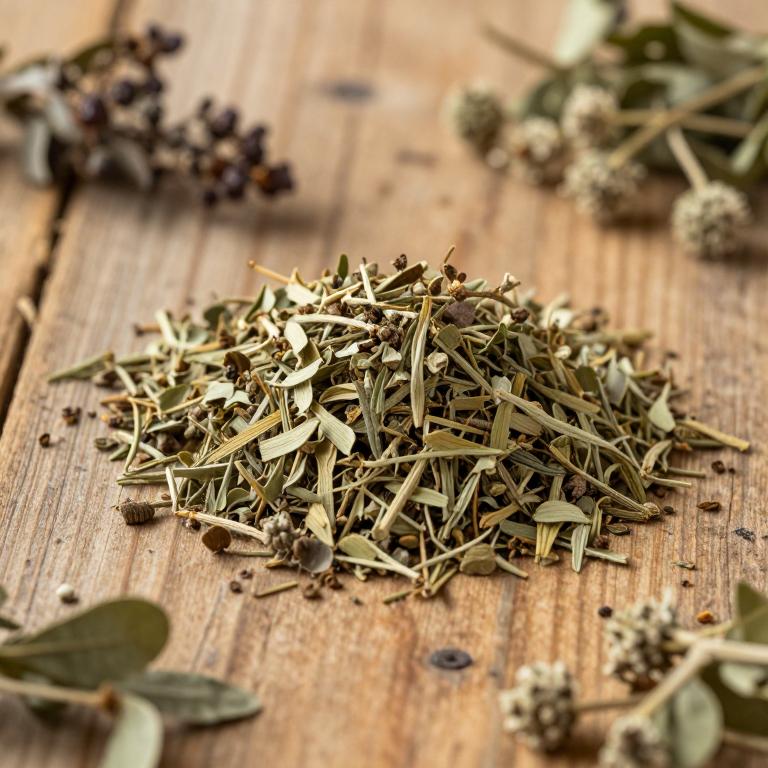
Argentine Senna, scientifically known as Senna corymbosa, is a versatile medicinal shrub prized for its potent therapeutic properties. Primarily recognized for its powerful laxative effects, it contains bioactive sennosides that stimulate intestinal activity. This plant remains a cornerstone in traditional herbal medicine for managing acute constipation and digestive health.
Names and Synonyms
Common Names
- Argentine Senna
- Autumn Cassia
- Golden Senna
Scientific Names
Accepted name
Senna corymbosaSynonyms
- Cassia corymbosa
- Cassia crassifolia
- Chamaefistula corymbosa
- Cassia bonariensis
- Adipera corymbosa
Regional and Traditional Names
Spanish:
- Cassia corymbosa
- Sen del campo
- Rama negra
French:
- Cassier
- Séné
Sources: Wikidata, Catalogue of Life
Taxonomical Classification
This plant belongs to the kingdom Plantae and the phylum Streptophyta, falling under the class Equisetopsida and subclass Magnoliidae. Within the order Fabales, it is classified under the family Fabaceae. It is further identified by the genus Senna, specifically as the species Sennoside corymbosa.
| Rank | Classification |
|---|---|
| Kingdom | Plantae |
| Phylum | Streptophyta |
| Class | Equisetopsida |
| Subclass | Magnoliidae |
| Order | Fabales |
| Family | Fabaceae |
| Genus | Senna |
Sources: The World Checklist of Vascular Plants (WCVP)
Distribution
This plant exhibits a diverse geographical distribution across several continents. In Europe, its range extends through Spain in the southwest and Italy in the southeast. The species is also found within the Macaronesian region, specifically inhabiting the Canary Islands. Moving to the southern hemisphere, it is well-established in the Cape Provinces of Southern Africa. Additionally, its presence is noted in the KwaZulu-Natal region of Southern Africa.
| Region | Area |
|---|---|
| Southwestern Europe | Spain |
| Southeastern Europe | Italy |
| Macaronesia | Canary Is. |
| Southern Africa | Cape Provinces |
| Southern Africa | KwaZulu-Natal |
| Southern Africa | Northern Provinces |
| Western Asia | Iraq |
| Indian Subcontinent | India |
| Indian Subcontinent | Pakistan |
| South-Central U.S.A. | Texas |
Sources: The World Checklist of Vascular Plants (WCVP)
Botanical Identification
Ecology
The ecology of Senna corymbosa is characterized by its broad adaptability across diverse environmental landscapes and significant altitudinal variations. This species thrives within a variety of habitats, ranging from anthropized areas (Área Antrópica) and open grasslands (Campo Limpo) to the more complex ecosystems of the Cerrado (latu sensu) and Ombrophilous Forests (Floresta Ombrófila/Pluvial). Its vertical distribution is extensive, allowing it to inhabit environments from sea level up to a maximum elevation of 1450 m AMSL.
- Elevational range max:
- 1450 m AMSL
- Elevational range min:
- 0 m AMSL
- Habitat :
- Área Antrópica, Campo Limpo, Cerrado (lato sensu), Floresta Ombrófila (= Floresta Pluvial)
Life history
The life history of Senna corymbosa is characterized by its status as a perennial plant, allowing it to persist in its environment through multiple growing seasons. As a phanerophyte, its reproductive buds are elevated above the ground on woody stems, a structural adaptation that defines its growth habit. This species maintains an evergreen deciduousness, ensuring that it retains its foliage throughout much of its life cycle rather than shedding all leaves seasonally. Categorized under the broader phanerophyte life form classification, the plant utilizes its elevated stem structure to navigate its ecological niche, supporting a continuous biological presence within its habitat.
- Deciduousness :
- evergreen
- Life form :
- phanerophyte
- Lifecycle :
- perennial
Morphology
The morphology of Senna corymbosa is characterized by its growth form as a woody shrub, displaying a self-supporting structure that does not function as a climber, liana, or vine. As an independent organism, it does not exhibit parasitic behavior and is classified as a terrestrial plant rather than an epiphyte. The plant maintains a robust, woody constitution, typically reaching a height ranging from a minimum of 1.5 m to a maximum of 5 m. Its habit is strictly terrestrial, occupying land environments without transitioning into aquatic or semiaquatic habitats.
- Aquatic :
- terrestrial
- Climber :
- self-supporting
- Epiphyte :
- terrestrial
- Growth form :
- shrub
- Parasite :
- independent
- Plant height max:
- 5 m
- Plant height min:
- 1.5 m
- Woodiness :
- woody
Physiology
The physiology of Senna corymbosa is characterized by a C3 photosynthetic pathway, which governs its carbon fixation processes and energy production. The plant exhibits a specific vegetative morphology where the leaves are arranged in an alternate pattern along the stem. These leaves are elliptic in form, possessing dimensions that typically range from a minimum length of 2.5 cm to a maximum length of 5 cm. In terms of lateral expansion, the leaf width is relatively narrow, fluctuating between a minimum of 0.5 cm and a maximum of 1 cm.
- Leaf arrangement :
- alternate
- Leaf form :
- elliptic
- Leaf length max:
- 5 cm
- Leaf length min:
- 2.5 cm
- Leaf width max:
- 1 cm
- Leaf width min:
- 0.5 cm
- Photosynthetic pathway :
- C3
Reproduction
The reproduction of Senna corymbosa is characterized by a distinct flowering period that typically begins in May and concludes in August, though the timing can be variable. During this reproductive phase, the plant produces yellow flowers that can reach a maximum length of 1.5 cm. These flowers are arranged in a raceme inflorescence, facilitating pollination. Following successful fertilization, the plant produces seeds with varying physical properties; the seed mass ranges from a minimum of 0.0182 g to a maximum of 0.0262 g, with an average seed mass of approximately 0.02245 g.
- Flower colour :
- yellow
- Flower length max:
- 1.5 cm
- Flowering time :
- May
- Flowering time :
- Aug
- Inflorescence :
- raceme
- Seed mass max:
- 0.0262 g
- Seed mass mean:
- 0.02245 g
- Seed mass min:
- 0.0182 g
Sources: Global Inventory of Floras and Traits (GIFT)
Chemicals
Senna corymbosa has 3 reported phytochemicals identified across 0 scientific publications and several other databases. The most consistently reported chemicals include Anthraquinones, Flavonoids, Tannins.
| Chemical | Supporting sources | Consensus |
|---|---|---|
| Anthraquinones | 1 supporting sources | ★☆☆☆☆ |
| Flavonoids | 1 supporting sources | ★☆☆☆☆ |
| Tannins | 1 supporting sources | ★☆☆☆☆ |
Anthraquinones
- Phytotherapy research : PTR
Flavonoids
- Phytotherapy research : PTR
Tannins
- Phytotherapy research : PTR
Preparations
Senna corymbosa has 1 reported preparations identified across 0 scientific publications and several other databases. The most consistently reported preparations include Aqueous extracts.
| Preparation | Supporting sources | Consensus |
|---|---|---|
| Aqueous extracts | 1 supporting sources | ★☆☆☆☆ |
Aqueous extracts
- Phytotherapy research : PTR