Senna cana
Senna cana · Accepted scientific name
Scientific literature: Very Sparse (6 studies) · ★☆☆☆☆
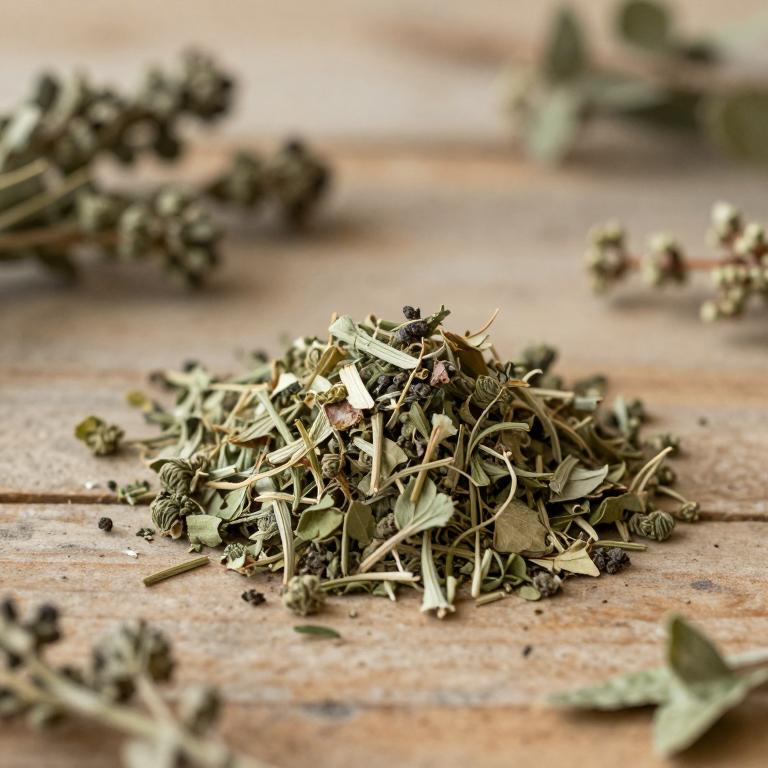
Senna cana, scientifically known as Senna cana, is a versatile medicinal shrub native to various tropical regions. Renowned for its potent laxative properties, it contains anthraquinone glycosides that stimulate bowel movements. Beyond digestive health, this plant is traditionally utilized in folk medicine to support detoxification and skin wellness.
- Family
- Fabaceae
- Native range
- Southern America
- Parts used
- Leaf · Stem
- Common names
- Not available
- Scientific synonyms
- Cassia Cana
Names and Synonyms
Scientific Names
Accepted name
Senna canaSynonyms
- Cassia cana
Sources: Wikidata, Catalogue of Life
Taxonomical Classification
This plant belongs to the kingdom Plantae and the phylum Streptophyta within the class Equisetopsida. It is classified under the subclass Magnoliidae and the order Fabales, falling into the family Fabaceae. Finally, its specific taxonomic placement is within the genus Senna.
| Rank | Classification |
|---|---|
| Kingdom | Plantae |
| Phylum | Streptophyta |
| Class | Equisetopsida |
| Subclass | Magnoliidae |
| Order | Fabales |
| Family | Fabaceae |
| Genus | Senna |
Sources: The World Checklist of Vascular Plants (WCVP)
Distribution
This plant exhibits a wide and diverse range of locations across the South American landscape. Within the country of Brazil, its presence is notably established throughout the Brazil North region. It also thrives across the vast territories of Brazil West-Central. Furthermore, the species can be found growing within the Brazil Northeast area. Finally, its geographical reach extends into the Brazil Southeast portion of the nation.
| Region | Area |
|---|---|
| Brazil | Brazil West-Central |
| Brazil | Brazil Northeast |
| Brazil | Brazil Southeast |
| Brazil | Brazil North |
Sources: The World Checklist of Vascular Plants (WCVP)
Botanical Identification
Ecology
The ecology of Senna cana is characterized by its ability to thrive across a diverse range of Brazilian biomes and specialized environmental conditions. This species is widely distributed throughout various landscapes, ranging from the semi-arid Caatinga (strictu sensu) to the more diverse Cerrado (lato sensu) and Seasonal Semi-deciduous Forests (Floresta Estacional Semi-decidual). It demonstrates significant ecological plasticity, occupying both stabilized natural environments and disturbed anthropogenic areas (Área Antrópica). Furthermore, the plant is specifically adapted to niche habitats that require resilience to specific geological and hydrological conditions, such as Campo Rupestre and specialized vegetation growing over rocky outcrops (Vegetação Sobre Afloramentos Rochosos), where it must contend with nutrient-poor soils and varying moisture availability.
- Habitat :
- Área Antrópica, Caatinga (stricto sensu), Campo Rupestre, Cerrado (lato sensu), Floresta Estacional Semidecidual, Vegetação Sobre Afloramentos Rochosos
Life history
The life history of Senna cana is characterized by its nature as a perennial plant, allowing it to persist through multiple growing seasons. Throughout its life cycle, it maintains an evergreen habit, retaining its foliage continuously rather than shedding it seasonally.
- Deciduousness :
- evergreen
- Lifecycle :
- perennial
Morphology
The morphology of Senna canna is characterized by its growth form as a woody shrub, which functions as a self-supporting plant rather than a climber. It is an independent species, lacking any parasitic behavior, and is strictly terrestrial in its habitat, with no aquatic or epiphytic tendencies. Reaching a maximum plant height of approximately 4 m, the species maintains a robust, woody structure throughout its development.
- Aquatic :
- terrestrial
- Climber :
- self-supporting
- Epiphyte :
- terrestrial
- Growth form :
- shrub
- Parasite :
- independent
- Plant height mean:
- 4 m
- Woodiness :
- woody
Physiology
The physiology of Senna cana is characterized by a C3 photosynthetic pathway, which dictates its metabolic processes for carbon fixation and energy production. Unlike plants utilizing C4 or CAM mechanisms, this species relies on the enzyme Rubisco to fix atmospheric carbon dioxide directly within the mesophyll cells during the Calvin cycle. Additionally, this plant is not a nitrogen fixer, meaning it lacks the symbiotic relationship with rhizobia or other nitrogen-fixing bacteria required to convert atmospheric nitrogen into usable forms, and instead relies on the uptake of nitrates and ammonium from the soil to satisfy its nutritional requirements.
- Nitrogen fixer :
- no
- Photosynthetic pathway :
- C3
Reproduction
The reproduction of Senna cana is centered on the production of seeds that exhibit high levels of uniformity in their physical characteristics. The reproductive output is characterized by a highly consistent seed mass, with no observed variation between the minimum and maximum recorded weights. Specifically, the seed mass remains constant at a mean value of 0.00598 g, which is mirrored by both its maximum and minimum values of 0.00598 g. This lack of variance in seed mass suggests a highly stabilized reproductive strategy regarding the energetic investment per individual seed.
- Seed mass mean:
- 0.00598 g
Sources: Global Inventory of Floras and Traits (GIFT)
Plant Parts
Senna cana has 2 reported plant parts identified across 2 scientific publications and several other databases that are studied for medicinal purposes. The most consistently reported plant part include leaf, stem.
| Plant part | Supporting sources | Consensus |
|---|---|---|
| Leaf | 1 supporting sources | ★☆☆☆☆ |
| Stem | 1 supporting sources | ★☆☆☆☆ |
Leaf
- Biochemistry research international
Stem
- Natural product research
Chemicals
Senna cana has 3 reported phytochemicals identified across 2 scientific publications and several other databases. The most consistently reported chemicals include Antioxidants, Chrysophanol, Flavonoids.
| Chemical | Supporting sources | Consensus |
|---|---|---|
| Antioxidants | 1 supporting sources | ★☆☆☆☆ |
| Chrysophanol | 1 supporting sources | ★☆☆☆☆ |
| Flavonoids | 1 supporting sources | ★☆☆☆☆ |
Antioxidants
- Biochemistry research international
Chrysophanol
- Natural product research
Flavonoids
- Biochemistry research international
Preparations
Senna cana has 1 reported preparations identified across 2 scientific publications and several other databases. The most consistently reported preparations include hexane extract.
| Preparation | Supporting sources | Consensus |
|---|---|---|
| Hexane extract | 1 supporting sources | ★☆☆☆☆ |
Hexane extract
- Natural product research