Senna aphylla
Senna aphylla · Accepted scientific name
Scientific literature: Very Sparse (7 studies) · ★☆☆☆☆
Sennoside, scientifically known as Senna afillia, is a medicinal shrub native to arid regions. Renowned for its potent purgative properties, it contains anthraquinone glycosides that stimulate bowel movements. Traditionally used to treat constipation, this plant serves as a vital natural remedy in various herbal pharmacopeias worldwide.
- Family
- Fabaceae
- Native range
- Southern America
- Parts used
- Not available
- Common names
- Not available
- Scientific synonyms
- Cassia Rigida · Cassia Rigida Var. Inermis · 13 more
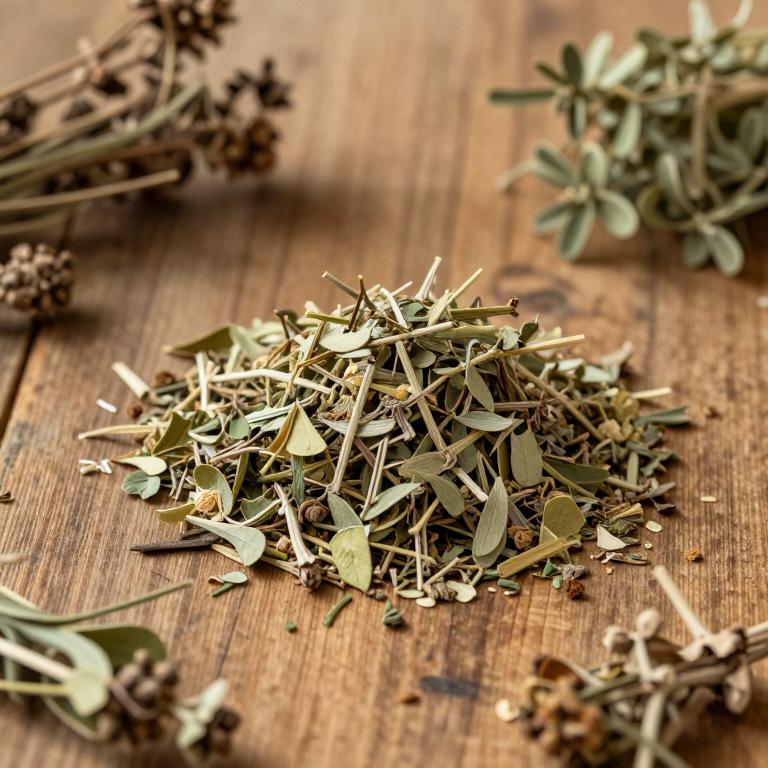
Names and Synonyms
Scientific Names
Accepted name
Senna aphyllaSynonyms
- Cassia rigida
- Cassia rigida var. inermis
- Senna aphylla subsp. divaricata
- Cassia fabrisii
- Cassia aphylla var. trichosepala
- Cassia aphylla var. virgata
- Cassia aphylla
- Cassia aphylla var. divaricata
- Cassia aphylla subsp. divaricata
- Cassia aphylla var. rigida
- Senna trichosepala
- Senna fabrisii
- Senna rigida
- Senna rigida var. inermis
- Cassia trichosepala
Regional and Traditional Names
Spanish:
- Pichanilla
Sources: Wikidata, Catalogue of Life
Taxonomical Classification
This plant belongs to the kingdom Plantae and the phylum Streptophyta, falling under the class Equisetopsida and subclass Magnoliidae. Within the order Fabales, it is classified under the family Fabaceae and is specifically identified by the genus Senna.
| Rank | Classification |
|---|---|
| Kingdom | Plantae |
| Phylum | Streptophyta |
| Class | Equisetopsida |
| Subclass | Magnoliidae |
| Order | Fabales |
| Family | Fabaceae |
| Genus | Senna |
Sources: The World Checklist of Vascular Plants (WCVP)
Distribution
This plant is primarily found within the diverse landscapes of Southern South America. Specifically, its range extends across several key regions of Argentina. It can be located throughout the Northeast portion of the country. Additionally, the species is distributed across the Southern territories of Argentina. Finally, its presence is also noted in the Northwest regions of the nation.
| Region | Area |
|---|---|
| Southern South America | Argentina Northeast |
| Southern South America | Argentina South |
| Southern South America | Argentina Northwest |
Sources: The World Checklist of Vascular Plants (WCVP)
Botanical Identification
Ecology
The ecology of Senna aphylla is characterized by its ability to inhabit a broad vertical gradient within its native landscapes, ranging from sea level up to significant altitudes. Specifically, the species thrives across an elevational range that begins at 0 m AMSL and extends to a maximum of 2000 m AMSL. This wide altitudinal distribution suggests a high degree of ecological plasticity, allowing the plant to adapt to diverse climatic conditions, varying temperature regimes, and shifting moisture availability found between lowland plains and montane environments.
- Elevational range max:
- 2000 m AMSL
- Elevational range min:
- 0 m AMSL
Life history
The life history of Senna aphylla is characterized by its status as a perennial plant, meaning it possesses the capacity to live for multiple years, though its growth patterns can be variable depending on environmental conditions. Throughout its life cycle, the plant develops a robust structure capable of surviving through successive growing seasons. As a perennial, it undergoes seasonal cycles of vegetative growth and reproductive phases, often establishing a persistent root system that allows it to endure periods of dormancy or stress before emerging again to contribute to the population through flowering and seed production.
- Lifecycle :
- perennial
Morphology
The morphology of Senna aphylla is characterized by its growth form as a woody shrub, which can be categorized as either a shrub or a subshrub depending on the specific specimen's development. This plant is fundamentally terrestrial in its habitat, functioning as an independent organism that does not exhibit aquatic, semiaquatic, or epiphytic tendencies. As a self-supporting species, it lacks the climbing or vining habits of lianas or obligatory climbers, maintaining a stable, upright structure. The plant's architecture is defined by its woody nature, providing the structural integrity necessary to sustain its shrubby habit without the need for external support or parasitic relationships.
- Aquatic :
- terrestrial
- Climber :
- self-supporting
- Epiphyte :
- terrestrial
- Growth form :
- shrub
- Parasite :
- independent
- Woodiness :
- woody
Physiology
The physiology of Senna aphylla is characterized by a C3 photosynthetic pathway, which dictates its metabolic processes and carbon fixation mechanisms. As a C3 plant, it utilizes the enzyme RuBisCO to fix atmospheric carbon dioxide directly into a three-carbon compound during the Calvin cycle, a process that occurs within the mesophyll cells. This pathway is typically most efficient under temperate or moist conditions where photorespiration rates are minimized. The plant's physiological regulation is closely tied to its water-use efficiency and transpiration rates, as the C3 mechanism requires open stomata for gas exchange, subsequently influencing its ability to manage moisture levels in its environment. Furthermore, its metabolic activity supports the biosynthesis of secondary metabolites, including anthraquinones, which are synthesized through complex biochemical pathways integrated with its primary carbon metabolism.
- Photosynthetic pathway :
- C3
Sources: Global Inventory of Floras and Traits (GIFT)
Chemicals
Senna aphylla has 7 reported phytochemicals identified across 0 scientific publications and several other databases. The most consistently reported chemicals include CALCIUM, IRON, PHOSPHORUS, ascorbic acid, lysine.
| Chemical | Supporting sources | Consensus |
|---|---|---|
| CALCIUM | 1 supporting sources | ★☆☆☆☆ |
| IRON | 1 supporting sources | ★☆☆☆☆ |
| PHOSPHORUS | 1 supporting sources | ★☆☆☆☆ |
| ascorbic acid | 1 supporting sources | ★☆☆☆☆ |
| lysine | 1 supporting sources | ★☆☆☆☆ |
| niacin | 1 supporting sources | ★☆☆☆☆ |
| thiamine | 1 supporting sources | ★☆☆☆☆ |
CALCIUM
- Archivos latinoamericanos de nutricion
IRON
- Archivos latinoamericanos de nutricion
PHOSPHORUS
- Archivos latinoamericanos de nutricion
ascorbic acid
- Archivos latinoamericanos de nutricion
lysine
- Archivos latinoamericanos de nutricion
niacin
- Archivos latinoamericanos de nutricion
thiamine
- Archivos latinoamericanos de nutricion
Preparations
Senna aphylla has 1 reported preparations identified across 0 scientific publications and several other databases. The most consistently reported preparations include flour.
| Preparation | Supporting sources | Consensus |
|---|---|---|
| Flour | 1 supporting sources | ★☆☆☆☆ |
Flour
- Archivos latinoamericanos de nutricion