Senna alexandrina var. alexandrina
Senna alexandrina var. alexandrina · Accepted scientific name
Scientific literature: Sparse (89 studies) · ★★☆☆☆
scientifically known as Senna alexandrina var. alexandrina, is a prominent medicinal shrub celebrated for its potent purgative properties. Widely utilized in traditional medicine, its leaves contain active sennosides, which effectively stimulate bowel movements. This versatile plant remains a cornerstone in treating constipation and supporting gastrointestinal health worldwide.
- Family
- Fabaceae
- Native range
- Africa
- Parts used
- Leaf · Fruit
- Common names
- Not available
- Scientific synonyms
- Senna Angustifolia · Senna Acutifolia · 13 more
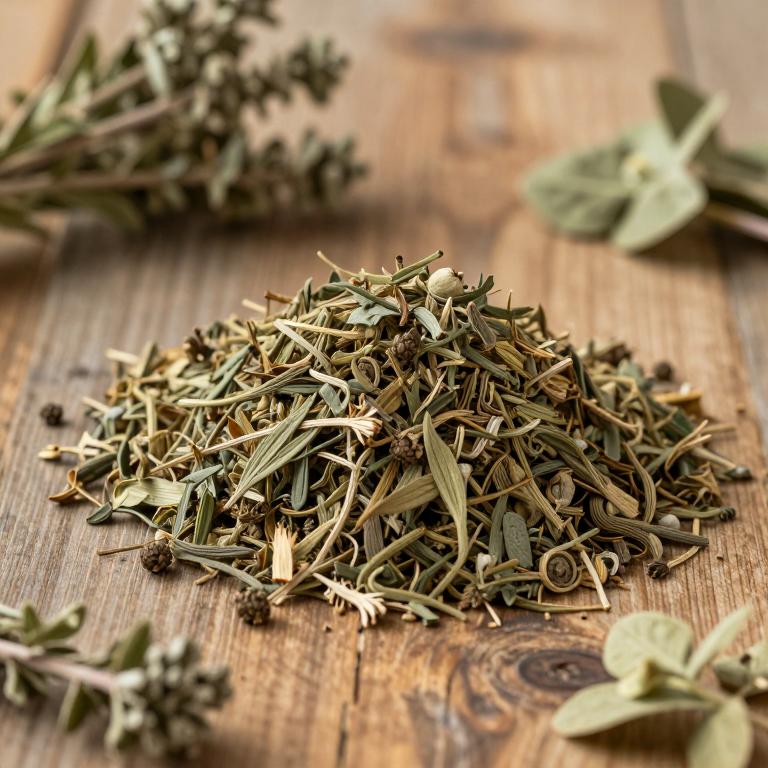
Names and Synonyms
Scientific Names
Accepted name
Senna alexandrina var. alexandrinaSynonyms
- Senna angustifolia
- Senna acutifolia
- Cassia senna var. eriocarpa
- Cassia acutifolia
- Cassia aethiopica
- Cassia angustifolia
- Cassia lenitiva
- Cassia ligustrinoides
- Cassia medicinalis
- Cassia medica
- Cassia ehrenbergii
- Cassia elongata
- Cassia acutifolia var. eriocarpa
- Cassia orientalis
- Cassia ovata
Regional and Traditional Names
French:
- Séné
Sources: Wikidata, Catalogue of Life
Taxonomical Classification
This plant belongs to the kingdom Plantae and the phylum Streptophyta, falling under the class Equisetopsida and subclass Magnoliidae. Within the order Fabales, it is classified under the family Fabaceae and the genus Senna. Specifically, its taxonomic identity is defined as Senna alexandrina var. alexandrina.
| Rank | Classification |
|---|---|
| Kingdom | Plantae |
| Phylum | Streptophyta |
| Class | Equisetopsida |
| Subclass | Magnoliidae |
| Order | Fabales |
| Family | Fabaceae |
| Genus | Senna |
Sources: The World Checklist of Vascular Plants (WCVP)
Distribution
This plant exhibits a broad distribution across several regions in Africa. In Northern Africa, it can be found growing in Algeria, Egypt, and Morocco. Its range extends southward into the West Tropical Africa region as well. Specifically, the species is documented in the countries of Benin and Mali. Therefore, its habitat spans both the northern and western tropical zones of the continent.
| Region | Area |
|---|---|
| Northern Africa | Algeria |
| Northern Africa | Egypt |
| Northern Africa | Morocco |
| West Tropical Africa | Benin |
| West Tropical Africa | Mali |
| West Tropical Africa | Mauritania |
| West Tropical Africa | Nigeria |
| West Tropical Africa | Niger |
| West-Central Tropical Africa | Central African Republic |
| West-Central Tropical Africa | Gulf of Guinea Is. |
Sources: The World Checklist of Vascular Plants (WCVP)
Plant Parts
Senna alexandrina var. alexandrina has 3 reported plant parts identified across 15 scientific publications and several other databases that are studied for medicinal purposes. The most consistently reported plant part include leaf, fruit, root.
| Plant part | Supporting sources | Consensus |
|---|---|---|
| Leaf | 12 supporting sources | ★★★★★ |
| Fruit | 2 supporting sources | ★☆☆☆☆ |
| Root | 1 supporting sources | ★☆☆☆☆ |
Leaf
- Frontiers in plant science
- Journal of AOAC International
- BMC complementary and alternative medicine
- Phytochemical analysis : PCA
- Pharmacology
View 7 additional sources
- Zhong yao cai = Zhongyaocai = Journal of Chinese medicinal materials
- Saudi journal of biological sciences
- Food and chemical toxicology : an international journal published for the British Industrial Biological Research Association
- PloS one
- Bioresource technology
- Frontiers in chemistry
- Dakar medical
Fruit
- Planta medica
- Pharmacology
Root
- Fitoterapia
Chemicals
Senna alexandrina var. alexandrina has 39 reported phytochemicals identified across 15 scientific publications and several other databases. The most consistently reported chemicals include Sennoside B, Sennosides, Aloe emodin, Rhein, Sennoside A.
| Chemical | Supporting sources | Consensus |
|---|---|---|
| Sennoside B | 3 supporting sources | ★★☆☆☆ |
| Sennosides | 3 supporting sources | ★★☆☆☆ |
| Aloe emodin | 2 supporting sources | ★☆☆☆☆ |
| Rhein | 2 supporting sources | ★☆☆☆☆ |
| Sennoside A | 2 supporting sources | ★☆☆☆☆ |
| 3,4-DIHYDROXYBENZOIC ACID | 1 supporting sources | ★☆☆☆☆ |
| 3-methoxy-4-hydroxy benzoic acid | 1 supporting sources | ★☆☆☆☆ |
| AFLATOXIN B1 | 1 supporting sources | ★☆☆☆☆ |
| Anthraquinone Compounds | 1 supporting sources | ★☆☆☆☆ |
| Anthraquinones | 1 supporting sources | ★☆☆☆☆ |
Sennoside B
- Natural product research
- Pharmacology
- Iranian journal of pharmaceutical research : IJPR
Sennosides
- Journal of biomolecular structure & dynamics
- Phytomedicine : international journal of phytotherapy and phytopharmacology
- Planta medica
Aloe emodin
- Zhong yao cai = Zhongyaocai = Journal of Chinese medicinal materials
- Planta medica
Rhein
- Planta medica
- Frontiers in chemistry
Sennoside A
- Natural product research
- Pharmacology
3,4-DIHYDROXYBENZOIC ACID
- Zhong yao cai = Zhongyaocai = Journal of Chinese medicinal materials
3-methoxy-4-hydroxy benzoic acid
- Zhong yao cai = Zhongyaocai = Journal of Chinese medicinal materials
AFLATOXIN B1
- African journal of traditional, complementary, and alternative medicines : AJTCAM
Anthraquinone Compounds
- Iranian journal of pharmaceutical research : IJPR
Anthraquinones
- Antimicrobial agents and chemotherapy
Activities
Senna alexandrina var. alexandrina has 8 reported activities identified across 15 scientific publications and several other databases. The most consistently reported activities include Laxative, Antipyretic, Antiviral, Analgesic, Antiasthmatic.
| Activity | Supporting sources | Consensus |
|---|---|---|
| Laxative | 3 supporting sources | ★★☆☆☆ |
| Antipyretic | 2 supporting sources | ★☆☆☆☆ |
| Antiviral | 2 supporting sources | ★☆☆☆☆ |
| Analgesic | 1 supporting sources | ★☆☆☆☆ |
| Antiasthmatic | 1 supporting sources | ★☆☆☆☆ |
| Antibacterial | 1 supporting sources | ★☆☆☆☆ |
| Antineoplastic | 1 supporting sources | ★☆☆☆☆ |
| Antitussive | 1 supporting sources | ★☆☆☆☆ |
Laxative
- Frontiers in plant science
- Journal of biomolecular structure & dynamics
- Planta medica
Antipyretic
- Saudi journal of biological sciences
- Journal of ethnopharmacology
Antiviral
- Saudi journal of biological sciences
- Journal of ethnopharmacology
Analgesic
- Journal of ethnopharmacology
Antiasthmatic
- Saudi journal of biological sciences
Antibacterial
- Saudi journal of biological sciences
Antineoplastic
- Journal of ethnopharmacology
Antitussive
- Saudi journal of biological sciences
Preparations
Senna alexandrina var. alexandrina has 16 reported preparations identified across 15 scientific publications and several other databases. The most consistently reported preparations include extracts, Hydroethanolic extracts (80%), Rhein was extracted from Cassia italica leaves, commercial botanical raw materials, crude ethanolic extract.
| Preparation | Supporting sources | Consensus |
|---|---|---|
| Extracts | 3 supporting sources | ★★☆☆☆ |
| Hydroethanolic extracts (80%) | 1 supporting sources | ★☆☆☆☆ |
| Rhein was extracted from cassia italica leaves | 1 supporting sources | ★☆☆☆☆ |
| Commercial botanical raw materials | 1 supporting sources | ★☆☆☆☆ |
| Crude ethanolic extract | 1 supporting sources | ★☆☆☆☆ |
| Dried leaflets or fruits | 1 supporting sources | ★☆☆☆☆ |
| Ethyl acetate | 1 supporting sources | ★☆☆☆☆ |
| Extracts of chloroform | 1 supporting sources | ★☆☆☆☆ |
| Fruits | 1 supporting sources | ★☆☆☆☆ |
| Herbal tisane | 1 supporting sources | ★☆☆☆☆ |
Extracts
- BMC complementary and alternative medicine
- Fitoterapia
- Journal of tropical medicine
Hydroethanolic extracts (80%)
- Journal of medicinal food
Rhein was extracted from cassia italica leaves
- Frontiers in chemistry
Commercial botanical raw materials
- Metabolites
Crude ethanolic extract
- The Journal of pharmacy and pharmacology
Dried leaflets or fruits
- Pharmacology
Ethyl acetate
- Journal of biomolecular structure & dynamics
Extracts of chloroform
- Journal of biomolecular structure & dynamics
Fruits
- Planta medica
Herbal tisane
- Phytotherapy research : PTR