White Thorn
Senegalia polyacantha · Accepted scientific name
Scientific literature: Very Sparse (17 studies) · ★☆☆☆☆
White Thorn, scientifically known as Senegalia polyacantha, is a resilient, thorny shrub native to African savannas. Renowned for its medicinal properties, various parts of this plant are traditionally utilized to treat skin ailments, inflammation, and digestive issues. It remains a vital resource in ethnobotanical practices across many rural communities.
- Family
- Fabaceae
- Native range
- Africa
- Parts used
- Leaf · Root
- Common names
- White Thorn · White-Stem Thorn
- Scientific synonyms
- Acacia Polyacantha
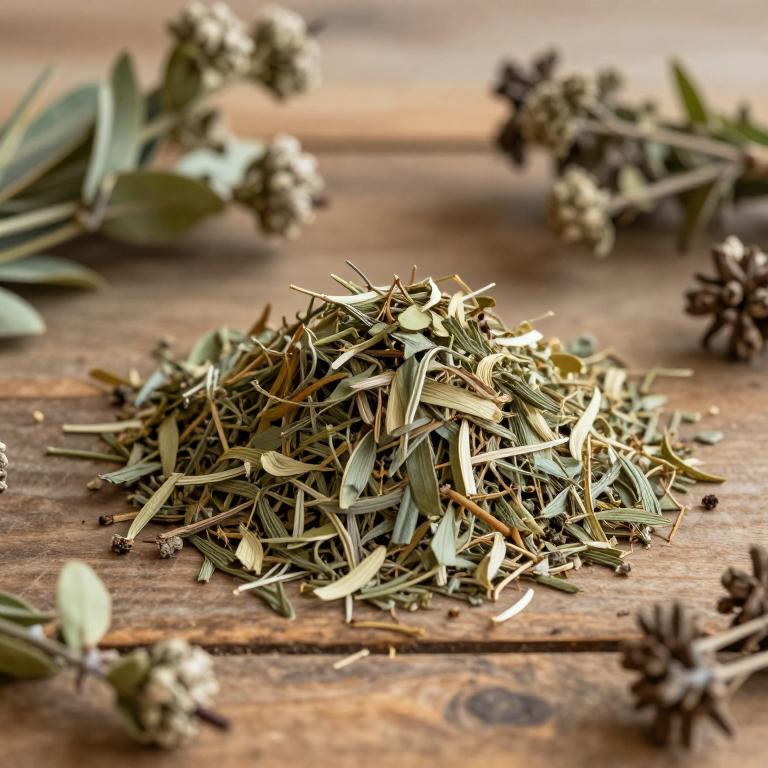
Names and Synonyms
Common Names
- White Thorn
- white-stem thorn
Scientific Names
Accepted name
Senegalia polyacanthaSynonyms
- Acacia polyacantha
Sources: Wikidata, Catalogue of Life
Taxonomical Classification
This plant belongs to the kingdom Plantae and the phylum Streptophyta, situated within the class Equisetopsida and subclass Magnoliidae. It is classified under the order Fabales and is a member of the family Fabaceae. Ultimately, its specific taxonomic identity is defined by the genus Senegalia and the species polyacantha.
| Rank | Classification |
|---|---|
| Kingdom | Plantae |
| Phylum | Streptophyta |
| Class | Equisetopsida |
| Subclass | Magnoliidae |
| Order | Fabales |
| Family | Fabaceae |
| Genus | Senegalia |
Sources: The World Checklist of Vascular Plants (WCVP)
Distribution
This plant, known scientifically as Senegalia polyacantha, is primarily distributed across the West Tropical Africa region. Its natural habitat encompasses several distinct countries within this geographic zone. Specifically, the species can be found growing in the landscapes of Benin and Burkina Faso. Additionally, the plant's range extends through the territories of Gambia and Ghana. Finally, its geographical presence is also confirmed within the borders of Guinea.
| Region | Area |
|---|---|
| West Tropical Africa | Benin |
| West Tropical Africa | Burkina |
| West Tropical Africa | Gambia |
| West Tropical Africa | Ghana |
| West Tropical Africa | Guinea |
| West Tropical Africa | Ivory Coast |
| West Tropical Africa | Mali |
| West Tropical Africa | Nigeria |
| West Tropical Africa | Niger |
| West Tropical Africa | Senegal |
Sources: The World Checklist of Vascular Plants (WCVP)
Botanical Identification
Ecology
The ecology of Senegalia polyacantha is characterized by its preference for specific moisture-rich and transitional environments, primarily thriving within riverine forests or woodlands and (wooded) grasslands. It is notably adapted to colonizing areas of impeded drainage, where soil moisture is higher. In terms of altitudinal distribution, the species occupies a distinct vertical niche, found at elevations ranging from a minimum of 460 m AMSL to a maximum of 1000 m AMSL.
- Elevational range max:
- 1000 m AMSL
- Elevational range min:
- 460 m AMSL
- Habitat :
- riverine forest or woodland, (wooded) grassland, on areas of impeded drainage
Life history
The life history of Senegalia polyacantha is characterized by its status as a perennial species, allowing it to persist in its environment through multiple growing seasons. As a phanerophyte, its buds are elevated above the ground level, a life form trait that supports its structural development within its ecological niche. This species exhibits a deciduous nature, shedding its leaves periodically, which is a key aspect of its seasonal physiological cycle.
- Deciduousness :
- deciduous
- Life form :
- phanerophyte
- Lifecycle :
- perennial
Morphology
The morphology of Senegalia polyacantha is characterized by its woody growth form, which can manifest as both a tree and a shrub. As a terrestrial plant, it grows independently without being an epiphyte or a parasite. The species exhibits significant variation in stature, with plant heights ranging from a minimum of 2 m to a maximum of approximately 24.38 m, maintaining an average height of 15 m. In terms of its structural habit, the plant is self-supporting rather than acting as a liana or a vine.
- Aquatic :
- terrestrial
- Climber :
- self-supporting
- Epiphyte :
- terrestrial
- Growth form :
- tree
- Growth form :
- shrub
- Parasite :
- independent
- Plant height max:
- 24.38429651 m
- Plant height mean:
- 15 m
- Plant height min:
- 2 m
- Woodiness :
- woody
Physiology
The physiology of Senegalia polyacantha is characterized by a C3 photosynthetic pathway, which involves the direct fixation of atmospheric carbon dioxide through the Calvin cycle. This metabolic strategy is typical for many woody species in its genus, allowing for efficient carbon assimilation under moderate environmental conditions. Furthermore, the plant functions as a nitrogen fixer, possessing a symbiotic relationship with rhizobia bacteria within its root nodules. This biological nitrogen fixation enables the plant to convert atmospheric nitrogen into ammonia, providing a critical source of nutrient enrichment that supports its growth and survival in nitrogen-poor soils.
- Nitrogen fixer :
- yes
- Photosynthetic pathway :
- C3
Reproduction
The reproduction of Senegalia polyacantha is characterized by a biotic pollination syndrome, relying primarily on animal vectors to facilitate the transfer of pollen. Specifically, the plant utilizes insect pollination to ensure successful fertilization, engaging various insect species as primary pollinators. Once fertilization is achieved, the plant produces seeds with a relatively small and consistent mass. The individual seed mass typically ranges from a minimum of 0.04895 g to a maximum of 0.08668 g, with the population exhibiting an average seed mass of approximately 0.0707058335 g.
- Pollination syndrome :
- insect
- Pollination syndrome :
- biotic
- Seed mass max:
- 0.08668 g
- Seed mass mean:
- 0.0707058335 g
- Seed mass min:
- 0.04895 g
Sources: Global Inventory of Floras and Traits (GIFT)
Plant Parts
Senegalia polyacantha has 3 reported plant parts identified across 3 scientific publications and several other databases that are studied for medicinal purposes. The most consistently reported plant part include leaf, root, stem.
| Plant part | Supporting sources | Consensus |
|---|---|---|
| Leaf | 1 supporting sources | ★☆☆☆☆ |
| Root | 1 supporting sources | ★☆☆☆☆ |
| Stem | 1 supporting sources | ★☆☆☆☆ |
Leaf
- Evidence-based complementary and alternative medicine : eCAM
Root
- Evidence-based complementary and alternative medicine : eCAM
Stem
- Journal of experimental pharmacology
Chemicals
Senegalia polyacantha has 9 reported phytochemicals identified across 3 scientific publications and several other databases. The most consistently reported chemicals include 2,3-dihydroxypropyltetracosanoate, 3-O-Methyl-D-chiro-inositol, 4-O-Methylmannose, Epicatechin, Lupeol.
| Chemical | Supporting sources | Consensus |
|---|---|---|
| 2,3-dihydroxypropyltetracosanoate | 1 supporting sources | ★☆☆☆☆ |
| 3-O-Methyl-D-chiro-inositol | 1 supporting sources | ★☆☆☆☆ |
| 4-O-Methylmannose | 1 supporting sources | ★☆☆☆☆ |
| Epicatechin | 1 supporting sources | ★☆☆☆☆ |
| Lupeol | 1 supporting sources | ★☆☆☆☆ |
| METHYL GALLATE | 1 supporting sources | ★☆☆☆☆ |
| STIGMASTEROL | 1 supporting sources | ★☆☆☆☆ |
| quercetin 3-O-galactoside | 1 supporting sources | ★☆☆☆☆ |
| sucrose | 1 supporting sources | ★☆☆☆☆ |
2,3-dihydroxypropyltetracosanoate
- Evidence-based complementary and alternative medicine : eCAM
3-O-Methyl-D-chiro-inositol
- Evidence-based complementary and alternative medicine : eCAM
4-O-Methylmannose
- Journal of experimental pharmacology
Epicatechin
- Evidence-based complementary and alternative medicine : eCAM
Lupeol
- Evidence-based complementary and alternative medicine : eCAM
METHYL GALLATE
- Evidence-based complementary and alternative medicine : eCAM
STIGMASTEROL
- Evidence-based complementary and alternative medicine : eCAM
quercetin 3-O-galactoside
- Evidence-based complementary and alternative medicine : eCAM
sucrose
- Journal of experimental pharmacology
Activities
Senegalia polyacantha has 2 reported activities identified across 3 scientific publications and several other databases. The most consistently reported activities include Antibacterial, Antioxidant.
| Activity | Supporting sources | Consensus |
|---|---|---|
| Antibacterial | 2 supporting sources | ★☆☆☆☆ |
| Antioxidant | 1 supporting sources | ★☆☆☆☆ |
Antibacterial
- Journal of experimental pharmacology
- Cellular and molecular biology (Noisy-le-Grand, France)
Antioxidant
- Cellular and molecular biology (Noisy-le-Grand, France)
Preparations
Senegalia polyacantha has 3 reported preparations identified across 3 scientific publications and several other databases. The most consistently reported preparations include compounds, extracted essential oils, fractions.
| Preparation | Supporting sources | Consensus |
|---|---|---|
| Compounds | 1 supporting sources | ★☆☆☆☆ |
| Extracted essential oils | 1 supporting sources | ★☆☆☆☆ |
| Fractions | 1 supporting sources | ★☆☆☆☆ |
Compounds
- Evidence-based complementary and alternative medicine : eCAM
Extracted essential oils
- Cellular and molecular biology (Noisy-le-Grand, France)
Fractions
- Evidence-based complementary and alternative medicine : eCAM