amritsar-gum
Senegalia modesta · Accepted scientific name
Scientific literature: Very Sparse (24 studies) · ★☆☆☆☆
Amritsar-gum, scientifically known as Senegalia modestica, is a versatile medicinal plant valued in traditional healing. Renowned for its therapeutic properties, it is frequently used to treat inflammatory conditions, skin ailments, and digestive issues. This resilient species offers significant pharmacological potential, making it a vital resource in natural medicine.
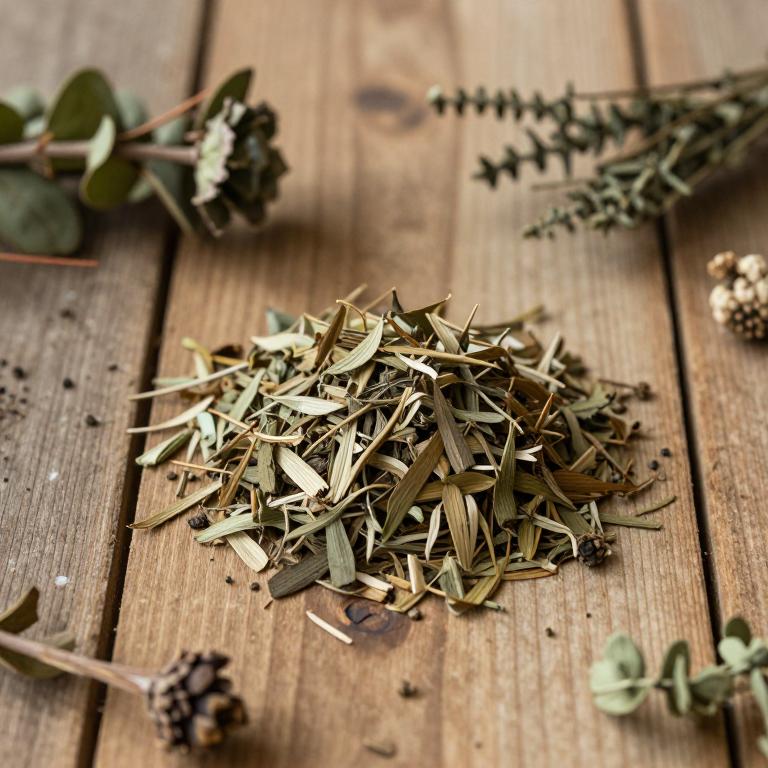
Names and Synonyms
Common Names
- amritsar-gum
- black sally
- blackwood
- Phulahi
Scientific Names
Accepted name
Senegalia modestaSynonyms
- Mimosa dumosa
- Acacia senegal subsp. modesta
- Acacia modesta
Sources: Wikidata, Catalogue of Life
Taxonomical Classification
This plant belongs to the kingdom Plantae and the phylum Streptophyta, falling under the class Equisetopsida and subclass Magnoliidae. Within the order Fabales, it is classified under the family Fabaceae. Specifically, its taxonomic identity is defined by the genus Senegalia, with the species name modesta.
| Rank | Classification |
|---|---|
| Kingdom | Plantae |
| Phylum | Streptophyta |
| Class | Equisetopsida |
| Subclass | Magnoliidae |
| Order | Fabales |
| Family | Fabaceae |
| Genus | Senegalia |
Sources: The World Checklist of Vascular Plants (WCVP)
Distribution
This plant exhibits a wide geographical distribution across several distinct regions of Asia. In Western Asia, it can be found growing within the borders of Afghanistan. The species is also well-established across the Indian Subcontinent, specifically in India and Pakistan. Furthermore, it is documented to inhabit the mountainous terrain of Nepal. Finally, its presence extends to the specific ecological zone of the West Himalaya.
| Region | Area |
|---|---|
| Western Asia | Afghanistan |
| Indian Subcontinent | India |
| Indian Subcontinent | Nepal |
| Indian Subcontinent | Pakistan |
| Indian Subcontinent | West Himalaya |
Sources: The World Checklist of Vascular Plants (WCVP)
Botanical Identification
Ecology
The ecology of Senegalia modesta is characterized by its specific niche within montane and sub-montane environments, where it occupies a defined altitudinal gradient. This species is predominantly found within an elevational range that starts at a minimum of 600 m AMSL and extends to a maximum of 1400 m AMSL. By thriving within this specific vertical span, the plant adapts to the varying temperature regimes and atmospheric pressures associated with these mid-elevation zones, playing a functional role in the structural complexity of its native habitat.
- Elevational range max:
- 1400 m AMSL
- Elevational range min:
- 600 m AMSL
Life history
The life history of Senegalia modesta is characterized by its classification as a phanerophyte, specifically exhibiting life forms such as nanophanerophyte and chamaephyte depending on its developmental stage and environmental stressors. As a woody species, its life cycle begins with seed germination, often triggered by seasonal moisture availability in its native arid or semi-arid habitats. It progresses through a vegetative growth phase where it establishes a robust structural framework, utilizing its perennial nature to endure fluctuating climatic conditions. The plant transitions into a reproductive phase marked by the production of flowers and subsequent seed development, ensuring the continuity of its population through dispersal mechanisms. Throughout its existence, its survival strategy relies on its ability to maintain its buds above the soil surface, a defining trait of its phanerophyte status, which allows it to withstand various levels of herbivory and seasonal environmental shifts.
- Life form :
- phanerophyte
Morphology
The morphology of Senegalia modesta is characterized by its growth form as a woody tree, which provides a robust and self-supporting structural framework. Unlike climbing plants or lianas, it is a self-supporting species that does not rely on other structures for elevation. It functions as an independent organism, lacking any parasitic or epiphytic tendencies, and maintains a strictly terrestrial existence rather than occupying aquatic or semiaquatic habitats. The plant's development is defined by its woody nature, establishing a perennial, arborescent habit.
- Aquatic :
- terrestrial
- Climber :
- self-supporting
- Epiphyte :
- terrestrial
- Growth form :
- tree
- Parasite :
- independent
- Woodiness :
- woody
Physiology
The physiology of Senegalia modesta is characterized by a C3 photosynthetic pathway, which dictates its carbon fixation processes and metabolic efficiency. In this pathway, the first stable intermediate produced during carbon fixation is a three-carbon molecule, typically processed within the mesophyll cells through the Calvin cycle. This physiological mechanism implies that the plant relies on the enzyme Rubisco for atmospheric CO2 assimilation, making its metabolic rate sensitive to ambient temperatures and moisture availability. Consequently, its gas exchange and water-use efficiency are intrinsically linked to the environmental conditions of its habitat, as the C3 process requires open stomata for continuous CO2 uptake, which inherently involves transpiration.
- Photosynthetic pathway :
- C3
Reproduction
The reproduction of Senegalia modesta is characterized by the production of seeds that exhibit specific morphological metrics regarding their weight. The seed mass within this species displays a relatively tight distribution, with a calculated mean seed mass of 0.03176 g. Detailed analysis of individual seed weights reveals a range of variation, where the minimum recorded seed mass is 0.03012 g and the maximum recorded seed mass reaches 0.0334 g. These values indicate a high degree of uniformity in the reproductive output of the plant, ensuring consistent seed characteristics for dispersal and subsequent germination.
- Seed mass max:
- 0.0334 g
- Seed mass mean:
- 0.03176 g
- Seed mass min:
- 0.03012 g
Sources: Global Inventory of Floras and Traits (GIFT)
Plant Parts
Senegalia modesta has 1 reported plant parts identified across 1 scientific publications and several other databases that are studied for medicinal purposes. The most consistently reported plant part include leaf.
| Plant part | Supporting sources | Consensus |
|---|---|---|
| Leaf | 1 supporting sources | ★☆☆☆☆ |
Leaf
- BMC plant biology
Chemicals
Senegalia modesta has 5 reported phytochemicals identified across 1 scientific publications and several other databases. The most consistently reported chemicals include Betulin, Flavonoids, Lupeol, oleic acid, squalene.
| Chemical | Supporting sources | Consensus |
|---|---|---|
| Betulin | 1 supporting sources | ★☆☆☆☆ |
| Flavonoids | 1 supporting sources | ★☆☆☆☆ |
| Lupeol | 1 supporting sources | ★☆☆☆☆ |
| oleic acid | 1 supporting sources | ★☆☆☆☆ |
| squalene | 1 supporting sources | ★☆☆☆☆ |
Betulin
- Dr. Duke
Flavonoids
- BMC plant biology
Lupeol
- Pharmaceutics
oleic acid
- Pharmaceutics
squalene
- Pharmaceutics
Activities
Senegalia modesta has 15 reported activities identified across 1 scientific publications and several other databases. The most consistently reported activities include Antibacterial, AntiHIV, Anticancer, Anticarcinomic, Antifeedant.
| Activity | Supporting sources | Consensus |
|---|---|---|
| Antibacterial | 2 supporting sources | ★☆☆☆☆ |
| AntiHIV | 1 supporting sources | ★☆☆☆☆ |
| Anticancer | 1 supporting sources | ★☆☆☆☆ |
| Anticarcinomic | 1 supporting sources | ★☆☆☆☆ |
| Antifeedant | 1 supporting sources | ★☆☆☆☆ |
| Antiflu | 1 supporting sources | ★☆☆☆☆ |
| Antiinflammatory | 1 supporting sources | ★☆☆☆☆ |
| Antioxidant | 1 supporting sources | ★☆☆☆☆ |
| Antitumor | 1 supporting sources | ★☆☆☆☆ |
| Antiviral | 1 supporting sources | ★☆☆☆☆ |
Antibacterial
- Zeitschrift fur Naturforschung. C, Journal of biosciences
- BMC plant biology
AntiHIV
- Dr. Duke
Anticancer
- Zeitschrift fur Naturforschung. C, Journal of biosciences
Anticarcinomic
- Dr. Duke
Antifeedant
- Dr. Duke
Antiflu
- Dr. Duke
Antiinflammatory
- Dr. Duke
Antioxidant
- BMC plant biology
Antitumor
- Dr. Duke
Antiviral
- Dr. Duke
Preparations
Senegalia modesta has 4 reported preparations identified across 1 scientific publications and several other databases. The most consistently reported preparations include aqueous extracts, ethyl acetate (AM-etha) fraction, methanolic extract, n-hexane (AM-hexa) fraction.
| Preparation | Supporting sources | Consensus |
|---|---|---|
| Aqueous extracts | 1 supporting sources | ★☆☆☆☆ |
| Ethyl acetate (am-etha) fraction | 1 supporting sources | ★☆☆☆☆ |
| Methanolic extract | 1 supporting sources | ★☆☆☆☆ |
| N-hexane (am-hexa) fraction | 1 supporting sources | ★☆☆☆☆ |
Aqueous extracts
- Zeitschrift fur Naturforschung. C, Journal of biosciences
Ethyl acetate (am-etha) fraction
- Pharmaceutics
Methanolic extract
- Pharmaceutics
N-hexane (am-hexa) fraction
- Pharmaceutics