Senegalia macrostachya
Senegalia macrostachya · Accepted scientific name
Scientific literature: Very Sparse (11 studies) · ★☆☆☆☆
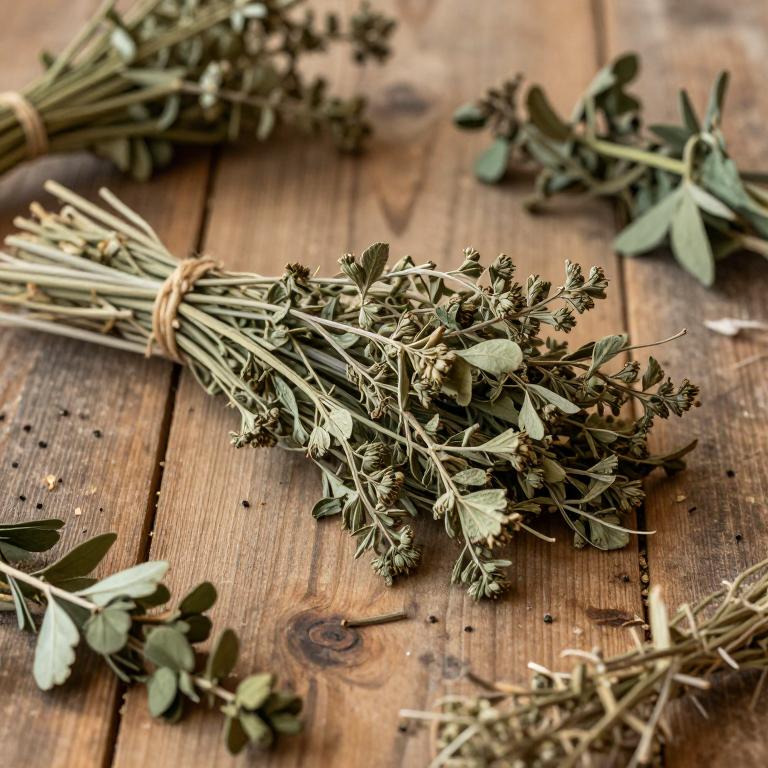
, scientifically known as Senegalia macrostachya, is a versatile medicinal plant native to various African regions. Renowned for its therapeutic properties, it is frequently utilized in traditional medicine to treat diverse ailments. This woody species offers significant pharmacological potential, making it a subject of growing interest in ethnobotanical research.
- Family
- Fabaceae
- Native range
- Africa
- Parts used
- Stem
- Common names
- Not available
- Scientific synonyms
- Acacia Macrostachya
Names and Synonyms
Scientific Names
Accepted name
Senegalia macrostachyaSynonyms
- Acacia macrostachya
Sources: Wikidata, Catalogue of Life
Taxonomical Classification
This plant belongs to the kingdom Plantae within the phylum Streptophyta and the class Equisetopsida. It is further classified under the subclass Magnoliidae and the order Fabales. Finally, it is a member of the Fabaceae family, specifically falling under the genus Senegalia (noted as Senegalia macrostachya).
| Rank | Classification |
|---|---|
| Kingdom | Plantae |
| Phylum | Streptophyta |
| Class | Equisetopsida |
| Subclass | Magnoliidae |
| Order | Fabales |
| Family | Fabaceae |
| Genus | Senegalia |
Sources: The World Checklist of Vascular Plants (WCVP)
Distribution
This plant is primarily distributed across the West Tropical Africa region. Within this geographical zone, it can be found growing in the nation of Benin. Its presence extends further to include the territory of Burkina. Additionally, the species is documented within the borders of Gambia and Guinea-Bissau. Finally, its natural habitat encompasses the country of Guinea.
| Region | Area |
|---|---|
| West Tropical Africa | Benin |
| West Tropical Africa | Burkina |
| West Tropical Africa | Gambia |
| West Tropical Africa | Guinea-Bissau |
| West Tropical Africa | Guinea |
| West Tropical Africa | Ivory Coast |
| West Tropical Africa | Mali |
| West Tropical Africa | Mauritania |
| West Tropical Africa | Nigeria |
| West Tropical Africa | Niger |
Sources: The World Checklist of Vascular Plants (WCVP)
Botanical Identification
Life history
The life history of Senegalia macrostachya is characterized by its long-lived nature and its structural adaptation to its environment. As a perennial species, the plant maintains its presence in the ecosystem over multiple years, rather than completing its life cycle in a single season. In terms of its growth habit and ecological positioning, it is classified as a phanerophyte, specifically exhibiting characteristics of both phanerophyte and nanophanerophyte life forms, which indicates that its buds are located on aerial parts of the plant, well above the soil surface. This life strategy allows the plant to persist through various seasonal changes and maintain a robust physical structure within its natural habitat.
- Life form :
- phanerophyte
- Lifecycle :
- perennial
Morphology
The morphology of Senegalia macrostachya is characterized by a woody growth form, specifically developing as a shrub. This terrestrial plant is self-supporting and does not function as a climber, epiphyte, or parasite, maintaining an independent life cycle. It reaches a significant stature, with a mean plant height of approximately 5 m and a maximum recorded height of up to 6.096074128 m.
- Aquatic :
- terrestrial
- Climber :
- self-supporting
- Epiphyte :
- terrestrial
- Growth form :
- shrub
- Parasite :
- independent
- Plant height max:
- 6.096074128 m
- Plant height mean:
- 5 m
- Woodiness :
- woody
Physiology
The physiology of Senegalia macrostachya is characterized by a C3 photosynthetic pathway, which governs its carbon fixation processes and metabolic efficiency under typical environmental conditions. Regarding its nutrient acquisition strategies, the plant does not function as a nitrogen fixer, meaning it lacks the symbiotic relationship with diazotrophic bacteria required to convert atmospheric nitrogen into biologically available forms.
- Nitrogen fixer :
- no
- Photosynthetic pathway :
- C3
Reproduction
The reproduction of Senegalia macrostachya is characterized by a biotic pollination syndrome, specifically relying on insects to facilitate the transfer of pollen. This insect-mediated pollination process ensures the genetic exchange necessary for the plant's life cycle. Following successful fertilization, the plant produces seeds with varying physical dimensions; the seed mass exhibits a range from a minimum of 0.057 g to a maximum of 0.0705 g, maintaining an average seed mass of 0.06375 g.
- Pollination syndrome :
- insect
- Pollination syndrome :
- biotic
- Seed mass max:
- 0.0705 g
- Seed mass mean:
- 0.06375 g
- Seed mass min:
- 0.057 g
Sources: Global Inventory of Floras and Traits (GIFT)
Plant Parts
Senegalia macrostachya has 1 reported plant parts identified across 1 scientific publications and several other databases that are studied for medicinal purposes. The most consistently reported plant part include stem.
| Plant part | Supporting sources | Consensus |
|---|---|---|
| Stem | 1 supporting sources | ★☆☆☆☆ |
Stem
- TheScientificWorldJournal
Chemicals
Senegalia macrostachya has 7 reported phytochemicals identified across 1 scientific publications and several other databases. The most consistently reported chemicals include Coumarins, Flavonoids, Phytosterols, STIGMASTEROL, Saponins.
| Chemical | Supporting sources | Consensus |
|---|---|---|
| Coumarins | 1 supporting sources | ★☆☆☆☆ |
| Flavonoids | 1 supporting sources | ★☆☆☆☆ |
| Phytosterols | 1 supporting sources | ★☆☆☆☆ |
| STIGMASTEROL | 1 supporting sources | ★☆☆☆☆ |
| Saponins | 1 supporting sources | ★☆☆☆☆ |
| Tannins | 1 supporting sources | ★☆☆☆☆ |
| triterpenoids | 1 supporting sources | ★☆☆☆☆ |
Coumarins
- TheScientificWorldJournal
Flavonoids
- TheScientificWorldJournal
Phytosterols
- TheScientificWorldJournal
STIGMASTEROL
- TheScientificWorldJournal
Saponins
- TheScientificWorldJournal
Tannins
- TheScientificWorldJournal
triterpenoids
- TheScientificWorldJournal
Activities
Senegalia macrostachya has 2 reported activities identified across 1 scientific publications and several other databases. The most consistently reported activities include Antibacterial, Anticancer.
| Activity | Supporting sources | Consensus |
|---|---|---|
| Antibacterial | 1 supporting sources | ★☆☆☆☆ |
| Anticancer | 1 supporting sources | ★☆☆☆☆ |
Antibacterial
- TheScientificWorldJournal
Anticancer
- Natural product research