Senegalia galpinii
Senegalia galpinii · Accepted scientific name
Scientific literature: Very Sparse (1 studies) · ★☆☆☆☆
Senegalia galpinii, is a resilient woody shrub indigenous to the arid landscapes of Southern Africa. Renowned for its medicinal properties, this plant is traditionally utilized in various herbal remedies to treat ailments ranging from skin infections to digestive issues. Its ability to thrive in harsh environments makes it ecologically significant.
- Family
- Not available
- Native range
- Africa
- Parts used
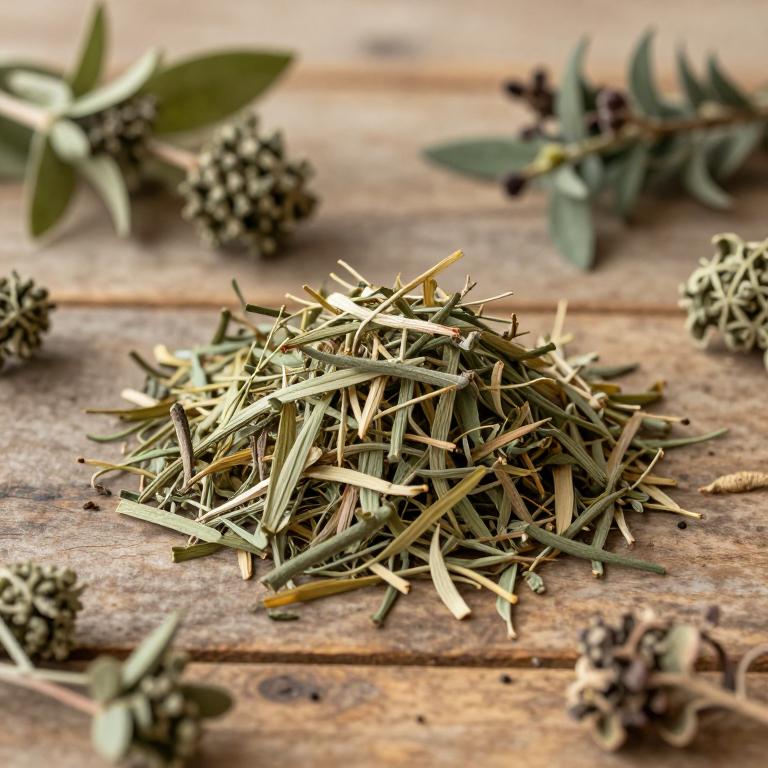
- Leaf
- Common names
- Not available
- Scientific synonyms
- Not available
Names and Synonyms
Scientific Names
Accepted name
Senegalia galpiniiDistribution
This plant exhibits a wide geographical range across several key regions of the African continent. In East Tropical Africa, its presence is documented specifically within Tanzania. Moving into South Tropical Africa, the species can be found inhabiting the landscapes of Angola. It also maintains a significant distribution throughout Malawi and Mozambique. Finally, the range of this medicinal plant extends further into the territory of Zambia.
| Region | Area |
|---|---|
| East Tropical Africa | Tanzania |
| South Tropical Africa | Angola |
| South Tropical Africa | Malawi |
| South Tropical Africa | Mozambique |
| South Tropical Africa | Zambia |
| South Tropical Africa | Zimbabwe |
| Southern Africa | Botswana |
| Southern Africa | Caprivi Strip |
| Southern Africa | Northern Provinces |
Sources: The World Checklist of Vascular Plants (WCVP)
Botanical Identification
Ecology
The ecology of Senegalia galpinii is characterized by its specific adaptation to mid-altitude terrains, where it thrives within a defined altitudinal niche. This species is primarily distributed across landscapes that fall within an elevational range spanning from a minimum of 640 m AMSL to a maximum of 1200 m AMSL. This vertical distribution suggests a preference for specific montane or sub-montane environmental conditions, likely influenced by the temperature gradients and moisture availability found within these elevations. Its presence in these specific zones indicates an ecological specialization to the soil compositions and climatic patterns typical of these middle-altitude habitats.
- Elevational range max:
- 1200 m AMSL
- Elevational range min:
- 640 m AMSL
Life history
The life history of Senegalia galpinii is characterized by its status as a perennial plant, allowing it to persist in its environment through multiple growing seasons. As a deciduous species, it undergoes a seasonal shedding of its foliage, a physiological adaptation that typically helps the plant manage moisture levels and survive periods of environmental stress.
- Deciduousness :
- deciduous
- Lifecycle :
- perennial
Morphology
The morphology of Senegalia galpinii is characterized by its stature as a woody tree, exhibiting a significant growth form that ranges in height from a minimum of 0.6 meters to a maximum of 36 meters, with an average height of approximately 20 meters. As a terrestrial species, it does not inhabit aquatic or semiaquatic environments, nor does it function as an epiphyte. The plant is an independent organism, lacking parasitic tendencies, and is classified as a self-supporting structure rather than a liana, vine, or climbing plant.
- Aquatic :
- terrestrial
- Climber :
- self-supporting
- Epiphyte :
- terrestrial
- Growth form :
- tree
- Parasite :
- independent
- Plant height max:
- 36 m
- Plant height mean:
- 20 m
- Plant height min:
- 0.6 m
- Woodiness :
- woody
Physiology
The physiology of Senegalia galpinii is characterized by a metabolic framework that utilizes the C3 photosynthetic pathway, a common mechanism among many woody species where carbon fixation occurs directly through the Calvin cycle. In terms of its nutrient cycling capabilities, the plant does not function as a nitrogen fixer, meaning it lacks the specialized symbiotic relationship with nitrogen-fixing bacteria required to convert atmospheric nitrogen into a usable form for growth.
- Nitrogen fixer :
- no
- Photosynthetic pathway :
- C3
Reproduction
The reproduction of Senegalia galpinii is driven by a biotic pollination syndrome, relying heavily on living organisms to facilitate the transfer of pollen. Specifically, the plant utilizes insect-mediated pollination, with bees acting as a key functional group in the reproductive process. Following successful fertilization, the plant produces seeds characterized by a very consistent and narrow mass range. The seed mass exhibits a mean value of approximately 0.27789 g, with minimal variation between the recorded minimum of 0.27778 g and the maximum of 0.278 g.
- Pollination syndrome :
- insect
- Pollination syndrome :
- bee
- Pollination syndrome :
- biotic
- Seed mass max:
- 0.278 g
- Seed mass mean:
- 0.27789 g
- Seed mass min:
- 0.27778 g
Sources: Global Inventory of Floras and Traits (GIFT)
Plant Parts
Senegalia galpinii has 1 reported plant parts identified across 1 scientific publications and several other databases that are studied for medicinal purposes. The most consistently reported plant part include leaf.
| Plant part | Supporting sources | Consensus |
|---|---|---|
| Leaf | 1 supporting sources | ★☆☆☆☆ |
Leaf
- Molecules (Basel, Switzerland)