Senegalia asak
Senegalia asak · Accepted scientific name
Scientific literature: Very Sparse (0 studies) · ★☆☆☆☆
Senegalia asak is a prominent botanical species recognized for its diverse range of therapeutic potential in traditional medicine. Researchers have increasingly focused on this plant to explore the concentrated bioactive compounds found within its various parts. One of the most effective methods for isolating these properties involves the creation of specialized alcoholic extracts. These preparations are studied extensively to determine their efficacy in treating various ailments and managing oxidative stress. Understanding the chemical profile of these extracts provides essential insights into the plant's pharmacological value.
- Synonyms
- Mimosa Asak · Acacia Asak · 3 more
- Common names
- Not available
- Family
- Fabaceae
- Distribution
- Asia-Tropical
- Plant Parts
- Not available
Classification
Common Names
Senegalia asak is a botanical species widely recognized by its traditional Chinese common name, 三刺兒茶. This plant belongs to a fascinating genus characterized by unique structural features and ecological importance. Understanding its nomenclature is essential for researchers and herbalists who study its specific properties. By identifying it through both its scientific and local names, one can better navigate its role in regional biodiversity. Such linguistic connections highlight the deep relationship between cultural history and natural science.
Sources: Catalogue of Life (COL)
Synonyms
Senegalia asak is a botanical species known to be associated with several different taxonomic designations. It is formally recognized as a synonym for Acacia asak, reflecting its place within various classification systems. This plant is also linked to Acacia senegal subsp. glaucophylla, illustrating its complex relationship with related subspecies. Furthermore, the species has been identified under the names Acacia triacantha and Senegalia triacantha in different contexts. Finally, the name Mimosa asak serves as another synonym, highlighting the diverse nomenclature used to describe this single plant.
Sources: The World Checklist of Vascular Plants (WCVP)
Taxonomy
Senegalia asak is a distinctive plant belonging to the vast kingdom Plantae. Within this kingdom, it is specifically classified under the class Equisetopsida. This species is further organized into the order Fabales, which defines its broader biological lineage. As a member of the family Fabaceae, it shares common characteristics with many other legumes. Ultimately, its precise scientific identity is found within the genus Senegalia.
| Rank | Classification |
|---|---|
| Kingdom | Plantae |
| Phylum | Streptophyta |
| Class | Equisetopsida |
| Subclass | Magnoliidae |
| Order | Fabales |
| Family | Fabaceae |
| Genus | Senegalia |
Sources: The World Checklist of Vascular Plants (WCVP)
Distribution
Geographic Regions
Senegalia asak maintains a widespread geographical presence that spans across both the African and Asian continents. In Africa, this species is prominently distributed throughout Northeast Tropical Africa, including specific populations in Djibouti, Eritrea, and Ethiopia. Its range further extends into the Sudan and South Sudan regions, solidifying its importance within the local ecosystems of those areas. Moving beyond the African continent, the plant also thrives within the temperate zones of Asia. Specifically, it can be found inhabiting the arid landscapes of the Arabian Peninsula, most notably in Oman.
Sources: The World Checklist of Vascular Plants (WCVP)
Identification
Morphology
Senegalia asak is a self-supporting plant that exhibits a distinct tree-like growth form. It typically reaches a maximum height of 8 meters as it matures in its natural habitat. This structural characteristic allows the species to establish a stable presence within its ecosystem.
Sources: Global Inventory of Floras and Traits (GIFT)
Biological Activities
Compounds
Conditions
Senegalia asak exhibits significant inhibitory activity against the SARS-CoV-2 main protease (Mpro) with an inhibition rate of 95.2% at a concentration of 100 µg/mL. Molecular docking and simulation analyses identified specific compounds from the plant, such as compound 14, as potential inhibitors of this viral protein. Additionally, the methanol extracts derived from the barks of this plant demonstrate effective free radical scavenging activities in DPPH assays. These dual properties highlight the plant's potential as both an antiviral agent and an antioxidant. Consequently, the phytochemicals within Senegalia asak serve important roles in addressing viral replication and oxidative stress.
Preparations
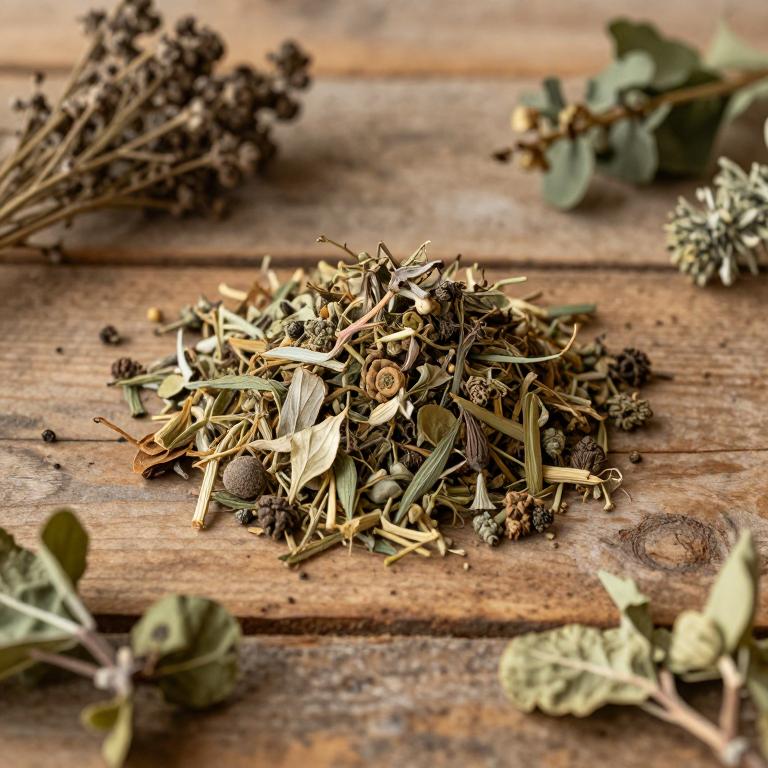
Senegalia asak is prepared as alcoholic extracts to evaluate its potential medicinal properties. These specific extracts were tested for their ability to inhibit the SARS-CoV-2 main protease. During the investigation, the alcoholic extracts of this plant demonstrated a significant inhibition rate of 95.2% at a concentration of 100 µg/mL. Detailed phytochemical studies of these extracts led to the identification of four specific flavonoid compounds. These identified compounds were further analyzed through molecular docking to determine their effectiveness as antiviral inhibitors.