Senecio fistulosus
Senecio fistulosus · Accepted scientific name
Scientific literature: Very Sparse (5 studies) · ★☆☆☆☆
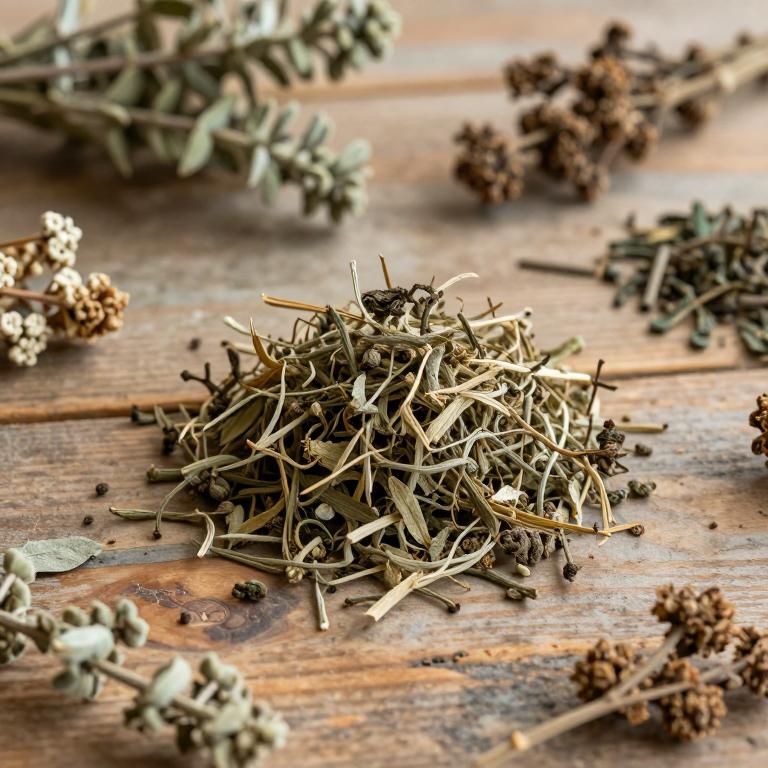
, scientifically known as Senecio fistulosus, is a remarkable medicinal herb valued in traditional healing practices. Often recognized by its distinctive hollow stems, this plant possesses diverse therapeutic properties. It is frequently utilized for its antioxidant, anti-inflammatory, and antimicrobial qualities, offering significant potential in natural pharmacological research and wellness.
- Family
- Asteraceae
- Native range
- Southern America
- Parts used
- Not available
- Common names
- Not available
- Scientific synonyms
- Not available
Names and Synonyms
Scientific Names
Accepted name
Senecio fistulosusSources: Wikidata, Catalogue of Life
Taxonomical Classification
This plant belongs to the kingdom Plantae and the phylum Streptophyta, falling under the class Equisetopsida and subclass Magnoliidae. It is further classified within the order Asterales and the family Asteraceae. Within this group, it is specifically identified under the genus Senecio.
| Rank | Classification |
|---|---|
| Kingdom | Plantae |
| Phylum | Streptophyta |
| Class | Equisetopsida |
| Subclass | Magnoliidae |
| Order | Asterales |
| Family | Asteraceae |
| Genus | Senecio |
Sources: The World Checklist of Vascular Plants (WCVP)
Distribution
This plant exhibits a widespread presence across several regions in South America. In the western portion of the continent, it can be found growing in Bolivia. Moving toward the southern part of the continent, its range extends through the northwest and southern regions of Argentina. The species is also distributed across central and southern Chile. Together, these locations highlight a broad longitudinal and latitudinal reach across the southern half of the continent.
| Region | Area |
|---|---|
| Western South America | Bolivia |
| Southern South America | Argentina South |
| Southern South America | Argentina Northwest |
| Southern South America | Chile Central |
| Southern South America | Chile South |
Sources: The World Checklist of Vascular Plants (WCVP)
Botanical Identification
Ecology
The ecology of Senecio fistulosus is defined by its specialized adaptation to high-altitude montane environments, where it thrives within a specific vertical distribution. This species is typically found across an altitudinal gradient that spans from a minimum elevation of 1200 m AMSL to a maximum elevation of 3500 m AMSL. Within this range, the plant occupies diverse ecological niches characteristic of mountain ecosystems, often navigating the varying temperature fluctuations and atmospheric pressures associated with significant changes in altitude. Its ability to persist from mid-elevation zones up to high-altitude reaches indicates a robust physiological tolerance to the unique climatic stressors of these montane habitats.
- Elevational range max:
- 3500 m AMSL
- Elevational range min:
- 1200 m AMSL
Life history
The life history of Senecio fistulosus is characterized by a perennial lifecycle, though its development can vary depending on environmental conditions. As a perennial species, it possesses the ability to persist through multiple growing seasons, often establishing a robust root system that supports its continuous existence in its natural habitat. Throughout its life stages, the plant undergoes cycles of vegetative growth and reproductive phases, transitioning from its initial establishment to the production of flowering structures. The duration of these cycles and the frequency of its reproductive efforts can be influenced by external factors, leading to a variable growth pattern that ensures its survival across changing ecological landscapes.
- Lifecycle :
- perennial
Morphology
The morphology of Senecio fistulosus is characterized by a non-woody, herbaceous growth form, specifically classified as a herb or forb. It functions as an independent organism, exhibiting no parasitic tendencies, and is primarily a terrestrial species rather than an aquatic or semiaquatic one. Unlike climbing species, it is entirely self-supporting and does not possess any epiphytic habits, remaining strictly terrestrial in its ecological niche.
- Aquatic :
- terrestrial
- Climber :
- self-supporting
- Epiphyte :
- terrestrial
- Growth form :
- herb
- Parasite :
- independent
- Woodiness :
- non-woody
Sources: Global Inventory of Floras and Traits (GIFT)
Chemicals
Senecio fistulosus has 5 reported phytochemicals identified across 0 scientific publications and several other databases. The most consistently reported chemicals include (Z,Z,Z)-9,12,15-Octadecatrienoic acid, Anthraquinones, Flavonoids, Hexadecanoic acid, Phenols.
| Chemical | Supporting sources | Consensus |
|---|---|---|
| (Z,Z,Z)-9,12,15-Octadecatrienoic acid | 1 supporting sources | ★☆☆☆☆ |
| Anthraquinones | 1 supporting sources | ★☆☆☆☆ |
| Flavonoids | 1 supporting sources | ★☆☆☆☆ |
| Hexadecanoic acid | 1 supporting sources | ★☆☆☆☆ |
| Phenols | 1 supporting sources | ★☆☆☆☆ |
(Z,Z,Z)-9,12,15-Octadecatrienoic acid
- Molecules (Basel, Switzerland)
Anthraquinones
- Molecules (Basel, Switzerland)
Flavonoids
- Molecules (Basel, Switzerland)
Hexadecanoic acid
- Molecules (Basel, Switzerland)
Phenols
- Molecules (Basel, Switzerland)