Sempervivum transcaucasicum
Sempervivum transcaucasicum · Accepted scientific name
Scientific literature: Very Sparse (6 studies) · ★☆☆☆☆
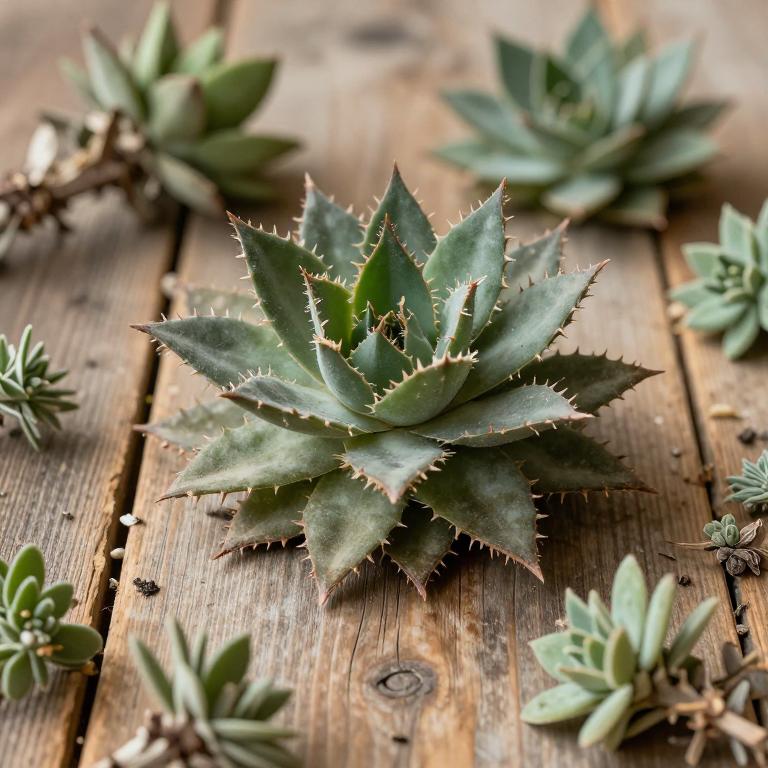
Scientifically known as Sempervivum transcaucasicum, is a resilient perennial succulent native to the Caucasus Mountains. Often called "houseleeks," these hardy plants are valued in traditional medicine for their anti-inflammatory and healing properties. Their thick, fleshy leaves are frequently utilized to treat minor wounds, skin irritations, and various topical ailments.
- Family
- Crassulaceae
- Native range
- Asia-Temperate
- Parts used
- Leaf · Root
- Common names
- Not available
- Scientific synonyms
- Sempervivum Gurgenidzeae · Sempervivum Georgicum
Names and Synonyms
Scientific Names
Accepted name
Sempervivum transcaucasicumSynonyms
- Sempervivum gurgenidzeae
- Sempervivum georgicum
Sources: Wikidata, Catalogue of Life
Taxonomical Classification
This plant belongs to the kingdom Plantae and the phylum Streptophyta, falling under the class Equisetopsida and subclass Magnoliidae. Within the order Saxifragales, it is classified under the family Crassulaceae. It is specifically identified by the genus Sempervivum.
| Rank | Classification |
|---|---|
| Kingdom | Plantae |
| Phylum | Streptophyta |
| Class | Equisetopsida |
| Subclass | Magnoliidae |
| Order | Saxifragales |
| Family | Crassulaceae |
| Genus | Sempervivum |
Sources: The World Checklist of Vascular Plants (WCVP)
Distribution
This plant is primarily found within the specific geographical regions of the Caucasus. Its natural habitat is concentrated in the Transcaucasus area, where it thrives in unique environmental conditions. Additionally, the species extends its range into Western Asia. Specifically, it can be located within the borders of Türkiye. These distinct territories define the limited native distribution of Sempervivum transcaucasicum.
| Region | Area |
|---|---|
| Caucasus | Transcaucasus |
| Western Asia | Türkiye |
Sources: The World Checklist of Vascular Plants (WCVP)
Plant Parts
Sempervivum transcaucasicum has 2 reported plant parts identified across 2 scientific publications and several other databases that are studied for medicinal purposes. The most consistently reported plant part include leaf, root.
| Plant part | Supporting sources | Consensus |
|---|---|---|
| Leaf | 1 supporting sources | ★☆☆☆☆ |
| Root | 1 supporting sources | ★☆☆☆☆ |
Leaf
- Journal of xenobiotics
Root
- Journal of xenobiotics
Activities
Sempervivum transcaucasicum has 2 reported activities identified across 2 scientific publications and several other databases. The most consistently reported activities include Antibacterial, Antioxidant.
| Activity | Supporting sources | Consensus |
|---|---|---|
| Antibacterial | 1 supporting sources | ★☆☆☆☆ |
| Antioxidant | 1 supporting sources | ★☆☆☆☆ |
Antibacterial
- Journal of xenobiotics
Antioxidant
- Journal of xenobiotics
Conditions
Sempervivum transcaucasicum has 2 reported investigations on conditions identified across 2 scientific publications and several other databases. The most consistently reported conditions include Escherichia coli, oxidative damage.
| Condition | Supporting sources | Consensus |
|---|---|---|
| Escherichia coli | 1 supporting sources | ★☆☆☆☆ |
| Oxidative damage | 1 supporting sources | ★☆☆☆☆ |
Escherichia coli
- Journal of xenobiotics
Oxidative damage
- Journal of xenobiotics
Preparations
Sempervivum transcaucasicum has 3 reported preparations identified across 2 scientific publications and several other databases. The most consistently reported preparations include leaf and root extracts, leaf extract, root extract.
| Preparation | Supporting sources | Consensus |
|---|---|---|
| Leaf and root extracts | 1 supporting sources | ★☆☆☆☆ |
| Leaf extract | 1 supporting sources | ★☆☆☆☆ |
| Root extract | 1 supporting sources | ★☆☆☆☆ |
Leaf and root extracts
- Journal of xenobiotics
Leaf extract
- Journal of xenobiotics
Root extract
- Journal of xenobiotics