Selaginella nothohybrida
Selaginella nothohybrida · Accepted scientific name
Scientific literature: Very Sparse (8 studies) · ★☆☆☆☆
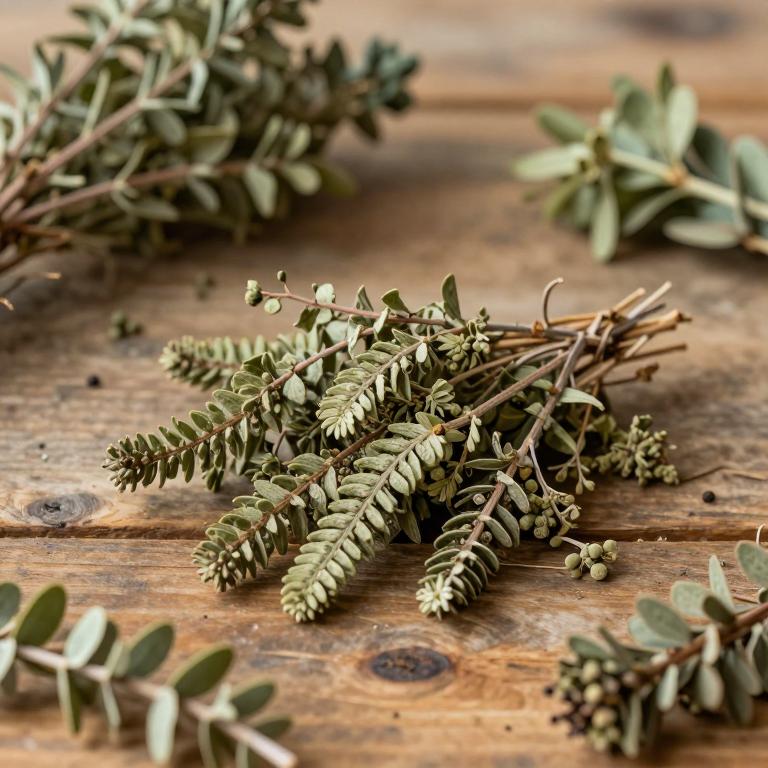
Selagineella nothohybrida, is a fascinating medicinal plant belonging to the spike moss family. Renowned for its unique biological resilience, this species is increasingly studied for its potential therapeutic properties. Its bioactive compounds offer promising avenues in traditional medicine, particularly for addressing inflammation and supporting overall cellular health and regeneration.
- Family
- Selaginellaceae
- Native range
- Northern America
- Parts used
- Not available
- Common names
- Not available
- Scientific synonyms
- Not available
Names and Synonyms
Scientific Names
Accepted name
Selaginella nothohybridaSources: Wikidata
Taxonomical Classification
This plant belongs to the kingdom Plantae within the phylum Streptophyta and the class Equisetopsida. It is further classified under the subclass Lycopodiidae and the order Selaginellales, falling into the family Selaginellaceae. Ultimately, its taxonomic identity is defined by its membership in the genus Selaginella.
| Rank | Classification |
|---|---|
| Kingdom | Plantae |
| Phylum | Streptophyta |
| Class | Equisetopsida |
| Subclass | Lycopodiidae |
| Order | Selaginellales |
| Family | Selaginellaceae |
| Genus | Selaginella |
Sources: The World Checklist of Vascular Plants (WCVP)
Distribution
This plant, Selaginella nothohybrida, exhibits a specific distribution pattern within the country of Mexico. Its presence is recorded across several distinct regions of the nation. Specifically, it can be found growing in the Northeast part of Mexico. Additionally, the species is distributed throughout the Southwest region of Mexico. These two areas represent the primary geographical range for this medicinal plant.
| Region | Area |
|---|---|
| Mexico | Mexico Northeast |
| Mexico | Mexico Southwest |
Sources: The World Checklist of Vascular Plants (WCVP)
Botanical Identification
Morphology
The morphology of Selaginella nothohybrida is characterized by a growth form classified as a herb, exhibiting a non-woody structure throughout its vegetative body. It functions as an independent organism, lacking any parasitic tendencies, and maintains a primarily terrestrial existence rather than being aquatic or epiphytic. In terms of its physical habit, the plant is self-supporting, acting neither as an obligatory nor a facultative climber, such as a vine or liana, but instead maintaining its own structural integrity.
- Aquatic :
- terrestrial
- Climber :
- self-supporting
- Epiphyte :
- terrestrial
- Growth form :
- herb
- Parasite :
- independent
- Woodiness :
- non-woody
Sources: Global Inventory of Floras and Traits (GIFT)
Chemicals
Selaginella nothohybrida has 3 reported phytochemicals identified across 0 scientific publications and several other databases. The most consistently reported chemicals include Amentoflavone, Robustaflavone, trehalose.
| Chemical | Supporting sources | Consensus |
|---|---|---|
| Amentoflavone | 2 supporting sources | ★☆☆☆☆ |
| Robustaflavone | 2 supporting sources | ★☆☆☆☆ |
| trehalose | 2 supporting sources | ★☆☆☆☆ |
Amentoflavone
- Journal of ethnopharmacology
- Journal of AOAC International
Robustaflavone
- Journal of ethnopharmacology
- Journal of AOAC International
trehalose
- Journal of ethnopharmacology
- Journal of AOAC International
Conditions
Selaginella nothohybrida has 1 reported investigations on conditions identified across 0 scientific publications and several other databases. The most consistently reported conditions include diuresis.
| Condition | Supporting sources | Consensus |
|---|---|---|
| Diuresis | 1 supporting sources | ★☆☆☆☆ |
Diuresis
- Journal of ethnopharmacology
Preparations
Selaginella nothohybrida has 1 reported preparations identified across 0 scientific publications and several other databases. The most consistently reported preparations include decoction.
| Preparation | Supporting sources | Consensus |
|---|---|---|
| Decoction | 1 supporting sources | ★☆☆☆☆ |
Decoction
- Journal of ethnopharmacology