resurrection-plant
Selaginella lepidophylla · Accepted scientific name
Scientific literature: Very Sparse (14 studies) · ★☆☆☆☆
Resurrection-plant, scientifically known as Selaginella lepidophylla, is a remarkable lycopod capable of surviving extreme dehydration. Known for its ability to "revive" when exposed to water, this desert-dwelling species is studied for its unique physiological resilience and potential medicinal applications in cellular protection and combating oxidative stress in biological systems.
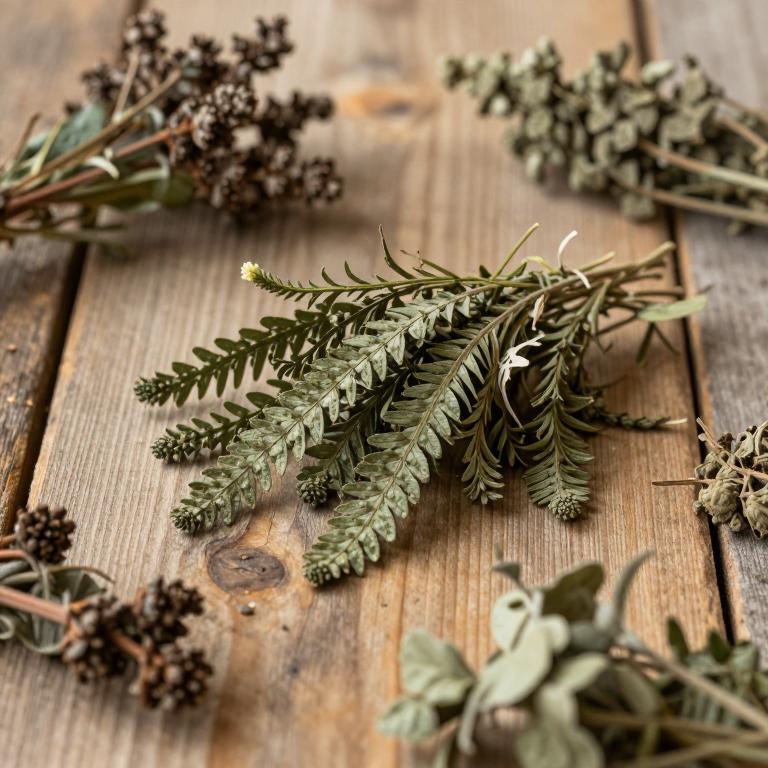
Names and Synonyms
Common Names
- resurrection-plant
- rose-of-Jericho
- dinosaur plant
- false rose of Jericho
- resurrection moss
Scientific Names
Accepted name
Selaginella lepidophyllaSynonyms
- Lycopodium lepidophyllum
- Selaginella rediviva
- Lepidoselaginella lepidophylla
- Lycopodioides lepidophylla
Regional and Traditional Names
Spanish:
- Lycopodium lepidophyllum
- Doradilla
- Flor de peña
- Yamanquitexochitl
German:
- Unechte Rose von Jericho
- Unechte Rose von Jericho
Sources: Wikidata, Catalogue of Life
Taxonomical Classification
This plant belongs to the kingdom Plantae and is classified under the phylum Streptophyta within the class Equisetopsida. It is further categorized into the subclass Lycopodiidae and the order Selaginellales, falling under the family Selaginellaceae. Finally, its taxonomic identity is defined by the genus Selaginella.
| Rank | Classification |
|---|---|
| Kingdom | Plantae |
| Phylum | Streptophyta |
| Class | Equisetopsida |
| Subclass | Lycopodiidae |
| Order | Selaginellales |
| Family | Selaginellaceae |
| Genus | Selaginella |
Sources: The World Checklist of Vascular Plants (WCVP)
Distribution
This plant is primarily distributed across the South-Central United States and various regions of Mexico. Within the United States, its range includes the states of New Mexico and Texas. In Mexico, the species can be found throughout the central part of the country. Additionally, it extends into the northeastern territories of Mexico. The plant's distribution also covers the Gulf regions of Mexico.
| Region | Area |
|---|---|
| South-Central U.S.A. | New Mexico |
| South-Central U.S.A. | Texas |
| Mexico | Mexico Central |
| Mexico | Mexico Northeast |
| Mexico | Mexico Gulf |
| Mexico | Mexico Northwest |
| Mexico | Mexico Southwest |
| Mexico | Mexico Southeast |
| Central America | Costa Rica |
| Central America | El Salvador |
Sources: The World Checklist of Vascular Plants (WCVP)
Botanical Identification
Life history
The life history of Selaginella lepidophylla is characterized by a perennial lifecycle, allowing it to persist through varying environmental conditions over multiple years. As a lycophyte, its development is defined by a complex alternation of generations, typically involving a dominant sporophyte stage that undergoes specialized physiological adaptations to survive extreme desiccation. The plant exhibits a remarkable ability to enter a state of metabolic suspension, curling into a tight, brown ball when moisture is scarce and rapidly unfurling into a green, active state upon rehydration. This survival strategy enables the plant to endure prolonged periods of drought in arid habitats, resuming its growth and reproductive processes once favorable hydration levels are restored.
- Lifecycle :
- perennial
Morphology
The morphology of Selaginella lepidophylla is characterized by a terrestrial growth habit, functioning as an independent organism without parasitic or epiphytic dependencies. It presents a non-woody structure, manifesting primarily as a herbaceous forb. In terms of its physical orientation, the plant is self-supporting, categorized as neither a liana nor a vine, as it does not require external climbing structures to maintain its form.
- Aquatic :
- terrestrial
- Climber :
- self-supporting
- Epiphyte :
- terrestrial
- Growth form :
- herb
- Growth form :
- forb
- Parasite :
- independent
- Woodiness :
- non-woody
Sources: Global Inventory of Floras and Traits (GIFT)
Chemicals
Selaginella lepidophylla has 3 reported phytochemicals identified across 0 scientific publications and several other databases. The most consistently reported chemicals include Amentoflavone, Robustaflavone, trehalose.
| Chemical | Supporting sources | Consensus |
|---|---|---|
| Amentoflavone | 2 supporting sources | ★☆☆☆☆ |
| Robustaflavone | 2 supporting sources | ★☆☆☆☆ |
| trehalose | 2 supporting sources | ★☆☆☆☆ |
Amentoflavone
- Journal of ethnopharmacology
- Journal of AOAC International
Robustaflavone
- Journal of ethnopharmacology
- Journal of AOAC International
trehalose
- Journal of ethnopharmacology
- Journal of AOAC International
Activities
Selaginella lepidophylla has 1 reported activities identified across 0 scientific publications and several other databases. The most consistently reported activities include Diuretic.
| Activity | Supporting sources | Consensus |
|---|---|---|
| Diuretic | 1 supporting sources | ★☆☆☆☆ |
Diuretic
- Urolithiasis
Conditions
Selaginella lepidophylla has 5 reported investigations on conditions identified across 0 scientific publications and several other databases. The most consistently reported conditions include gastrointestinal disorders, Urolithiasis, diuresis, fungi, hypertension.
| Condition | Supporting sources | Consensus |
|---|---|---|
| Gastrointestinal disorders | 2 supporting sources | ★☆☆☆☆ |
| Urolithiasis | 1 supporting sources | ★☆☆☆☆ |
| Diuresis | 1 supporting sources | ★☆☆☆☆ |
| Fungi | 1 supporting sources | ★☆☆☆☆ |
| Hypertension | 1 supporting sources | ★☆☆☆☆ |
Gastrointestinal disorders
- Journal of medicinal food
- The Journal of the Egyptian Public Health Association
Urolithiasis
- Urolithiasis
Diuresis
- Journal of ethnopharmacology
Fungi
- Journal of medicinal food
Hypertension
- Journal of intercultural ethnopharmacology
Preparations
Selaginella lepidophylla has 3 reported preparations identified across 0 scientific publications and several other databases. The most consistently reported preparations include Methanolic extracts, decoction, methanolic extracts.
| Preparation | Supporting sources | Consensus |
|---|---|---|
| Methanolic extracts | 1 supporting sources | ★☆☆☆☆ |
| Decoction | 1 supporting sources | ★☆☆☆☆ |
| Methanolic extracts | 1 supporting sources | ★☆☆☆☆ |
Methanolic extracts
- Journal of medicinal food
Decoction
- Journal of ethnopharmacology
Methanolic extracts
- Journal of medicinal food