Selaginella convoluta
Selaginella convoluta · Accepted scientific name
Scientific literature: Very Sparse (17 studies) · ★☆☆☆☆
Selaginella convoluta, scientifically known as Selaginella convoluta, is a unique resurrection plant celebrated for its remarkable ability to survive extreme dehydration. Often used in traditional medicine and modern pharmacology, this resilient species offers fascinating insights into cellular protection, stress tolerance, and potential therapeutic applications in biotechnology and wellness.
- Family
- Selaginellaceae
- Native range
- Northern America
- Parts used
- Not available
- Common names
- Not available
- Scientific synonyms
- Pulviniella Convoluta · Lycopodioides Convoluta · 10 more
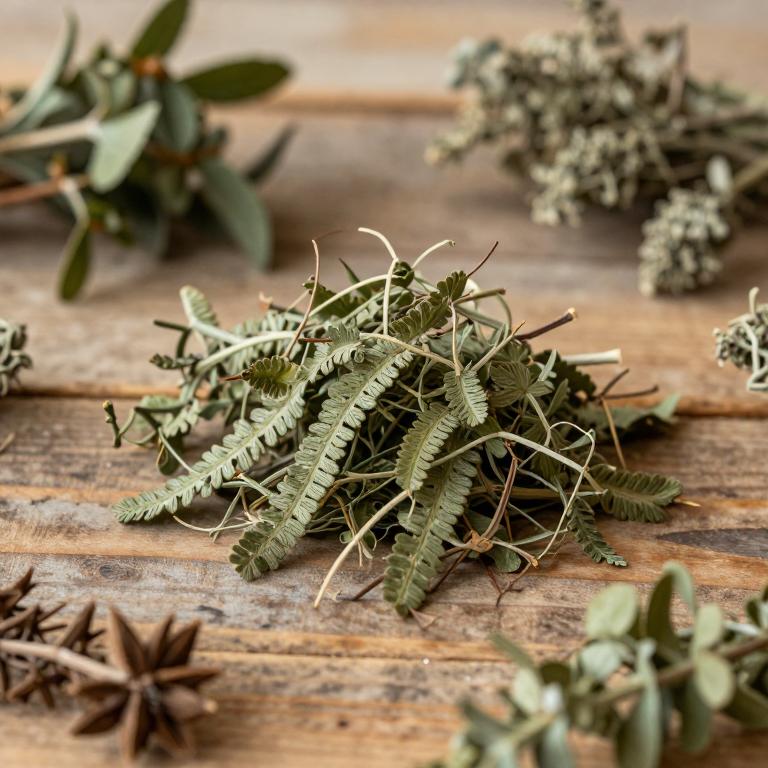
Names and Synonyms
Scientific Names
Accepted name
Selaginella convolutaSynonyms
- Pulviniella convoluta
- Lycopodioides convoluta
- Lycopodioides orbigniana
- Lycopodium convolutum
- Selaginella longispicata var. subintegrifolia
- Selaginella longispicata
- Lycopodium revolutum
- Selaginella involvens var. texta
- Selaginella orbignyana
- Selaginella paradoxa
- Selaginella texta
- Selaginella textura
Sources: Wikidata, Catalogue of Life
Taxonomical Classification
This plant belongs to the kingdom Plantae and is classified under the phylum Streptophyta and the class Equisetopsida. Within the subclass Lycopodiidae, it is organized under the order Selaginellales and the family Selaginellaceae. Finally, it is identified by its specific genus, Selaginella.
| Rank | Classification |
|---|---|
| Kingdom | Plantae |
| Phylum | Streptophyta |
| Class | Equisetopsida |
| Subclass | Lycopodiidae |
| Order | Selaginellales |
| Family | Selaginellaceae |
| Genus | Selaginella |
Sources: The World Checklist of Vascular Plants (WCVP)
Distribution
This plant exhibits a specific geographical range that spans across parts of North and Central America. Within Mexico, it is primarily found located in the southeastern region of the country. Its distribution extends southward into Central America, where it inhabits the territory of Belize. Furthermore, the species is present in the nation of Guatemala. Finally, its documented presence continues through Honduras and Nicaragua.
| Region | Area |
|---|---|
| Mexico | Mexico Southeast |
| Central America | Belize |
| Central America | Guatemala |
| Central America | Honduras |
| Central America | Nicaragua |
| Caribbean | Cuba |
| Caribbean | Dominican Republic |
| Northern South America | Guyana |
| Northern South America | Venezuela |
| Western South America | Bolivia |
Sources: The World Checklist of Vascular Plants (WCVP)
Botanical Identification
Ecology
The ecology of Selaginella convoluta is characterized by its presence within the Floresta Ombrófila (equivalent to the Floresta Pluvial), where it thrives in the high-humidity conditions typical of tropical rainforest ecosystems. This species exhibits a broad altitudinal distribution, occupying a diverse range of vertical gradients from sea level (0 m AMSL) up to an elevation of 1900 m AMSL. This wide elevational range suggests an ability to adapt to varying microclimates, ranging from lowland tropical environments to higher-altitude montane forest settings.
- Elevational range max:
- 1900 m AMSL
- Elevational range min:
- 0 m AMSL
- Habitat :
- Floresta Ombrófila (= Floresta Pluvial)
Life history
The life history of Selaginella convoluta is characterized by its nature as a perennial plant, allowing it to persist through multiple growing seasons. As a member of the lycophyte group, its life cycle involves a distinct alternation of generations between a dominant sporophyte and a microscopic gametophyte. The perennial lifecycle enables the plant to establish stable colonies in its preferred moist, shaded habitats, where it can continue to grow and spread vegetatively via creeping rhizophores. During its reproductive phase, the sporophyte produces spores within specialized strobili, which are then dispersed to facilitate the development of gametophytes, ultimately ensuring the long-term continuity of the species across successive years.
- Lifecycle :
- perennial
Morphology
The morphology of Selaginella convoluta is characterized by a non-woody, herbaceous growth form that functions as a self-supporting plant rather than a liana or vine. It is classified as a terrestrial organism, occupying soil-based habitats rather than being aquatic or semiaquatic, and it lacks epiphytic tendencies, remaining strictly terrestrial. As an independent species, it does not exhibit parasitic behavior, maintaining a self-reliant life cycle. Its structural development follows a herbaceous habit, lacking any woody tissue or significant lignification, which allows it to maintain its form within its specific ecological niche.
- Aquatic :
- terrestrial
- Climber :
- self-supporting
- Epiphyte :
- terrestrial
- Growth form :
- herb
- Parasite :
- independent
- Woodiness :
- non-woody
Sources: Global Inventory of Floras and Traits (GIFT)
Chemicals
Selaginella convoluta has 4 reported phytochemicals identified across 0 scientific publications and several other databases. The most consistently reported chemicals include Flavonoids, Phenols, Steroids, Terpenoids.
| Chemical | Supporting sources | Consensus |
|---|---|---|
| Flavonoids | 1 supporting sources | ★☆☆☆☆ |
| Phenols | 1 supporting sources | ★☆☆☆☆ |
| Steroids | 1 supporting sources | ★☆☆☆☆ |
| Terpenoids | 1 supporting sources | ★☆☆☆☆ |
Flavonoids
- BMC complementary and alternative medicine
Phenols
- BMC complementary and alternative medicine
Steroids
- BMC complementary and alternative medicine
Terpenoids
- BMC complementary and alternative medicine
Activities
Selaginella convoluta has 6 reported activities identified across 0 scientific publications and several other databases. The most consistently reported activities include Analgesic, Antidepressant, Antiparasitic, Antiproliferative, Aphrodisiac.
| Activity | Supporting sources | Consensus |
|---|---|---|
| Analgesic | 1 supporting sources | ★☆☆☆☆ |
| Antidepressant | 1 supporting sources | ★☆☆☆☆ |
| Antiparasitic | 1 supporting sources | ★☆☆☆☆ |
| Antiproliferative | 1 supporting sources | ★☆☆☆☆ |
| Aphrodisiac | 1 supporting sources | ★☆☆☆☆ |
| Diuretic | 1 supporting sources | ★☆☆☆☆ |
Analgesic
- BMC complementary and alternative medicine
Antidepressant
- BMC complementary and alternative medicine
Antiparasitic
- Metabolomics : Official journal of the Metabolomic Society
Antiproliferative
- Metabolomics : Official journal of the Metabolomic Society
Aphrodisiac
- BMC complementary and alternative medicine
Diuretic
- BMC complementary and alternative medicine
Conditions
Selaginella convoluta has 7 reported investigations on conditions identified across 0 scientific publications and several other databases. The most consistently reported conditions include amenorrhea, analgesic, antidepressant, aphrodisiac, bleeding.
| Condition | Supporting sources | Consensus |
|---|---|---|
| Amenorrhea | 1 supporting sources | ★☆☆☆☆ |
| Analgesic | 1 supporting sources | ★☆☆☆☆ |
| Antidepressant | 1 supporting sources | ★☆☆☆☆ |
| Aphrodisiac | 1 supporting sources | ★☆☆☆☆ |
| Bleeding | 1 supporting sources | ★☆☆☆☆ |
| Diuretic | 1 supporting sources | ★☆☆☆☆ |
| Pain | 1 supporting sources | ★☆☆☆☆ |
Amenorrhea
- BMC complementary and alternative medicine
Analgesic
- BMC complementary and alternative medicine
Antidepressant
- BMC complementary and alternative medicine
Aphrodisiac
- BMC complementary and alternative medicine
Bleeding
- BMC complementary and alternative medicine
Diuretic
- BMC complementary and alternative medicine
Pain
- BMC complementary and alternative medicine
Preparations
Selaginella convoluta has 2 reported preparations identified across 0 scientific publications and several other databases. The most consistently reported preparations include Sc-EtOH, ethanolic extract.
| Preparation | Supporting sources | Consensus |
|---|---|---|
| Sc-etoh | 1 supporting sources | ★☆☆☆☆ |
| Ethanolic extract | 1 supporting sources | ★☆☆☆☆ |
Sc-etoh
- BMC complementary and alternative medicine
Ethanolic extract
- BMC complementary and alternative medicine