Selaginella bryopteris
Selaginella bryopteris · Accepted scientific name
Scientific literature: Very Sparse (23 studies) · ★☆☆☆☆
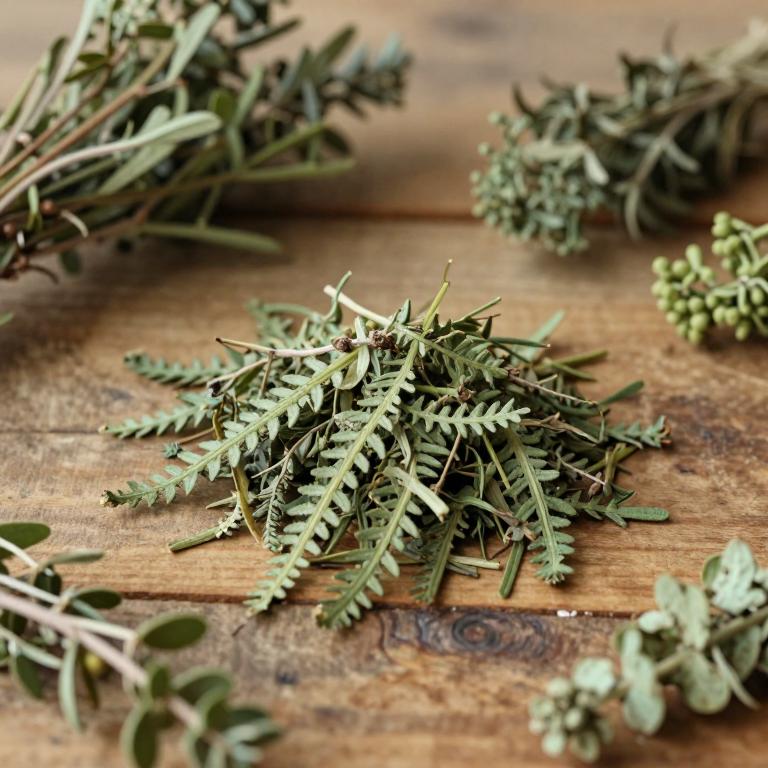
scientifically known as Selaginella bryopteris, is a remarkable resurrection plant celebrated in Ayurveda. Capable of surviving extreme desiccation, it regains vitality upon hydration. Rich in bioactive compounds, this resilient fern is widely researched for its potent antioxidant, anti-inflammatory, and anti-aging properties, offering significant potential in modern pharmacology.
- Family
- Selaginellaceae
- Native range
- Asia-Tropical
- Parts used
- Not available
- Common names
- Not available
- Scientific synonyms
- Lycopodium Bryopteris · Selaginella Imbricata Var. Erecta · 5 more
Names and Synonyms
Scientific Names
Accepted name
Selaginella bryopterisSynonyms
- Lycopodium bryopteris
- Selaginella imbricata var. erecta
- Stachygynandrum bryopteris
- Lycopodioides bryopteris
- Lycopodium circinale
- Stachygynandrum circinale
- Pulviniella bryopteris
Sources: Wikidata, Catalogue of Life
Taxonomical Classification
This plant belongs to the kingdom Plantae and is classified under the phylum Streptophyta within the class Equisetopsida. It is further categorized under the subclass Lycopodiidae and the order Selaginellales, falling into the family Selaginellaceae. Finally, it is identified by the genus Selaginella and the specific species Selaginella bryopteris.
| Rank | Classification |
|---|---|
| Kingdom | Plantae |
| Phylum | Streptophyta |
| Class | Equisetopsida |
| Subclass | Lycopodiidae |
| Order | Selaginellales |
| Family | Selaginellaceae |
| Genus | Selaginella |
Sources: The World Checklist of Vascular Plants (WCVP)
Distribution
This plant is widely distributed across various regions of the Indian Subcontinent. Specifically, it can be found growing in the lush landscapes of Assam and throughout India. Its presence extends into the neighboring country of Bangladesh as well. Furthermore, the species is known to inhabit the rugged terrains of the East Himalaya. Finally, it is also documented to grow within the mountainous regions of Nepal.
| Region | Area |
|---|---|
| Indian Subcontinent | Assam |
| Indian Subcontinent | Bangladesh |
| Indian Subcontinent | East Himalaya |
| Indian Subcontinent | India |
| Indian Subcontinent | Nepal |
| Indian Subcontinent | West Himalaya |
Sources: The World Checklist of Vascular Plants (WCVP)
Chemicals
Selaginella bryopteris has 7 reported phytochemicals identified across 0 scientific publications and several other databases. The most consistently reported chemicals include Amentoflavone, Delicaflavone, Flavonoids, Hexoses, Robustaflavone.
| Chemical | Supporting sources | Consensus |
|---|---|---|
| Amentoflavone | 1 supporting sources | ★☆☆☆☆ |
| Delicaflavone | 1 supporting sources | ★☆☆☆☆ |
| Flavonoids | 1 supporting sources | ★☆☆☆☆ |
| Hexoses | 1 supporting sources | ★☆☆☆☆ |
| Robustaflavone | 1 supporting sources | ★☆☆☆☆ |
| Sciadopitysin | 1 supporting sources | ★☆☆☆☆ |
| eugenol | 1 supporting sources | ★☆☆☆☆ |
Amentoflavone
- Phytochemistry
Delicaflavone
- Phytochemistry
Flavonoids
- The British journal of nutrition
Hexoses
- Journal of biosciences
Robustaflavone
- Phytochemistry
Sciadopitysin
- Phytochemistry
eugenol
- Data in brief
Activities
Selaginella bryopteris has 3 reported activities identified across 0 scientific publications and several other databases. The most consistently reported activities include Anticarcinogenic, Antioxidant, Chemopreventive.
| Activity | Supporting sources | Consensus |
|---|---|---|
| Anticarcinogenic | 1 supporting sources | ★☆☆☆☆ |
| Antioxidant | 1 supporting sources | ★☆☆☆☆ |
| Chemopreventive | 1 supporting sources | ★☆☆☆☆ |
Anticarcinogenic
- The British journal of nutrition
Antioxidant
- Journal of biosciences
Chemopreventive
- The British journal of nutrition
Conditions
Selaginella bryopteris has 11 reported investigations on conditions identified across 0 scientific publications and several other databases. The most consistently reported conditions include cancer, colitis, constipation, edema, epilepsy.
| Condition | Supporting sources | Consensus |
|---|---|---|
| Cancer | 2 supporting sources | ★☆☆☆☆ |
| Colitis | 1 supporting sources | ★☆☆☆☆ |
| Constipation | 1 supporting sources | ★☆☆☆☆ |
| Edema | 1 supporting sources | ★☆☆☆☆ |
| Epilepsy | 1 supporting sources | ★☆☆☆☆ |
| Fever | 1 supporting sources | ★☆☆☆☆ |
| Heat shock | 1 supporting sources | ★☆☆☆☆ |
| Inflammation | 1 supporting sources | ★☆☆☆☆ |
| Oxidative stress | 1 supporting sources | ★☆☆☆☆ |
| Urinary tract infections | 1 supporting sources | ★☆☆☆☆ |
Cancer
- The British journal of nutrition
- Journal of pharmacopuncture
Colitis
- Journal of pharmacopuncture
Constipation
- Journal of pharmacopuncture
Edema
- Journal of pharmacopuncture
Epilepsy
- Journal of pharmacopuncture
Fever
- Journal of pharmacopuncture
Heat shock
- Journal of biosciences
Inflammation
- Journal of pharmacopuncture
Oxidative stress
- Journal of biosciences
Urinary tract infections
- Journal of pharmacopuncture
Preparations
Selaginella bryopteris has 11 reported preparations identified across 0 scientific publications and several other databases. The most consistently reported preparations include Ethanolic and methanolic extracts, acetone, acetone and methanolic extracts, acetone extracts, aqueous extract.
| Preparation | Supporting sources | Consensus |
|---|---|---|
| Ethanolic and methanolic extracts | 1 supporting sources | ★☆☆☆☆ |
| Acetone | 1 supporting sources | ★☆☆☆☆ |
| Acetone and methanolic extracts | 1 supporting sources | ★☆☆☆☆ |
| Acetone extracts | 1 supporting sources | ★☆☆☆☆ |
| Aqueous extract | 1 supporting sources | ★☆☆☆☆ |
| Ethanol | 1 supporting sources | ★☆☆☆☆ |
| Flavonoid-rich benzene fraction of the aqueous extract | 1 supporting sources | ★☆☆☆☆ |
| Methanol | 1 supporting sources | ★☆☆☆☆ |
| Methanolic extracts | 1 supporting sources | ★☆☆☆☆ |
| Non-polar methanolic fraction | 1 supporting sources | ★☆☆☆☆ |
Ethanolic and methanolic extracts
- Data in brief
Acetone
- Data in brief
Acetone and methanolic extracts
- Data in brief
Acetone extracts
- Data in brief
Aqueous extract
- The British journal of nutrition
Ethanol
- Data in brief
Flavonoid-rich benzene fraction of the aqueous extract
- The British journal of nutrition
Methanol
- Data in brief
Methanolic extracts
- Data in brief
Non-polar methanolic fraction
- Journal of pharmacopuncture