Sebastiania schottiana
Sebastiania schottiana · Accepted scientific name
Scientific literature: Very Sparse (4 studies) · ★☆☆☆☆
Sebastiania schoottiana, scientifically known as Sebastiania schoottiana, is a medicinal plant valued for its diverse therapeutic potential. Found primarily in tropical regions, it is traditionally utilized in folk medicine to treat various ailments. Research continues to explore its bioactive compounds, highlighting its importance in pharmacological and ethnobotanical studies.
- Family
- Euphorbiaceae
- Native range
- Southern America
- Parts used
- Not available
- Common names
- Not available
- Scientific synonyms
- Sebastiania Angustifolia · Sebastiania Hippophaifolia · 12 more
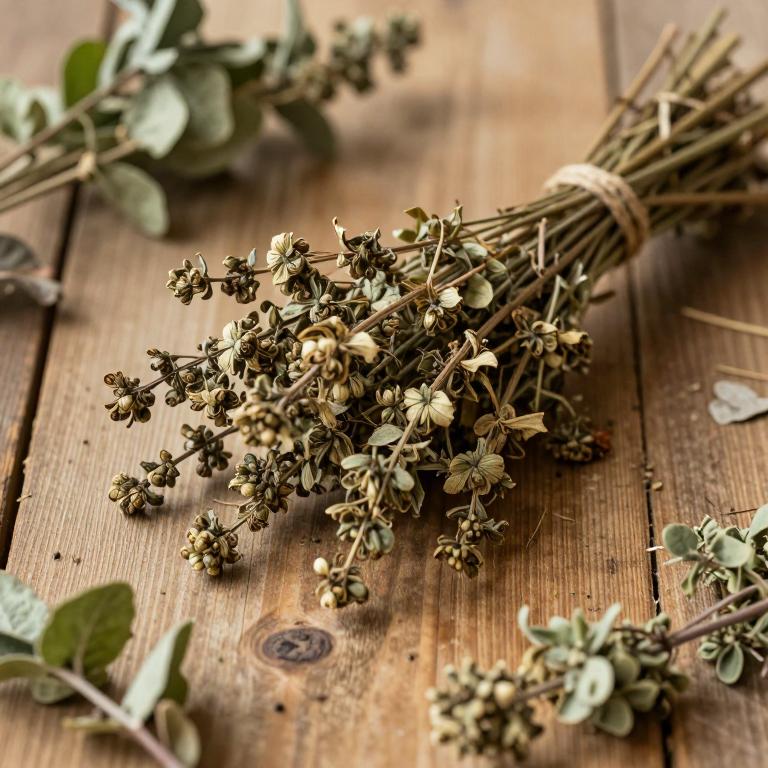
Names and Synonyms
Scientific Names
Accepted name
Sebastiania schottianaSynonyms
- Sebastiania angustifolia
- Sebastiania hippophaifolia
- Sebastiania phyllanthiformis
- Sebastiania schottiana var. angustifolia
- Sebastiania schottiana var. mucronata
- Adenogyne angustifolia
- Adenogyne mucronata
- Stillingia schottiana
- Sebastiania mucronata
- Gymnanthes schottiana
- Excoecaria hippophaifolia
- Stillingia phyllanthiformis
- Sebastiania schottiana var. phyllanthiformis
- Gymnanthes angustifolia
Regional and Traditional Names
Spanish:
- Sarandí Negro
Sources: Wikidata, Catalogue of Life
Taxonomical Classification
This plant, scientifically known as Sebastiania schottiiana, belongs to the kingdom Plantae and the phylum Streptophyta. Within the class Equisetopsida and subclass Magnoliidae, it is classified under the order Malpighiales. Finally, it is a member of the family Euphorbiaceae and is placed within the genus Sebastiania.
| Rank | Classification |
|---|---|
| Kingdom | Plantae |
| Phylum | Streptophyta |
| Class | Equisetopsida |
| Subclass | Magnoliidae |
| Order | Malpighiales |
| Family | Euphorbiaceae |
| Genus | Sebastiania |
Sources: The World Checklist of Vascular Plants (WCVP)
Distribution
This plant exhibits a broad geographical range across several regions of South America. Within Brazil, its presence is documented across the West-Central, Southeast, and South regions. The species also extends its reach into the southern part of the continent. Specifically, it can be found in the Northeast region of Argentina. Finally, its distribution includes the territory of Paraguay.
| Region | Area |
|---|---|
| Brazil | Brazil West-Central |
| Brazil | Brazil Southeast |
| Brazil | Brazil South |
| Southern South America | Argentina Northeast |
| Southern South America | Paraguay |
| Southern South America | Uruguay |
Sources: The World Checklist of Vascular Plants (WCVP)
Botanical Identification
Ecology
The ecology of Sebastiania schottiana is characterized by a broad altitudinal distribution and a high degree of habitat versatility across diverse Brazilian biomes. This species can be found across a wide elevational range, spanning from sea level (0 m AMSL) up to a maximum altitude of 900 m AMSL. Its ecological presence is marked by its ability to inhabit several distinct forest types and vegetation structures, including the Cerrado (latu sensu), Ciliar Forest (or Gallery Forest), Semideciduous Seasonal Forest, Ombrophilous Forest (Pluvial Forest), and Ombrophilous Mixed Forest. This wide range of habitats suggests a robust adaptability to varying moisture levels and seasonal patterns, ranging from the more open, seasonally dry environments of the Cerrado and seasonal forests to the more humid and continuous canopy structures of ombrophilous ecosystems.
- Elevational range max:
- 900 m AMSL
- Elevational range min:
- 0 m AMSL
- Habitat :
- Cerrado (lato sensu), Floresta Ciliar ou Galeria, Floresta Estacional Semidecidual, Floresta Ombrófila (= Floresta Pluvial), Floresta Ombrófila Mista
Life history
The life history of Sebastiania schottiana is characterized by a perennial lifecycle, allowing the plant to persist through multiple growing seasons. In terms of its structural development and survival strategy, it exhibits a dual life form classification, functioning as a phanerophyte through its elevated woody stems and also being categorized as a nanophanerophyte, reflecting its specific growth habit and stature within its ecological niche.
- Life form :
- nanophanerophyte
- Life form :
- phanerophyte
- Lifecycle :
- perennial
Morphology
The morphology of Sebastiania schottiana is characterized by a woody growth form that manifests primarily as a shrub or a small tree, reaching a maximum plant height of approximately 4 meters. As a self-supporting organism, it does not function as a climber, liana, or vine, nor does it exhibit climbing habits such as obligatory or facultative climbing. The plant is strictly terrestrial in its ecological niche, lacking aquatic, semiaquatic, or epiphytic tendencies, and it does not function as a holoepiphyte, hemiepiphyte, or any other form of epiphyte. Furthermore, it is an independent species that does not exhibit parasitic behavior, maintaining a robust, woody structure throughout its development.
- Aquatic :
- terrestrial
- Climber :
- self-supporting
- Epiphyte :
- terrestrial
- Growth form :
- tree
- Growth form :
- shrub
- Parasite :
- independent
- Plant height max:
- 4 m
- Woodiness :
- woody
Sources: Global Inventory of Floras and Traits (GIFT)
Chemicals
Sebastiania schottiana has 2 reported phytochemicals identified across 0 scientific publications and several other databases. The most consistently reported chemicals include 2-Hydroxy-4,6-dimethoxyacetophenone, Xanthoxyline.
| Chemical | Supporting sources | Consensus |
|---|---|---|
| 2-Hydroxy-4,6-dimethoxyacetophenone | 1 supporting sources | ★☆☆☆☆ |
| Xanthoxyline | 1 supporting sources | ★☆☆☆☆ |
2-Hydroxy-4,6-dimethoxyacetophenone
- Planta medica
Xanthoxyline
- Planta medica
Activities
Sebastiania schottiana has 1 reported activities identified across 0 scientific publications and several other databases. The most consistently reported activities include Antinociceptive.
| Activity | Supporting sources | Consensus |
|---|---|---|
| Antinociceptive | 1 supporting sources | ★☆☆☆☆ |
Antinociceptive
- Die Pharmazie
Preparations
Sebastiania schottiana has 1 reported preparations identified across 0 scientific publications and several other databases. The most consistently reported preparations include hydroalcoholic extract obtained from the aerial parts.
| Preparation | Supporting sources | Consensus |
|---|---|---|
| Hydroalcoholic extract obtained from the aerial parts | 1 supporting sources | ★☆☆☆☆ |
Hydroalcoholic extract obtained from the aerial parts
- Die Pharmazie