Tripartite Sumac
Searsia tripartita · Accepted scientific name
Scientific literature: Very Sparse (32 studies) · ★☆☆☆☆
Tripartiite Sumac, scientifically known as Searsia tripartita, is a versatile medicinal shrub native to Southern Africa. Renowned for its healing properties, it is traditionally used to treat ailments ranging from skin inflammations to digestive issues. This resilient plant offers a rich source of bioactive compounds essential for natural wellness.
- Family
- Anacardiaceae
- Native range
- Europe
- Parts used
- Stem · Leaf
- Common names
- Tripartite Sumac
- Scientific synonyms
- Toxicodendron Oxyacanthum · Ziziphus Tripartita · 10 more
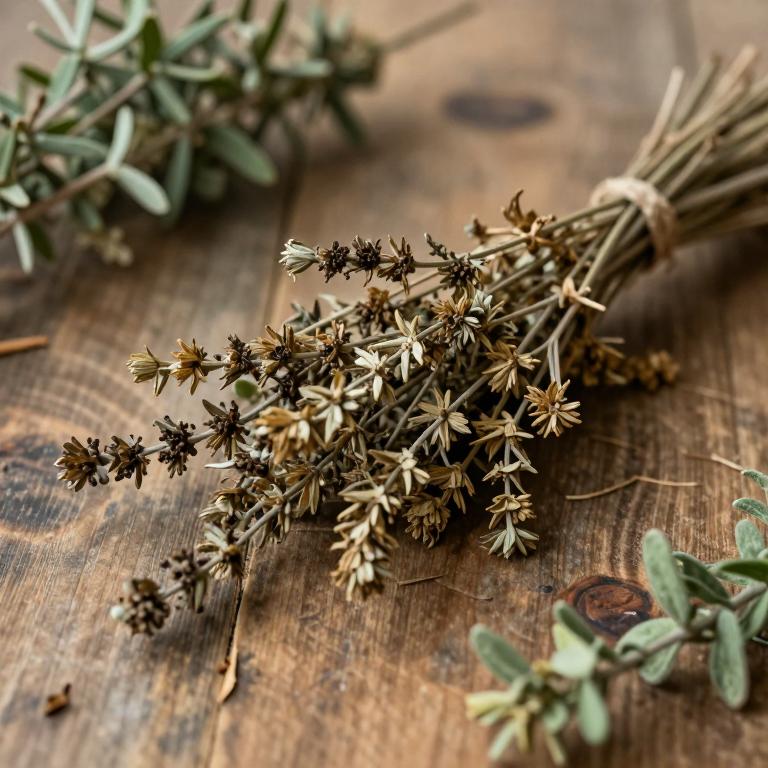
Names and Synonyms
Common Names
- Tripartite Sumac
Scientific Names
Accepted name
Searsia tripartitaSynonyms
- Toxicodendron oxyacanthum
- Ziziphus tripartita
- Rhus tripartita
- Rhus oxyacantha var. ballii
- Rhamnus tripartita
- Rhus crataegiformis
- Rhus dioica
- Rhus oxyacantha
- Rhus ziziphina
- Rhus albicans
- Rhus syriaca
- Rhus oxyacantha var. ziziphina
Sources: Wikidata, Catalogue of Life
Taxonomical Classification
This plant belongs to the kingdom Plantae and is classified within the phylum Streptophyta and the class Equisetopsida. It further falls under the subclass Magnoliidae and the order Sapindales, belonging to the family Anacardiaceae. Ultimately, it is identified by its genus, Searsia.
| Rank | Classification |
|---|---|
| Kingdom | Plantae |
| Phylum | Streptophyta |
| Class | Equisetopsida |
| Subclass | Magnoliidae |
| Order | Sapindales |
| Family | Anacardiaceae |
| Genus | Searsia |
Sources: The World Checklist of Vascular Plants (WCVP)
Distribution
This plant exhibits a wide geographical distribution across several distinct regions. In Southeastern Europe, it can be found growing in Sicilia. Its presence extends significantly into Northern Africa, where it is located in Algeria. Additionally, the species is documented in the North African nations of Libya and Egypt. Finally, its range reaches as far west as Morocco within the same continent.
| Region | Area |
|---|---|
| Southeastern Europe | Sicilia |
| Northern Africa | Algeria |
| Northern Africa | Egypt |
| Northern Africa | Libya |
| Northern Africa | Morocco |
| Northern Africa | Tunisia |
| Northern Africa | Western Sahara |
| West Tropical Africa | Mali |
| West Tropical Africa | Mauritania |
| West Tropical Africa | Niger |
Sources: The World Checklist of Vascular Plants (WCVP)
Plant Parts
Searsia tripartita has 3 reported plant parts identified across 7 scientific publications and several other databases that are studied for medicinal purposes. The most consistently reported plant part include stem, leaf, root.
| Plant part | Supporting sources | Consensus |
|---|---|---|
| Stem | 3 supporting sources | ★★☆☆☆ |
| Leaf | 2 supporting sources | ★☆☆☆☆ |
| Root | 2 supporting sources | ★☆☆☆☆ |
Stem
- Journal of food and drug analysis
- BMC complementary and alternative medicine
- Journal of pharmaceutical and biomedical analysis
Leaf
- BMC complementary medicine and therapies
- Journal of pharmaceutical and biomedical analysis
Root
- Biomedicine & pharmacotherapy = Biomedecine & pharmacotherapie
- Journal of pharmaceutical and biomedical analysis
Chemicals
Searsia tripartita has 17 reported phytochemicals identified across 7 scientific publications and several other databases. The most consistently reported chemicals include Flavonoids, Condensed Tannins, polyphenols, CATECHIN, Carotenoids.
| Chemical | Supporting sources | Consensus |
|---|---|---|
| Flavonoids | 3 supporting sources | ★★☆☆☆ |
| Condensed Tannins | 2 supporting sources | ★☆☆☆☆ |
| polyphenols | 2 supporting sources | ★☆☆☆☆ |
| CATECHIN | 1 supporting sources | ★☆☆☆☆ |
| Carotenoids | 1 supporting sources | ★☆☆☆☆ |
| Epicatechin | 1 supporting sources | ★☆☆☆☆ |
| Flavonoid | 1 supporting sources | ★☆☆☆☆ |
| Gallic acid | 1 supporting sources | ★☆☆☆☆ |
| Gallocatechin | 1 supporting sources | ★☆☆☆☆ |
| Polyphenol | 1 supporting sources | ★☆☆☆☆ |
Flavonoids
- BMC complementary medicine and therapies
- Biomedicine & pharmacotherapy = Biomedecine & pharmacotherapie
- PloS one
Condensed Tannins
- Biomedicine & pharmacotherapy = Biomedecine & pharmacotherapie
- PloS one
polyphenols
- Biomedicine & pharmacotherapy = Biomedecine & pharmacotherapie
- PloS one
CATECHIN
- BMC complementary and alternative medicine
Carotenoids
- PloS one
Epicatechin
- BMC complementary and alternative medicine
Flavonoid
- Biomedicine & pharmacotherapy = Biomedecine & pharmacotherapie
Gallic acid
- Biomedicine & pharmacotherapy = Biomedecine & pharmacotherapie
Gallocatechin
- BMC complementary and alternative medicine
Polyphenol
- BMC complementary medicine and therapies
Activities
Searsia tripartita has 1 reported activities identified across 7 scientific publications and several other databases. The most consistently reported activities include Antioxidant.
| Activity | Supporting sources | Consensus |
|---|---|---|
| Antioxidant | 1 supporting sources | ★☆☆☆☆ |
Antioxidant
- Journal of food and drug analysis
Preparations
Searsia tripartita has 13 reported preparations identified across 7 scientific publications and several other databases. The most consistently reported preparations include plant extract, Rhus tripartita extract, alcoholic extract of the stem part of Rhus tripartita male genotype (RTSM), crude extract of polyphenols, extract.
| Preparation | Supporting sources | Consensus |
|---|---|---|
| Plant extract | 2 supporting sources | ★☆☆☆☆ |
| Rhus tripartita extract | 1 supporting sources | ★☆☆☆☆ |
| Alcoholic extract of the stem part of rhus tripartita male genotype (rtsm) | 1 supporting sources | ★☆☆☆☆ |
| Crude extract of polyphenols | 1 supporting sources | ★☆☆☆☆ |
| Extract | 1 supporting sources | ★☆☆☆☆ |
| Extracts prepared from the leaves | 1 supporting sources | ★☆☆☆☆ |
| Extracts prepared from the root | 1 supporting sources | ★☆☆☆☆ |
| Extracts prepared from the stem | 1 supporting sources | ★☆☆☆☆ |
| Plant leaf extract | 1 supporting sources | ★☆☆☆☆ |
| Saponin extract | 1 supporting sources | ★☆☆☆☆ |
Plant extract
- BMC complementary medicine and therapies
- PloS one
Rhus tripartita extract
- BMC complementary medicine and therapies
Alcoholic extract of the stem part of rhus tripartita male genotype (rtsm)
- BMC complementary and alternative medicine
Crude extract of polyphenols
- BMC complementary medicine and therapies
Extract
- PloS one
Extracts prepared from the leaves
- Journal of pharmaceutical and biomedical analysis
Extracts prepared from the root
- Journal of pharmaceutical and biomedical analysis
Extracts prepared from the stem
- Journal of pharmaceutical and biomedical analysis
Plant leaf extract
- BMC complementary medicine and therapies
Saponin extract
- BMC complementary medicine and therapies