Searsia rehmanniana
Searsia rehmanniana · Accepted scientific name
Scientific literature: Very Sparse (1 studies) · ★☆☆☆☆
Searsia rehmanniana, scientifically known as Searsia rehmanniana, is a versatile shrub native to Southern Africa. Valued in traditional medicine, its leaves and bark possess antimicrobial and anti-inflammatory properties. Often used to treat skin ailments and digestive issues, this resilient plant remains a significant component of regional ethnobotanical practices.
- Family
- Not available
- Native range
- Africa
- Parts used
- Leaf
- Common names
- Not available
- Scientific synonyms
- Not available
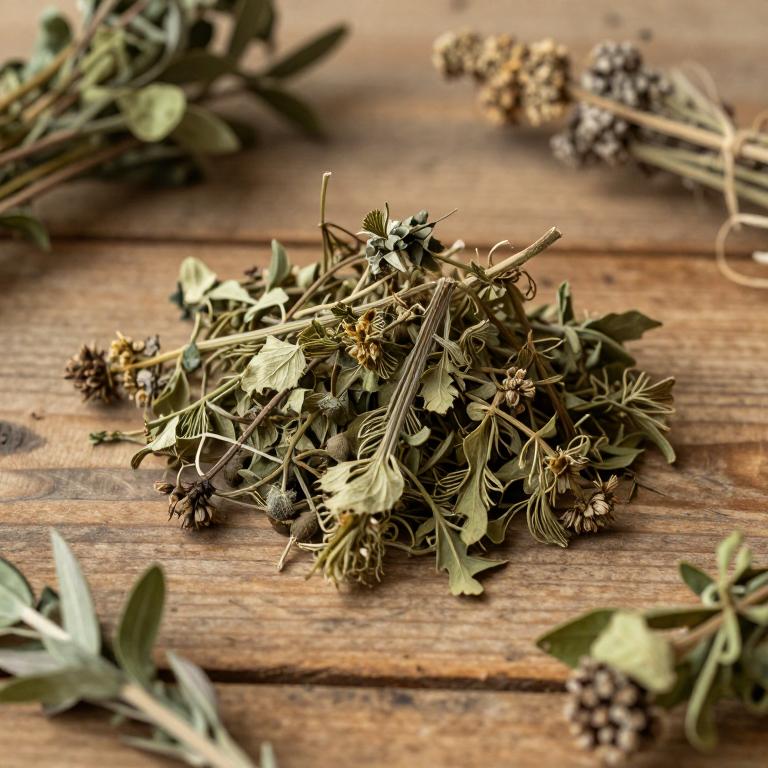
Names and Synonyms
Scientific Names
Accepted name
Searsia rehmannianaDistribution
This plant is primarily distributed across various regions within Southern Africa. In the northern reaches, it can be found throughout the Northern Provinces. Its presence extends into the subtropical landscapes of Mozambique within South Tropical Africa. Moving south, the species is widely distributed across the Cape Provinces and the KwaZulu-Natal region. Additionally, its range encompasses the territory of Eswatini.
| Region | Area |
|---|---|
| South Tropical Africa | Mozambique |
| Southern Africa | Cape Provinces |
| Southern Africa | KwaZulu-Natal |
| Southern Africa | Eswatini |
| Southern Africa | Northern Provinces |
Sources: The World Checklist of Vascular Plants (WCVP)
Botanical Identification
Ecology
The ecology of Searsia rehmanniana is characterized by a broad altitudinal distribution that allows it to occupy diverse topographical niches within its native habitat. This species thrives across a significant vertical gradient, ranging from low-lying areas at an elevation of 30 m AMSL to high-altitude environments reaching up to 2100 m AMSL. This extensive elevational range suggests an adaptable physiological capacity to withstand varying climatic conditions, including fluctuations in temperature, atmospheric pressure, and moisture availability associated with different mountain and lowland profiles. Such ecological plasticity enables the plant to persist in a variety of landscapes, ranging from coastal or lowland scrub to montane ecosystems.
- Elevational range max:
- 2100 m AMSL
- Elevational range min:
- 30 m AMSL
Life history
The life history of Searsia rehmanniana is characterized by its status as a perennial plant, meaning it persists through multiple growing seasons rather than completing its life cycle in a single year. As a long-lived woody species, it establishes a stable presence within its ecosystem, undergoing continuous cycles of vegetative growth and seasonal development. This perennial nature allows the plant to invest significant energy into structural longevity and root establishment, enabling it to withstand varying environmental conditions over many years. Throughout its extended lifespan, the plant undergoes periodic reproductive phases, contributing to the long-term stability and succession of its natural habitat.
- Lifecycle :
- perennial
Morphology
The morphology of Searsia rehmanniana is characterized by its growth form as a woody shrub, which functions as a self-supporting structure rather than a climber or liana. It is an independent plant that does not exhibit parasitic or epiphytic behavior, maintaining a strictly terrestrial existence. In terms of physical stature, the plant typically reaches a minimum height of 0.5 m and can grow up to a maximum height of 5 m.
- Aquatic :
- terrestrial
- Climber :
- self-supporting
- Epiphyte :
- terrestrial
- Growth form :
- shrub
- Parasite :
- independent
- Plant height max:
- 5 m
- Plant height min:
- 0.5 m
- Woodiness :
- woody
Physiology
The physiology of Searsia rehmanniana is characterized by a metabolic framework optimized for temperate and subtropical environments, specifically utilizing a C3 photosynthetic pathway. In this pathway, carbon fixation occurs through the direct carboxylation of ribulose-1,5-bisphosphate (RuBP) by the enzyme RuBisCO, resulting in the immediate formation of a three-carbon compound, 3-phosphoglycerate. This C3 mechanism suggests that the plant prioritizes efficient carbon assimilation under moderate light and temperature conditions where water loss through transpiration is relatively manageable. The physiological processes governing its growth and resource allocation are tightly linked to this metabolic strategy, influencing its transpiration rates and water-use efficiency in its native habitat.
- Photosynthetic pathway :
- C3
Sources: Global Inventory of Floras and Traits (GIFT)
Plant Parts
Searsia rehmanniana has 1 reported plant parts identified across 1 scientific publications and several other databases that are studied for medicinal purposes. The most consistently reported plant part include leaf.
| Plant part | Supporting sources | Consensus |
|---|---|---|
| Leaf | 1 supporting sources | ★☆☆☆☆ |
Leaf
- Journal of ethnopharmacology
Preparations
Searsia rehmanniana has 1 reported preparations identified across 1 scientific publications and several other databases. The most consistently reported preparations include ethanolic leaf extracts.
| Preparation | Supporting sources | Consensus |
|---|---|---|
| Ethanolic leaf extracts | 1 supporting sources | ★☆☆☆☆ |
Ethanolic leaf extracts
- Journal of ethnopharmacology