Searsia pyroides
Searsia pyroides · Accepted scientific name
Scientific literature: Very Sparse (10 studies) · ★☆☆☆☆
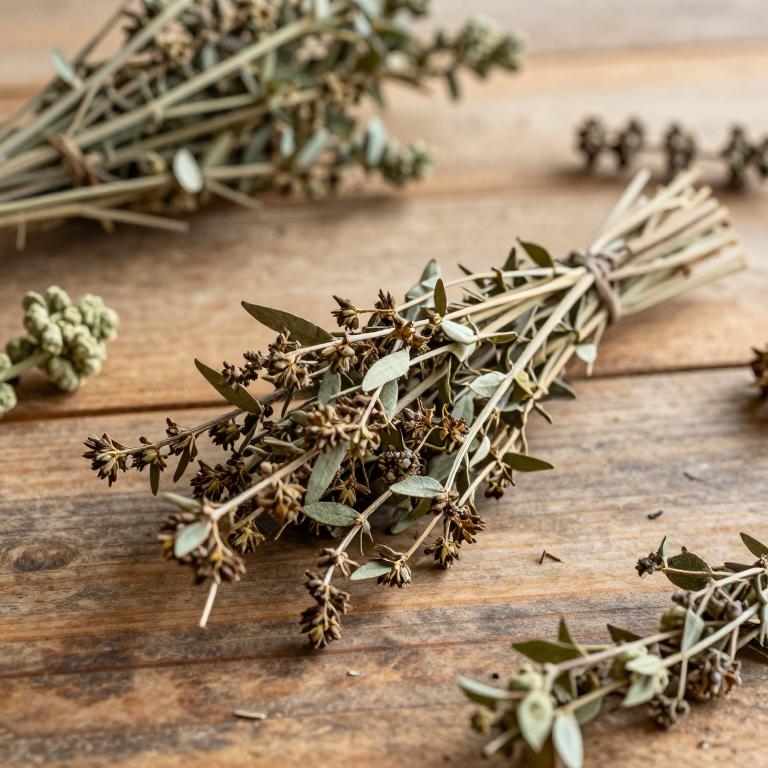
Searsia pyroides, scientifically known as Searsia pyroides, is a resilient, evergreen shrub native to Southern Africa. Often found in rocky terrains, this medicinal plant is valued for its diverse therapeutic properties. Local traditional healers utilize its leaves and bark to treat various ailments, highlighting its significant ethnobotanical importance.
- Family
- Anacardiaceae
- Native range
- Africa
- Parts used
- Leaf
- Common names
- Not available
- Scientific synonyms
- Toxicodendron Pyroides
Names and Synonyms
Scientific Names
Accepted name
Searsia pyroidesSynonyms
- Toxicodendron pyroides
Sources: Wikidata, Catalogue of Life
Taxonomical Classification
This plant belongs to the kingdom Plantae and is classified under the phylum Streptophyta and the class Equisetopsida. Within the subclass Magnoliidae, it falls under the order Sapindales and the family Anacardiaceae. Finally, it is identified by its specific genus, Searsia.
| Rank | Classification |
|---|---|
| Kingdom | Plantae |
| Phylum | Streptophyta |
| Class | Equisetopsida |
| Subclass | Magnoliidae |
| Order | Sapindales |
| Family | Anacardiaceae |
| Genus | Searsia |
Sources: The World Checklist of Vascular Plants (WCVP)
Distribution
This plant exhibits a broad geographical distribution across several regions of the African continent. Within West-Central Tropical Africa, it can be found in Burundi, Cameroon, and Rwanda. Its presence also extends into the Democratic Republic of the Congo, which is another key part of the West-Central Tropical Africa region. Furthermore, the species reaches into Northeast Tropical Africa, specifically documented in Chad. This distribution pattern highlights the plant's ability to inhabit diverse tropical environments.
| Region | Area |
|---|---|
| West-Central Tropical Africa | Burundi |
| West-Central Tropical Africa | Cameroon |
| West-Central Tropical Africa | Rwanda |
| West-Central Tropical Africa | DR Congo |
| Northeast Tropical Africa | Chad |
| Northeast Tropical Africa | Ethiopia |
| Northeast Tropical Africa | Sudan-South Sudan |
| East Tropical Africa | Kenya |
| East Tropical Africa | Tanzania |
| East Tropical Africa | Uganda |
Sources: The World Checklist of Vascular Plants (WCVP)
Botanical Identification
Ecology
The ecology of Searsia pyroides is characterized by its broad adaptability across diverse topographical gradients, spanning an elevational range from a minimum of 50 m AMSL to a maximum of 2200 m AMSL. This wide altitudinal distribution allows the species to occupy various ecological niches, from lowland coastal or subtropical regions to high-altitude montane environments. Within these varying elevations, the plant thrives in diverse habitat types, often found in rocky outcrops, thickets, and woodland ecosystems where it can navigate shifting climatic conditions and soil compositions. Its ability to persist across such a significant vertical span suggests a robust physiological tolerance to the varying temperature regimes and moisture availability associated with different altitudinal zones.
- Elevational range max:
- 2200 m AMSL
- Elevational range min:
- 50 m AMSL
Life history
The life history of Searsia pyroides is characterized by its long-term survival strategy as a perennial organism, meaning it persists through multiple growing seasons rather than completing its life cycle in a single year. As a phanerophyte, the plant maintains its photosynthetic organs and meristematic tissues well above the soil surface, typically forming a woody structure that allows it to withstand various environmental pressures. Its growth habit falls under the classification of both phanerophyte and nanophanerophyte, indicating a structural life form where the buds are held on branches above the ground level, facilitating its establishment and continued development within its ecological niche.
- Life form :
- phanerophyte
- Lifecycle :
- perennial
Morphology
The morphology of Searsia pyroides is characterized by a woody growth form, typically manifesting as a shrub or small tree. This plant is a self-supporting, terrestrial species that functions as an independent organism, lacking both parasitic and epiphytic tendencies. In terms of stature, it exhibits significant variability in height, ranging from a minimum of 0.5 m to a maximum of 7 m, with an average plant height of approximately 7.5 m.
- Aquatic :
- terrestrial
- Climber :
- self-supporting
- Epiphyte :
- terrestrial
- Growth form :
- shrub
- Parasite :
- independent
- Plant height max:
- 7 m
- Plant height mean:
- 7.5 m
- Plant height min:
- 0.5 m
- Woodiness :
- woody
Physiology
The physiology of Searsia pyroides is characterized by a C3 photosynthetic pathway, a common metabolic strategy among many woody dicotyledonous species that utilizes the Calvin cycle to fix atmospheric carbon dioxide. This pathway involves the initial carboxylation of ribulose-1,5-bisphosphate by the enzyme RuBisCO, which is typical for plants inhabiting temperate to subtropical environments where water loss through transpiration is balanced against carbon gain. Furthermore, the species does not function as a nitrogen fixer, meaning it lacks the symbiotic relationship with nitrogen-fixing bacteria, such as Rhizobium or Frankia, required to convert atmospheric nitrogen into bioavailable forms. Consequently, its nitrogen acquisition is primarily dependent on the uptake of nitrates or ammonium ions from the soil through its root system.
- Nitrogen fixer :
- no
- Photosynthetic pathway :
- C3
Reproduction
The reproduction of Searsia pyroides is characterized by specific biological mechanisms and seed traits that ensure its propagation within its habitat. The plant does not practice self-fertilization, as the trait is noted as absent, suggesting a reliance on cross-pollination to maintain genetic diversity. Its dispersal strategy is classified as zoochorous, specifically utilizing an endozoochorous syndrome, which means that seeds are dispersed through the internal passage of animals after being consumed. The seeds themselves are notably small and consistent in size, with a recorded seed mass of 0.00875 g, a value that serves as both the minimum, mean, and maximum mass for the species.
- Dispersal syndrome :
- zoochorous
- Dispersal syndrome :
- endozoochorous
- Seed mass mean:
- 0.00875 g
- Self fertilization :
- absent
Sources: Global Inventory of Floras and Traits (GIFT)
Plant Parts
Searsia pyroides has 1 reported plant parts identified across 2 scientific publications and several other databases that are studied for medicinal purposes. The most consistently reported plant part include leaf.
| Plant part | Supporting sources | Consensus |
|---|---|---|
| Leaf | 2 supporting sources | ★☆☆☆☆ |
Leaf
- Journal of ethnopharmacology
- Molecules (Basel, Switzerland)
Chemicals
Searsia pyroides has 3 reported phytochemicals identified across 2 scientific publications and several other databases. The most consistently reported chemicals include Agathisflavone, Amentoflavone, apigenin.
| Chemical | Supporting sources | Consensus |
|---|---|---|
| Agathisflavone | 1 supporting sources | ★☆☆☆☆ |
| Amentoflavone | 1 supporting sources | ★☆☆☆☆ |
| apigenin | 1 supporting sources | ★☆☆☆☆ |
Agathisflavone
- Journal of ethnopharmacology
Amentoflavone
- Journal of ethnopharmacology
apigenin
- Journal of ethnopharmacology
Activities
Searsia pyroides has 1 reported activities identified across 2 scientific publications and several other databases. The most consistently reported activities include Anticonvulsant.
| Activity | Supporting sources | Consensus |
|---|---|---|
| Anticonvulsant | 1 supporting sources | ★☆☆☆☆ |
Anticonvulsant
- Journal of ethnopharmacology
Conditions
Searsia pyroides has 2 reported investigations on conditions identified across 2 scientific publications and several other databases. The most consistently reported conditions include convulsions, epilepsy.
| Condition | Supporting sources | Consensus |
|---|---|---|
| Convulsions | 1 supporting sources | ★☆☆☆☆ |
| Epilepsy | 1 supporting sources | ★☆☆☆☆ |
Convulsions
- Journal of ethnopharmacology
Epilepsy
- Journal of ethnopharmacology
Preparations
Searsia pyroides has 6 reported preparations identified across 2 scientific publications and several other databases. The most consistently reported preparations include Ethanol leaf extracts, Extracts, crude ethanolic extracts, ethanol extract, ethanol extracts.
| Preparation | Supporting sources | Consensus |
|---|---|---|
| Ethanol leaf extracts | 1 supporting sources | ★☆☆☆☆ |
| Extracts | 1 supporting sources | ★☆☆☆☆ |
| Crude ethanolic extracts | 1 supporting sources | ★☆☆☆☆ |
| Ethanol extract | 1 supporting sources | ★☆☆☆☆ |
| Ethanol extracts | 1 supporting sources | ★☆☆☆☆ |
| Extracts | 1 supporting sources | ★☆☆☆☆ |
Ethanol leaf extracts
- Journal of ethnopharmacology
Extracts
- Journal of ethnopharmacology
Crude ethanolic extracts
- Journal of ethnopharmacology
Ethanol extract
- Journal of ethnopharmacology
Ethanol extracts
- Journal of ethnopharmacology
Extracts
- Journal of ethnopharmacology