Common Currant
Searsia pyroides var. pyroides · Accepted scientific name
Scientific literature: Very Sparse (20 studies) · ★☆☆☆☆
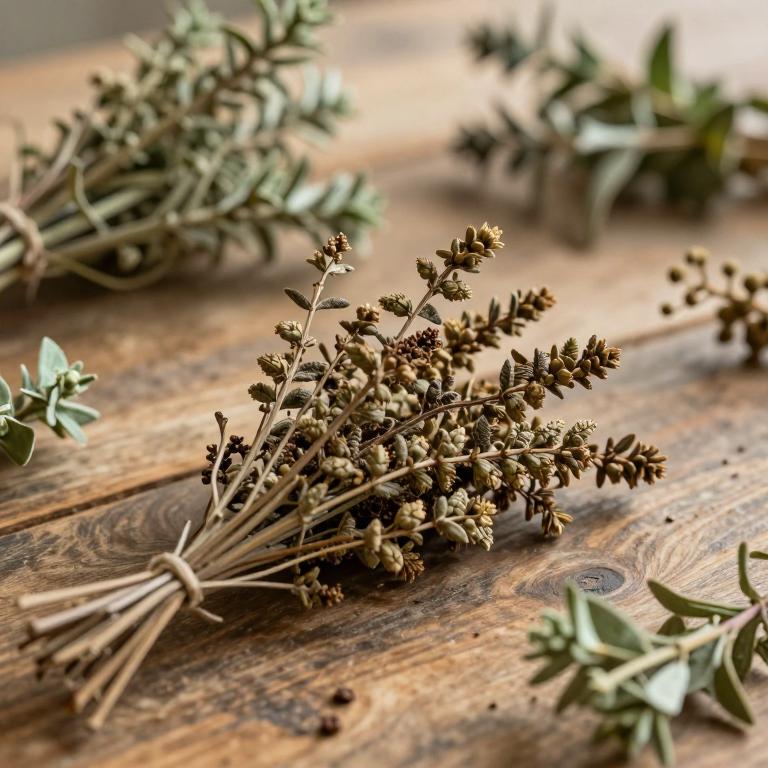
Common Currant, scientifically known as Searsia pyroides var. pyroides, is a resilient, small-leaved shrub native to Southern Africa. Renowned for its dense, fine-textured foliage and hardy nature, it serves as vital ecological support. This versatile plant is valued in landscaping and traditional practices for its durability and medicinal potential.
Names and Synonyms
Common Names
- Common Currant
- Common Currant-Rhus
- Fire-Thorn
- Firethorn Crowberry
Scientific Names
Accepted name
Searsia pyroides var. pyroidesSynonyms
- Rhus villosa var. tomentosa
- Rhus villosa var. gallaensis
- Rhus villosa var. cuneifoliolata
- Rhus steudneri
- Rhus vulgaris
- Rhus baurii
Regional and Traditional Names
German:
- Sauer-Karee
Sources: Wikidata, Catalogue of Life
Taxonomical Classification
This plant belongs to the kingdom Plantae and is classified under the phylum Streptophyta and class Equisetopsida. Within the subclass Magnoliidae, it falls under the order Sapindales and the family Anacardiaceae. Ultimately, it is identified as a member of the genus Searsia, specifically the variety Searsia pyroides var. pyroides.
| Rank | Classification |
|---|---|
| Kingdom | Plantae |
| Phylum | Streptophyta |
| Class | Equisetopsida |
| Subclass | Magnoliidae |
| Order | Sapindales |
| Family | Anacardiaceae |
| Genus | Searsia |
Sources: The World Checklist of Vascular Plants (WCVP)
Distribution
This plant exhibits a specific distribution pattern concentrated within the tropical regions of the African continent. It can be found throughout West-Central Tropical Africa, including the nations of Burundi, Cameroon, Rwanda, and the DR Congo. Additionally, its range extends into Northeast Tropical Africa, where it is documented in Chad. These locations highlight the plant's preference for diverse West-Central and Northeastern tropical environments. Consequently, its geographical presence is defined by these specific clusters of tropical habitats.
| Region | Area |
|---|---|
| West-Central Tropical Africa | Burundi |
| West-Central Tropical Africa | Cameroon |
| West-Central Tropical Africa | Rwanda |
| West-Central Tropical Africa | DR Congo |
| Northeast Tropical Africa | Chad |
| Northeast Tropical Africa | Ethiopia |
| Northeast Tropical Africa | Sudan-South Sudan |
| East Tropical Africa | Kenya |
| East Tropical Africa | Tanzania |
| East Tropical Africa | Uganda |
Sources: The World Checklist of Vascular Plants (WCVP)
Plant Parts
Searsia pyroides var. pyroides has 1 reported plant parts identified across 1 scientific publications and several other databases that are studied for medicinal purposes. The most consistently reported plant part include fruit.
| Plant part | Supporting sources | Consensus |
|---|---|---|
| Fruit | 1 supporting sources | ★☆☆☆☆ |
Fruit
- PloS one
Chemicals
Searsia pyroides var. pyroides has 8 reported phytochemicals identified across 1 scientific publications and several other databases. The most consistently reported chemicals include Glycosides, Phenols, Saponins, Tannins, Terpenoids.
| Chemical | Supporting sources | Consensus |
|---|---|---|
| Glycosides | 2 supporting sources | ★☆☆☆☆ |
| Phenols | 2 supporting sources | ★☆☆☆☆ |
| Saponins | 2 supporting sources | ★☆☆☆☆ |
| Tannins | 2 supporting sources | ★☆☆☆☆ |
| Terpenoids | 2 supporting sources | ★☆☆☆☆ |
| 2-Hydroxy-4-methoxybenzaldehyde | 1 supporting sources | ★☆☆☆☆ |
| Flavonoids | 1 supporting sources | ★☆☆☆☆ |
| methanol | 1 supporting sources | ★☆☆☆☆ |
Glycosides
- BMC complementary medicine and therapies
- PloS one
Phenols
- BMC complementary medicine and therapies
- PloS one
Saponins
- BMC complementary medicine and therapies
- PloS one
Tannins
- BMC complementary medicine and therapies
- PloS one
Terpenoids
- BMC complementary medicine and therapies
- PloS one
2-Hydroxy-4-methoxybenzaldehyde
- Planta medica
Flavonoids
- BMC complementary medicine and therapies
methanol
- BMC complementary medicine and therapies
Activities
Searsia pyroides var. pyroides has 6 reported activities identified across 1 scientific publications and several other databases. The most consistently reported activities include Antibacterial, Antimalarial, Antimicrobial, Antioxidant, Bacteriostatic.
| Activity | Supporting sources | Consensus |
|---|---|---|
| Antibacterial | 1 supporting sources | ★☆☆☆☆ |
| Antimalarial | 1 supporting sources | ★☆☆☆☆ |
| Antimicrobial | 1 supporting sources | ★☆☆☆☆ |
| Antioxidant | 1 supporting sources | ★☆☆☆☆ |
| Bacteriostatic | 1 supporting sources | ★☆☆☆☆ |
| Tyrosinase-Inhibitor | 1 supporting sources | ★☆☆☆☆ |
Antibacterial
- PloS one
Antimalarial
- BMC complementary medicine and therapies
Antimicrobial
- BMC complementary medicine and therapies
Antioxidant
- PloS one
Bacteriostatic
- BMC complementary medicine and therapies
Tyrosinase-Inhibitor
- Planta medica
Preparations
Searsia pyroides var. pyroides has 2 reported preparations identified across 1 scientific publications and several other databases. The most consistently reported preparations include Rhus vulgaris fruit extract, methanol extract.
| Preparation | Supporting sources | Consensus |
|---|---|---|
| Rhus vulgaris fruit extract | 1 supporting sources | ★☆☆☆☆ |
| Methanol extract | 1 supporting sources | ★☆☆☆☆ |
Rhus vulgaris fruit extract
- PloS one
Methanol extract
- BMC complementary medicine and therapies