Searsia pentaphylla
Searsia pentaphylla · Accepted scientific name
Scientific literature: Very Sparse (1 studies) · ★☆☆☆☆
Searsia pentaphyllos, scientifically known as Searsia pentaphyllos, is a versatile evergreen shrub native to Southern Africa. Renowned for its medicinal properties, various parts of this plant are traditionally used to treat ailments ranging from skin inflammation to digestive issues, making it a significant species in ethnobotanical studies and traditional healing.
- Family
- Not available
- Native range
- Europe
- Parts used
- Leaf
- Common names
- Not available
- Scientific synonyms
- Not available
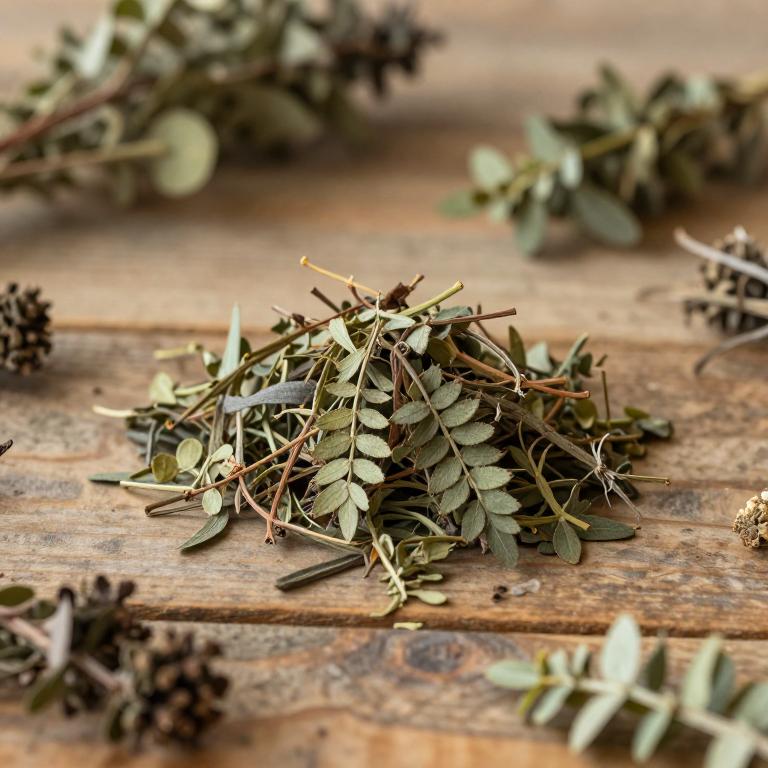
Names and Synonyms
Scientific Names
Accepted name
Searsia pentaphyllaDistribution
This plant exhibits a diverse geographical range spanning across parts of Europe and Northern Africa. In Southeastern Europe, its presence is specifically noted in Sicilia. Moving across the Mediterranean, it is widely distributed throughout Northern Africa. This distribution includes significant populations in Algeria, Morocco, and Tunisia. Furthermore, its habitat extends into the arid regions of Western Sahara.
| Region | Area |
|---|---|
| Southeastern Europe | Sicilia |
| Northern Africa | Algeria |
| Northern Africa | Morocco |
| Northern Africa | Tunisia |
| Northern Africa | Western Sahara |
| Western Asia | Palestine |
Sources: The World Checklist of Vascular Plants (WCVP)
Botanical Identification
Life history
The life history of Searsia pentaphylla is characterized by its structural classification as a phanerophyte, signifying its development as a woody plant where the perennating buds are elevated well above the soil surface. Within its ecological niche, it functions primarily as a phanerophyte, establishing a robust perennial presence through its woody architecture. While its growth habit is fundamentally defined by this phanerophyte status, its life history profile within specific botanical datasets also acknowledges its potential classification under the nanophanerophyte category, reflecting its ability to maintain life cycles through woody structures that can vary in height relative to environmental stressors. This life history strategy allows the species to persist through seasonal changes, utilizing its elevated buds to survive adverse conditions and continue its reproductive cycle.
- Life form :
- nanophanerophyte
- Life form :
- phanerophyte
Morphology
The morphology of Searsia pentaphyllla is characterized by its growth form as a woody shrub, functioning as a self-supporting structure rather than a climber or liana. As a terrestrial plant, it does not exhibit aquatic or semiaquatic tendencies, maintaining its presence in well-drained land environments. The species is an independent organism, lacking any parasitic relationship with host plants, and is defined by its permanent woody tissue which provides the necessary structural integrity for its shrubby habit.
- Aquatic :
- terrestrial
- Climber :
- self-supporting
- Growth form :
- shrub
- Parasite :
- independent
- Woodiness :
- woody
Physiology
The physiology of Searsia pentaphylla is characterized by its reliance on the C3 photosynthetic pathway, a metabolic process where carbon dioxide is fixed directly into a three-carbon compound during the Calvin cycle. This pathway involves the enzyme RuBisCO facilitating the carboxylation of ribulose-1,5-bisphosphate, which is typical for many woody species adapted to temperate and subtropical environments. As a C3 plant, its gas exchange and water-use efficiency are closely linked to stomatal conductance, where the plant must balance the uptake of CO2 for carbohydrate synthesis against the physiological risk of transpiration. The metabolic efficiency of its photosynthetic apparatus is optimized for environments where temperatures and light intensities do not necessitate the specialized adaptations found in C4 or CAM pathways.
- Photosynthetic pathway :
- C3
Reproduction
The reproduction of Searsia pentaphylla is characterized by the production of seeds that exhibit specific variations in weight, which play a critical role in its dispersal and establishment processes. The seed mass within a population shows a measurable range, with a calculated mean seed mass of 0.171405 g. This average is bounded by a minimum seed mass of 0.13204 g and a maximum seed mass of 0.21077 g, reflecting the natural phenotypic plasticity or environmental influences on the development of its reproductive units. These quantitative metrics regarding seed mass are essential for understanding the energetic investment the plant makes into its offspring and the potential success of its recruitment in its natural habitat.
- Seed mass max:
- 0.21077 g
- Seed mass mean:
- 0.171405 g
- Seed mass min:
- 0.13204 g
Sources: Global Inventory of Floras and Traits (GIFT)
Plant Parts
Searsia pentaphylla has 1 reported plant parts identified across 1 scientific publications and several other databases that are studied for medicinal purposes. The most consistently reported plant part include leaf.
| Plant part | Supporting sources | Consensus |
|---|---|---|
| Leaf | 1 supporting sources | ★☆☆☆☆ |
Leaf
- Chemistry & biodiversity
Preparations
Searsia pentaphylla has 1 reported preparations identified across 1 scientific publications and several other databases. The most consistently reported preparations include Ethanolic Leaf Extract.
| Preparation | Supporting sources | Consensus |
|---|---|---|
| Ethanolic leaf extract | 1 supporting sources | ★☆☆☆☆ |
Ethanolic leaf extract
- Chemistry & biodiversity