Searsia parviflora
Searsia parviflora · Accepted scientific name
Scientific literature: Very Sparse (5 studies) · ★☆☆☆☆
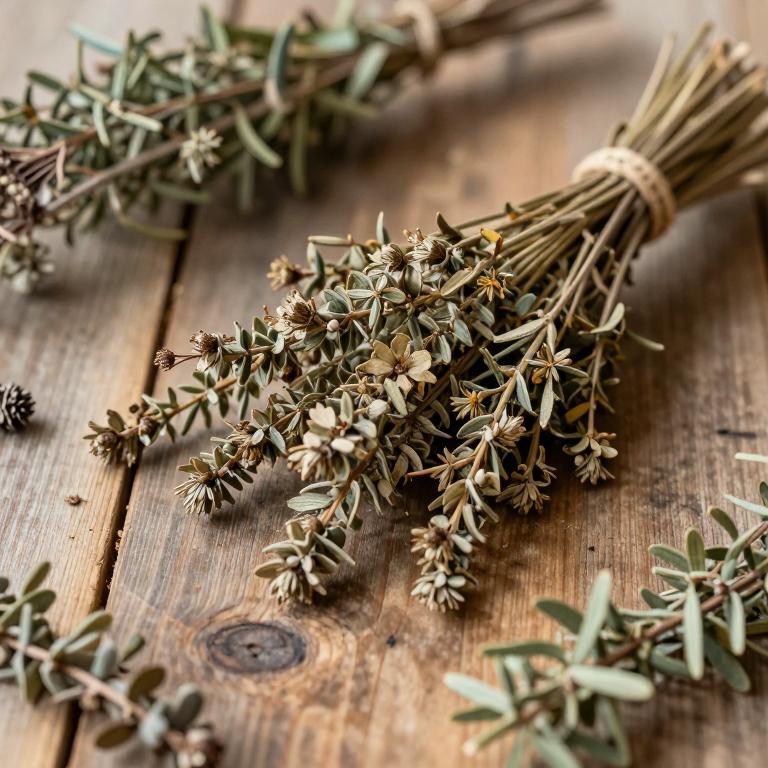
Searsia parviflora, scientifically known as Searsia parviflora, is a versatile evergreen shrub native to Southern Africa. Renowned for its dense, glossy foliage and small yellowish flowers, this hardy plant offers significant ecological value. It is frequently utilized in traditional medicine and landscape design for its resilience and aesthetic charm.
- Family
- Anacardiaceae
- Native range
- Asia-Tropical
- Parts used
- Fruit
- Common names
- Not available
- Scientific synonyms
- Toxicodendron Parviflorum · Rhus Parviflora
Names and Synonyms
Scientific Names
Accepted name
Searsia parvifloraSynonyms
- Toxicodendron parviflorum
- Rhus parviflora
Sources: Wikidata
Taxonomical Classification
This plant belongs to the kingdom Plantae and is classified under the phylum Streptophyta and class Equisetopsida. Within the subclass Magnoliidae, it falls under the order Sapindales and the family Anacardiaceae. Finally, its taxonomic identity is defined by the genus Searsia.
| Rank | Classification |
|---|---|
| Kingdom | Plantae |
| Phylum | Streptophyta |
| Class | Equisetopsida |
| Subclass | Magnoliidae |
| Order | Sapindales |
| Family | Anacardiaceae |
| Genus | Searsia |
Sources: The World Checklist of Vascular Plants (WCVP)
Distribution
This plant exhibits a broad geographical distribution throughout the Indian Subcontinent. It can be found growing across various regions of India and within the borders of Bangladesh. Its presence extends into the mountainous terrains of Nepal, showcasing its adaptability to diverse altitudes. Specifically, the species is documented to inhabit the East Himalaya and the West Himalaya regions. Together, these locations highlight the significant range this medicinal plant covers across South Asia.
| Region | Area |
|---|---|
| Indian Subcontinent | Bangladesh |
| Indian Subcontinent | East Himalaya |
| Indian Subcontinent | India |
| Indian Subcontinent | Nepal |
| Indian Subcontinent | West Himalaya |
| Indo-China | Myanmar |
Sources: The World Checklist of Vascular Plants (WCVP)
Plant Parts
Searsia parviflora has 1 reported plant parts identified across 1 scientific publications and several other databases that are studied for medicinal purposes. The most consistently reported plant part include fruit.
| Plant part | Supporting sources | Consensus |
|---|---|---|
| Fruit | 1 supporting sources | ★☆☆☆☆ |
Fruit
- Journal of ethnopharmacology
Chemicals
Searsia parviflora has 3 reported phytochemicals identified across 1 scientific publications and several other databases. The most consistently reported chemicals include Agathisflavone, Mesuaferrone B, Rhusflavone.
| Chemical | Supporting sources | Consensus |
|---|---|---|
| Agathisflavone | 1 supporting sources | ★☆☆☆☆ |
| Mesuaferrone B | 1 supporting sources | ★☆☆☆☆ |
| Rhusflavone | 1 supporting sources | ★☆☆☆☆ |
Agathisflavone
- Journal of ethnopharmacology
Mesuaferrone B
- Journal of ethnopharmacology
Rhusflavone
- Journal of ethnopharmacology