Indian sumac
Searsia mysorensis · Accepted scientific name
Scientific literature: Very Sparse (3 studies) · ★☆☆☆☆
Indian sumaç, scientifically known as Searsia mysorensis, is a versatile medicinal shrub native to India. Renowned for its potent bioactive compounds, it is traditionally utilized in Ayurvedic practices to treat various ailments. This plant offers significant therapeutic potential, particularly for its antimicrobial, antioxidant, and anti-inflammatory properties in holistic medicine.
- Family
- Anacardiaceae
- Native range
- Asia-Tropical
- Parts used
- Not available
- Common names
- Indian Sumac · Mysore Sumac
- Scientific synonyms
- Toxicodendron Mysurense · Rhus Indica · 1 more
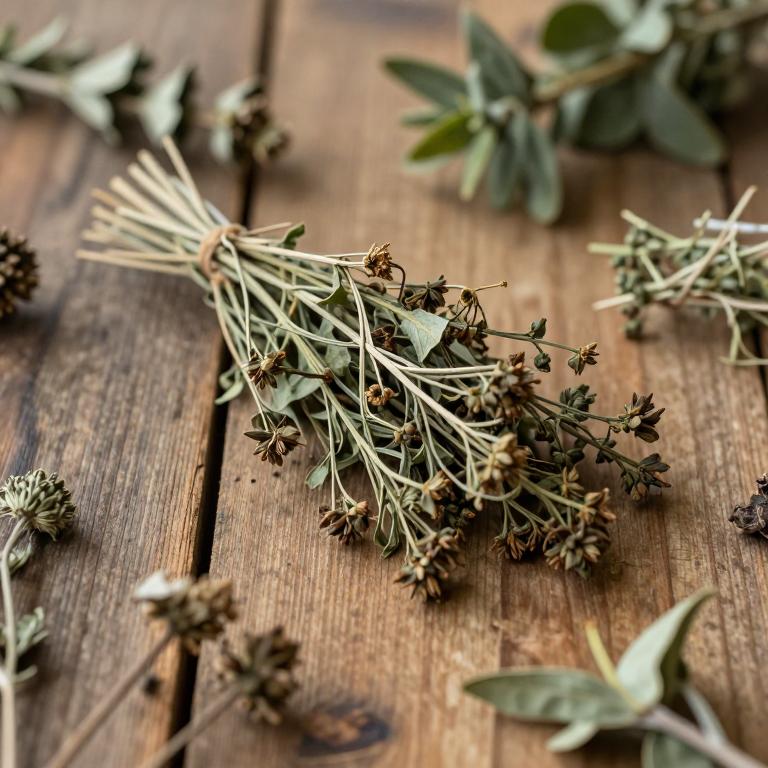
Names and Synonyms
Common Names
- Indian sumac
- Mysore sumac
Scientific Names
Accepted name
Searsia mysorensisSynonyms
- Toxicodendron mysurense
- Rhus indica
- Rhus mysorensis
Sources: Wikidata, Catalogue of Life
Taxonomical Classification
This plant, known scientifically as Searsia mysorensis, belongs to the kingdom Plantae and the phylum Streptophyta. Within the class Equisetopsida and subclass Magnoliidae, it is classified under the order Sapindales and the family Anacardiaceae. Finally, it is situated within the genus Searsia.
| Rank | Classification |
|---|---|
| Kingdom | Plantae |
| Phylum | Streptophyta |
| Class | Equisetopsida |
| Subclass | Magnoliidae |
| Order | Sapindales |
| Family | Anacardiaceae |
| Genus | Searsia |
Sources: The World Checklist of Vascular Plants (WCVP)
Distribution
This plant is native to specific regions within the Indian Subcontinent. Its primary geographical distribution is concentrated in the country of India. Additionally, it can be found growing naturally within the borders of Pakistan. These two nations represent the core areas where the species is ecologically established. Consequently, its range is limited to these specific territories in South Asia.
| Region | Area |
|---|---|
| Indian Subcontinent | India |
| Indian Subcontinent | Pakistan |
Sources: The World Checklist of Vascular Plants (WCVP)
Activities
Searsia mysorensis has 3 reported activities identified across 0 scientific publications and several other databases. The most consistently reported activities include Anticholinesterase, Antioxidant, Neuroprotective.
| Activity | Supporting sources | Consensus |
|---|---|---|
| Anticholinesterase | 1 supporting sources | ★☆☆☆☆ |
| Antioxidant | 1 supporting sources | ★☆☆☆☆ |
| Neuroprotective | 1 supporting sources | ★☆☆☆☆ |
Anticholinesterase
- BMC complementary and alternative medicine
Antioxidant
- BMC complementary and alternative medicine
Neuroprotective
- BMC complementary and alternative medicine
Preparations
Searsia mysorensis has 2 reported preparations identified across 0 scientific publications and several other databases. The most consistently reported preparations include Methanolic extracts, chloroform fractions.
| Preparation | Supporting sources | Consensus |
|---|---|---|
| Methanolic extracts | 1 supporting sources | ★☆☆☆☆ |
| Chloroform fractions | 1 supporting sources | ★☆☆☆☆ |
Methanolic extracts
- BMC complementary and alternative medicine
Chloroform fractions
- BMC complementary and alternative medicine