Searsia laevigata f. laevigata
Searsia laevigata f. laevigata · Accepted scientific name
Scientific literature: Very Sparse (6 studies) · ★☆☆☆☆
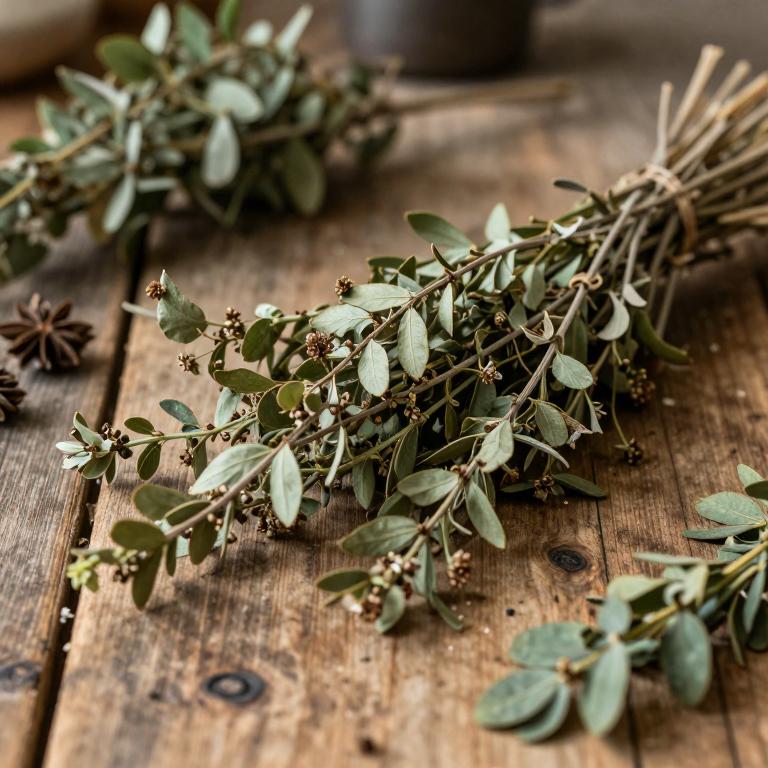
, scientifically known as Searsia laevigata f. laevigatica, is a versatile shrub native to Southern Africa. Renowned for its medicinal properties, this plant is traditionally utilized in various cultures to treat ailments ranging from skin irritations to digestive issues, offering a natural resource of bioactive compounds for holistic healing.
- Family
- Anacardiaceae
- Native range
- Africa
- Parts used
- Leaf · Root
- Common names
- Not available
- Scientific synonyms
- Turpinia Pubescens · Toxicodendron Villosum · 16 more
Names and Synonyms
Scientific Names
Accepted name
Searsia laevigata f. laevigataSynonyms
- Turpinia pubescens
- Toxicodendron villosum
- Searsia pubescens
- Toxicodendron incanum
- Rhus tenuiflora
- Rhus trifoliata
- Rhus villosa
- Rhus mucronata
- Rhus pubescens
- Rhus livida
- Rhus crassinervia
- Rhus burmanni
- Rhus hirsuta
- Rhus pilipes
- Rhus incana
- Rhus elongata
- Rhus atomaria
- Toxicodendron elongata
Sources: Wikidata
Taxonomical Classification
This plant belongs to the kingdom Plantae and the phylum Streptophyta, falling under the class Equisetopsida and subclass Magnoliidae. Within the order Sapindales and the family Anacardiaceae, it is classified under the genus Searsia. Specifically, the botanical identity of this specimen is recognized as Searsia laevigata f. laevigata.
| Rank | Classification |
|---|---|
| Kingdom | Plantae |
| Phylum | Streptophyta |
| Class | Equisetopsida |
| Subclass | Magnoliidae |
| Order | Sapindales |
| Family | Anacardiaceae |
| Genus | Searsia |
Sources: The World Checklist of Vascular Plants (WCVP)
Distribution
This plant is specifically found within the southern region of the African continent. Its natural habitat is primarily concentrated throughout the Cape Provinces. This particular geographical range highlights its occurrence in the diverse landscapes of Southern Africa. Because of this restricted distribution, the species is a characteristic element of the local flora in these areas. Consequently, understanding its presence in the Cape Provinces is essential for studying its ecological niche.
| Region | Area |
|---|---|
| Southern Africa | Cape Provinces |
Sources: The World Checklist of Vascular Plants (WCVP)
Plant Parts
Searsia laevigata f. laevigata has 2 reported plant parts identified across 2 scientific publications and several other databases that are studied for medicinal purposes. The most consistently reported plant part include leaf, root.
| Plant part | Supporting sources | Consensus |
|---|---|---|
| Leaf | 1 supporting sources | ★☆☆☆☆ |
| Root | 1 supporting sources | ★☆☆☆☆ |
Leaf
- Journal of ethnopharmacology
Root
- Journal of natural products
Chemicals
Searsia laevigata f. laevigata has 3 reported phytochemicals identified across 2 scientific publications and several other databases. The most consistently reported chemicals include Agathisflavone, Amentoflavone, rhuschalcone IV.
| Chemical | Supporting sources | Consensus |
|---|---|---|
| Agathisflavone | 1 supporting sources | ★☆☆☆☆ |
| Amentoflavone | 1 supporting sources | ★☆☆☆☆ |
| rhuschalcone IV | 1 supporting sources | ★☆☆☆☆ |
Agathisflavone
- Journal of ethnopharmacology
Amentoflavone
- Journal of ethnopharmacology
rhuschalcone IV
- Molecules (Basel, Switzerland)
Preparations
Searsia laevigata f. laevigata has 3 reported preparations identified across 2 scientific publications and several other databases. The most consistently reported preparations include ethanol extract of the leaves, root bark, twigs.
| Preparation | Supporting sources | Consensus |
|---|---|---|
| Ethanol extract of the leaves | 1 supporting sources | ★☆☆☆☆ |
| Root bark | 1 supporting sources | ★☆☆☆☆ |
| Twigs | 1 supporting sources | ★☆☆☆☆ |
Ethanol extract of the leaves
- Journal of ethnopharmacology
Root bark
- Journal of natural products
Twigs
- Journal of natural products