skullcap
Scutellaria · Accepted scientific name
Scientific literature: Very Sparse (33 studies) · ★☆☆☆☆
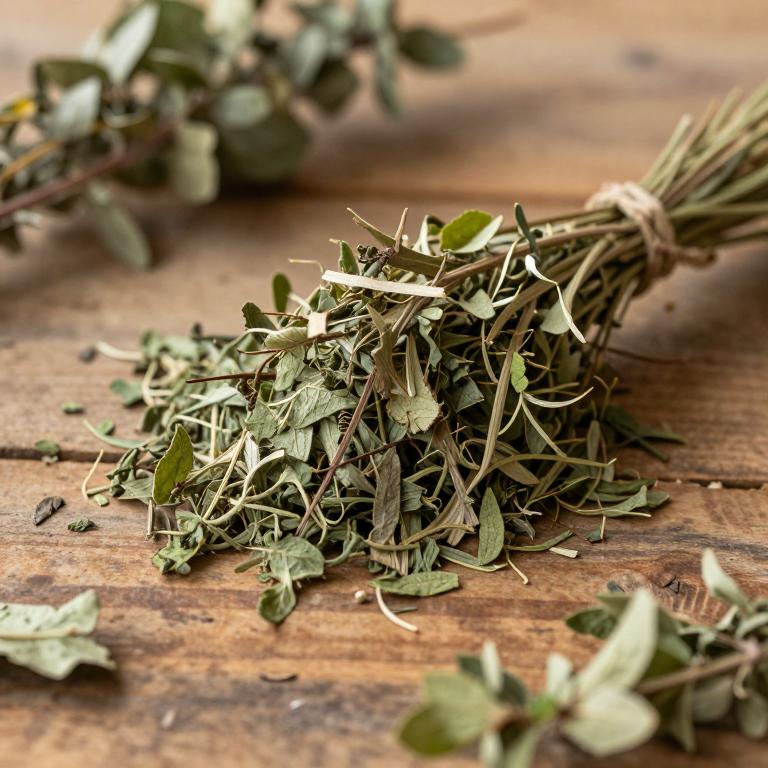
Skullcap, scientifically known as Scutelariia, is a versatile genus of flowering plants within the mint family. Renowned in traditional herbalism for its calming properties, various species are used to soothe anxiety and promote relaxation. This botanical treasure offers significant therapeutic potential, making it a cornerstone of natural medicine.
- Family
- Lamiaceae
- Native range
- Europe
- Parts used
- Root
- Common names
- Skullcap · Skullcaps
- Scientific synonyms
- Cassida · Cruzia · 6 more
Names and Synonyms
Common Names
- skullcap
- skullcaps
Scientific Names
Accepted name
ScutellariaSynonyms
- Cassida
- Cruzia
- Theresa
- Perilomia
- Hastifolia
- Harlanlewisia
- Anaspis
- Salazaria
Regional and Traditional Names
Spanish:
- Hastifolia
- Harlanlewisia
- Cruzia
- Cassida
- Perilomia
- Mirtos de escudo
German:
- Helmkräuter
- Helmkraut
- Helmkraut
- Helmkräuter
French:
- scutellaires
- Scutellaires
- Scutellaria x nicholsonii
Sources: Wikidata, Catalogue of Life
Taxonomical Classification
This plant belongs to the kingdom Plantae and the phylum Streptophyta, falling under the class Equisetopsida and subclass Magnoliidae. Within the order Lamiales and family Lamiaceae, it is specifically classified under the genus Scutellaria.
| Rank | Classification |
|---|---|
| Kingdom | Plantae |
| Phylum | Streptophyta |
| Class | Equisetopsida |
| Subclass | Magnoliidae |
| Order | Lamiales |
| Family | Lamiaceae |
| Genus | Scutellaria |
Sources: The World Checklist of Vascular Plants (WCVP)
Distribution
This plant exhibits a specific range of distribution across the northern regions of Europe. In the northernmost reaches, it can be found growing within the territories of Finland and Norway. Its presence also extends to the islands of Great Britain and Ireland. Additionally, the species is documented to inhabit the landscape of Denmark. Together, these locations define its geographical footprint across Northern Europe.
| Region | Area |
|---|---|
| Northern Europe | Denmark |
| Northern Europe | Finland |
| Northern Europe | Great Britain |
| Northern Europe | Ireland |
| Northern Europe | Norway |
| Northern Europe | Sweden |
| Middle Europe | Austria |
| Middle Europe | Belgium |
| Middle Europe | Czechia-Slovakia |
| Middle Europe | Germany |
Sources: The World Checklist of Vascular Plants (WCVP)
Plant Parts
Scutellaria has 1 reported plant parts identified across 4 scientific publications and several other databases that are studied for medicinal purposes. The most consistently reported plant part include root.
| Plant part | Supporting sources | Consensus |
|---|---|---|
| Root | 4 supporting sources | ★★☆☆☆ |
Root
- Scientific reports
- Analytical and bioanalytical chemistry
- Biological & pharmaceutical bulletin
- Science advances
Chemicals
Scutellaria has 7 reported phytochemicals identified across 4 scientific publications and several other databases. The most consistently reported chemicals include Baicalin, Norwogonin, OTA, Scutellarein, Wogonin.
| Chemical | Supporting sources | Consensus |
|---|---|---|
| Baicalin | 1 supporting sources | ★☆☆☆☆ |
| Norwogonin | 1 supporting sources | ★☆☆☆☆ |
| OTA | 1 supporting sources | ★☆☆☆☆ |
| Scutellarein | 1 supporting sources | ★☆☆☆☆ |
| Wogonin | 1 supporting sources | ★☆☆☆☆ |
| baicalein | 1 supporting sources | ★☆☆☆☆ |
| citrinin | 1 supporting sources | ★☆☆☆☆ |
Baicalin
- Yao xue xue bao = Acta pharmaceutica Sinica
Norwogonin
- Critical reviews in biotechnology
OTA
- Toxins
Scutellarein
- Critical reviews in biotechnology
Wogonin
- Critical reviews in biotechnology
baicalein
- Critical reviews in biotechnology
citrinin
- Toxins
Activities
Scutellaria has 5 reported activities identified across 4 scientific publications and several other databases. The most consistently reported activities include Antioxidant, Antitumor, Hepatoprotective, Antiviral, Cytotoxic.
| Activity | Supporting sources | Consensus |
|---|---|---|
| Antioxidant | 2 supporting sources | ★☆☆☆☆ |
| Antitumor | 2 supporting sources | ★☆☆☆☆ |
| Hepatoprotective | 2 supporting sources | ★☆☆☆☆ |
| Antiviral | 1 supporting sources | ★☆☆☆☆ |
| Cytotoxic | 1 supporting sources | ★☆☆☆☆ |
Antioxidant
- Carbohydrate research
- BMC biology
Antitumor
- Nutrition and cancer
- Carbohydrate research
Hepatoprotective
- Carbohydrate research
- BMC biology
Antiviral
- Carbohydrate research
Cytotoxic
- Nutrition and cancer
Conditions
Scutellaria has 13 reported investigations on conditions identified across 4 scientific publications and several other databases. The most consistently reported conditions include antioxidant, Escherichia coli, Lactobacillus plantarum, Pseudomonas fluorescens, Staphylococcus aureus.
| Condition | Supporting sources | Consensus |
|---|---|---|
| Antioxidant | 2 supporting sources | ★☆☆☆☆ |
| Escherichia coli | 1 supporting sources | ★☆☆☆☆ |
| Lactobacillus plantarum | 1 supporting sources | ★☆☆☆☆ |
| Pseudomonas fluorescens | 1 supporting sources | ★☆☆☆☆ |
| Staphylococcus aureus | 1 supporting sources | ★☆☆☆☆ |
| Antiviral | 1 supporting sources | ★☆☆☆☆ |
| Bronchitis | 1 supporting sources | ★☆☆☆☆ |
| Dermatitis | 1 supporting sources | ★☆☆☆☆ |
| Gastritis | 1 supporting sources | ★☆☆☆☆ |
| Infections | 1 supporting sources | ★☆☆☆☆ |
Antioxidant
- Current pharmaceutical biotechnology
- BMC biology
Escherichia coli
- Journal of food protection
Lactobacillus plantarum
- Journal of food protection
Pseudomonas fluorescens
- Journal of food protection
Staphylococcus aureus
- Zhongguo Zhong yao za zhi = Zhongguo zhongyao zazhi = China journal of Chinese materia medica
Antiviral
- Current pharmaceutical biotechnology
Bronchitis
- Medicines (Basel, Switzerland)
Dermatitis
- Medicines (Basel, Switzerland)
Gastritis
- Medicines (Basel, Switzerland)
Infections
- Medicines (Basel, Switzerland)
Preparations
Scutellaria has 2 reported preparations identified across 4 scientific publications and several other databases. The most consistently reported preparations include medicinal plants-seaweed blend, root.
| Preparation | Supporting sources | Consensus |
|---|---|---|
| Medicinal plants-seaweed blend | 1 supporting sources | ★☆☆☆☆ |
| Root | 1 supporting sources | ★☆☆☆☆ |
Medicinal plants-seaweed blend
- Journal of animal science
Root
- Analytical and bioanalytical chemistry