Scutellaria racemosa
Scutellaria racemosa · Accepted scientific name
Scientific literature: Very Sparse (11 studies) · ★☆☆☆☆
, scientifically known as Scutelariia racemosa, is a perennial herb native to North America. Commonly called skullcap, it has been used for centuries in traditional medicine to calm the nervous system. Renowned for its sedative and anxiolytic properties, it helps alleviate anxiety, insomnia, and various stress-related neurological conditions.
- Family
- Lamiaceae
- Native range
- Northern America
- Parts used
- Not available
- Common names
- Not available
- Scientific synonyms
- Scutellaria Rojasii · Scutellaria Rumicifolia
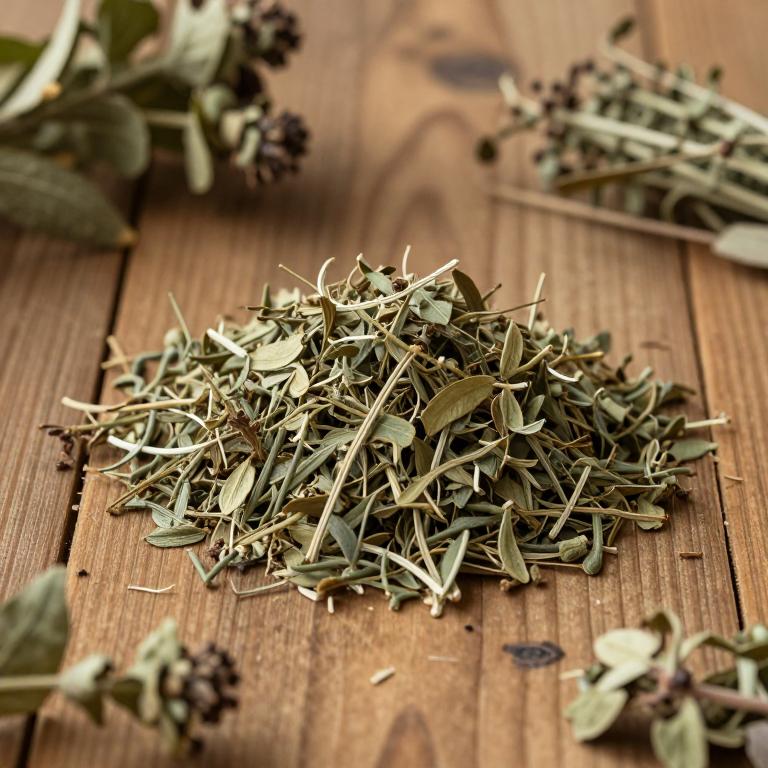
Names and Synonyms
Scientific Names
Accepted name
Scutellaria racemosaSynonyms
- Scutellaria rojasii
- Scutellaria rumicifolia
Sources: Wikidata, Catalogue of Life
Taxonomical Classification
This plant belongs to the kingdom Plantae and the phylum Streptophyta, falling under the class Equisetopsida and subclass Magnoliidae. Within the order Lamiales and family Lamiaceae, it is classified under the genus Scutellaria. Specifically, it is identified by the species name Scutellaria racemosa.
| Rank | Classification |
|---|---|
| Kingdom | Plantae |
| Phylum | Streptophyta |
| Class | Equisetopsida |
| Subclass | Magnoliidae |
| Order | Lamiales |
| Family | Lamiaceae |
| Genus | Scutellaria |
Sources: The World Checklist of Vascular Plants (WCVP)
Distribution
This plant exhibits a specific geographical distribution concentrated within the southern regions of the United States. In the South-Central U.S.A., it can be found growing in the state of Texas. Moving toward the Southeastern U.S.A., the species is also present in Alabama. Furthermore, its range extends through Georgia and into the state of Florida. Finally, this medicinal plant is documented as occurring within Louisiana.
| Region | Area |
|---|---|
| South-Central U.S.A. | Texas |
| Southeastern U.S.A. | Alabama |
| Southeastern U.S.A. | Florida |
| Southeastern U.S.A. | Georgia |
| Southeastern U.S.A. | Louisiana |
| Southeastern U.S.A. | Mississippi |
| Southeastern U.S.A. | North Carolina |
| Southeastern U.S.A. | South Carolina |
| Mexico | Mexico Northeast |
| Mexico | Mexico Gulf |
Sources: The World Checklist of Vascular Plants (WCVP)
Botanical Identification
Ecology
The ecology of Scutellaria racemosa is characterized by a broad altitudinal distribution, ranging from sea level (0 m AMSL) to a maximum elevation of 3100 m AMSL, with a mean elevational range of approximately 250 m AMSL. This species demonstrates significant ecological plasticity, occupying a diverse array of habitats including anthropic areas (Área Antrópica), high-altitude grasslands (Campo de Altitude), and open fields (Campo Limpo). Additionally, it is found within more complex forest ecosystems, such as coastal forests (Floresta Ciliar ou Galeria) and ombrophilous forests, which include rainforest environments (Floresta Ombrófila/Floresta Pluvial).
- Elevational range max:
- 3100 m AMSL
- Elevational range mean:
- 250 m AMSL
- Elevational range min:
- 0 m AMSL
- Habitat :
- Área Antrópica, Campo de Altitude, Campo Limpo, Floresta Ciliar ou Galeria, Floresta Ombrófila (= Floresta Pluvial)
Life history
The life history of Scutellaria racemosa is characterized by its nature as a perennial plant, allowing it to persist through multiple growing seasons. Structurally, it is classified as a hemicryptophyte, a life form where the perennating buds are located at the soil surface or just beneath it, protected by leaf litter or the ground layer. This developmental strategy enables the plant to survive unfavorable environmental conditions while maintaining the capacity for seasonal regrowth.
- Life form :
- hemicryptophyte
- Lifecycle :
- perennial
Morphology
The morphology of Scutellaria racemosa is characterized by its growth form as a non-woody herb, specifically categorized as a forb. This plant is a self-supporting species that does not function as a climber or a liana, nor does it exhibit parasitic behavior, remaining an independent organism. In terms of its ecological habit, it is a terrestrial plant, lacking aquatic or epiphytic tendencies. The physical stature of the species is relatively diminutive, with a plant height ranging from a minimum of 0.15 m to a maximum of 0.34 m.
- Aquatic :
- terrestrial
- Climber :
- self-supporting
- Epiphyte :
- terrestrial
- Growth form :
- herb
- Growth form :
- forb
- Parasite :
- independent
- Plant height max:
- 0.34 m
- Plant height min:
- 0.15 m
- Woodiness :
- non-woody
Physiology
The physiological development of the foliage in Scutellaria racemosa is characterized by specific morphological dimensions that define its photosynthetic surface area. The leaves exhibit a consistent structural range, with individual leaf lengths varying between a minimum of 2 cm and a maximum of 2.6 cm. Complementing this longitudinal growth, the leaf width fluctuates within a narrower margin, measuring as little as 0.3 cm at its minimum and extending to a maximum of 1.1 cm. These precise measurements in length and width dictate the plant's capacity for light interception and gas exchange, forming the basis of its vegetative physiological profile.
- Leaf length max:
- 2.6 cm
- Leaf length min:
- 2 cm
- Leaf width max:
- 1.1 cm
- Leaf width min:
- 0.3 cm
Reproduction
The reproduction of Scutellaria racemosa is characterized by a specific flowering phenology and highly uniform seed production. The plant exhibits a prolonged flowering period that begins in October and extends through to February, though the timing can be variable depending on environmental conditions. During this reproductive phase, the production of seeds is remarkably consistent in terms of weight; the seed mass remains constant with a mean, maximum, and minimum value of 0.00028 g. This uniformity in seed mass suggests a highly standardized developmental process for its progeny during the transition from flower to seed.
- Flowering time :
- Oct
- Flowering time :
- Feb
- Seed mass mean:
- 0.00028 g
Sources: Global Inventory of Floras and Traits (GIFT)
Chemicals
Scutellaria racemosa has 6 reported phytochemicals identified across 0 scientific publications and several other databases. The most consistently reported chemicals include Baicalin, Melatonin, Scutellarin, Wogonin, baicalein.
| Chemical | Supporting sources | Consensus |
|---|---|---|
| Baicalin | 1 supporting sources | ★☆☆☆☆ |
| Melatonin | 1 supporting sources | ★☆☆☆☆ |
| Scutellarin | 1 supporting sources | ★☆☆☆☆ |
| Wogonin | 1 supporting sources | ★☆☆☆☆ |
| baicalein | 1 supporting sources | ★☆☆☆☆ |
| serotonin | 1 supporting sources | ★☆☆☆☆ |
Baicalin
- Planta medica
Melatonin
- Planta medica
Scutellarin
- Planta medica
Wogonin
- Planta medica
baicalein
- Planta medica
serotonin
- Planta medica
Conditions
Scutellaria racemosa has 1 reported investigations on conditions identified across 0 scientific publications and several other databases. The most consistently reported conditions include neurological disorders.
| Condition | Supporting sources | Consensus |
|---|---|---|
| Neurological disorders | 1 supporting sources | ★☆☆☆☆ |
Neurological disorders
- Planta medica