Scutellaria pinnatifida
Scutellaria pinnatifida · Accepted scientific name
Scientific literature: Very Sparse (3 studies) · ★☆☆☆☆
Scutellaria pinnatifida, scientifically known as Scutellaria pinnatifida, is a perennial herb highly valued in traditional Chinese medicine. Known as Ban Lan Gen, it is celebrated for its potent anti-inflammatory, antiviral, and antibacterial properties. Often used to treat fevers and respiratory infections, this plant remains a cornerstone of herbal therapy.
- Family
- Lamiaceae
- Native range
- Asia-Temperate
- Parts used
- Not available
- Common names
- Not available
- Scientific synonyms
- Not available
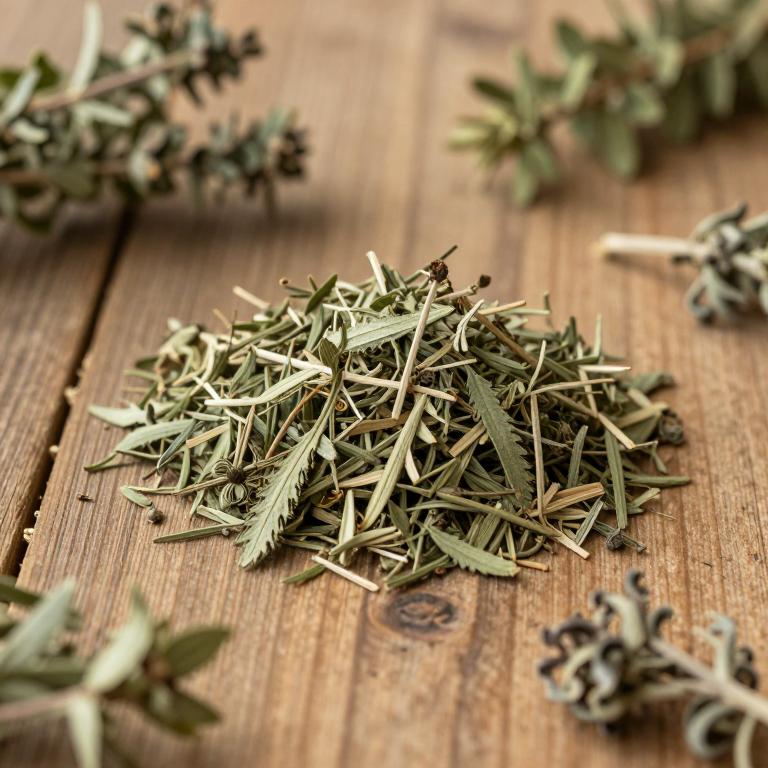
Names and Synonyms
Scientific Names
Accepted name
Scutellaria pinnatifidaSources: Wikidata, Catalogue of Life
Taxonomical Classification
This plant belongs to the kingdom Plantae and the phylum Streptophyta, falling under the class Equisetopsida and subclass Magnoliidae. Within the order Lamiales and the family Lamiaceae, it is classified under the genus Scutellaria. Specifically, it is identified by its scientific name, Scutellaria pinnatifida.
| Rank | Classification |
|---|---|
| Kingdom | Plantae |
| Phylum | Streptophyta |
| Class | Equisetopsida |
| Subclass | Magnoliidae |
| Order | Lamiales |
| Family | Lamiaceae |
| Genus | Scutellaria |
Sources: The World Checklist of Vascular Plants (WCVP)
Distribution
This plant exhibits a specific geographical distribution concentrated within the Western Asia region. Its natural habitat spans across several key territories, including the country of Iran. Additionally, the species can be found growing within the borders of Iraq. It is also documented to inhabit various parts of Türkiye. Together, these locations define the primary range of this medicinal species.
| Region | Area |
|---|---|
| Western Asia | Iran |
| Western Asia | Iraq |
| Western Asia | Türkiye |
Sources: The World Checklist of Vascular Plants (WCVP)
Botanical Identification
Life history
The life history of Scutellaria pinnatifida is characterized by its classification as a chamaephyte, a life form that dictates its survival strategy through the positioning of its perennating buds close to the soil surface. Within the spectrum of plant growth forms, it specifically exhibits traits consistent with a chamaephyte, ensuring that its vital regenerative organs remain protected near or just above the ground level to withstand seasonal environmental fluctuations. This life form allows the plant to persist across different growing seasons by utilizing its low-lying buds to recover quickly after dormant periods. As a perennial herb, its life cycle involves a period of vegetative growth following the protection of its buds, followed by reproductive phases where it contributes to the population through seed production, all while maintaining the structural stability afforded by its chamaephytic nature.
- Life form :
- chamaephyte
Morphology
The morphology of Scutellaria pinnatifida is characterized by its growth form as a subshrub, exhibiting a non-woody structure throughout its development. As an independent organism, it does not function as a parasite and maintains a terrestrial lifestyle rather than acting as an epiphyte. While its growth habits can vary, it possesses self-supporting climbing tendencies, allowing it to navigate its environment without relying on host plants for structural stability.
- Climber :
- self-supporting
- Epiphyte :
- terrestrial
- Growth form :
- subshrub
- Parasite :
- independent
- Woodiness :
- non-woody
Reproduction
The reproduction of Scutellaria pinnatifida is characterized by the production of minute seeds that facilitate its dispersal and establishment within its natural habitat. Based on quantitative botanical data, the seeds exhibit a highly consistent mass, showing no variance across the observed samples. The seed mass mean, as well as both the maximum and minimum recorded values, is precisely 0.00068 g. This uniformity in seed mass suggests a highly regulated reproductive strategy, ensuring that each seed possesses a standardized amount of nutrient reserves to support initial germination processes.
- Seed mass mean:
- 0.00068 g
Sources: Global Inventory of Floras and Traits (GIFT)
Chemicals
Scutellaria pinnatifida has 2 reported phytochemicals identified across 0 scientific publications and several other databases. The most consistently reported chemicals include Flavonoid, Wogonin.
| Chemical | Supporting sources | Consensus |
|---|---|---|
| Flavonoid | 1 supporting sources | ★☆☆☆☆ |
| Wogonin | 1 supporting sources | ★☆☆☆☆ |
Flavonoid
- Environmental toxicology and pharmacology
Wogonin
- Environmental toxicology and pharmacology
Conditions
Scutellaria pinnatifida has 1 reported investigations on conditions identified across 0 scientific publications and several other databases. The most consistently reported conditions include Parkinson's disease.
| Condition | Supporting sources | Consensus |
|---|---|---|
| Parkinson's disease | 1 supporting sources | ★☆☆☆☆ |
Parkinson's disease
- PloS one
Preparations
Scutellaria pinnatifida has 1 reported preparations identified across 0 scientific publications and several other databases. The most consistently reported preparations include S. pinnatifida extracts.
| Preparation | Supporting sources | Consensus |
|---|---|---|
| S. pinnatifida extracts | 1 supporting sources | ★☆☆☆☆ |
S. pinnatifida extracts
- PloS one