Scutellaria orientalis pinnatifida
Scutellaria orientalis subsp. pinnatifida · Accepted scientific name
Scientific literature: Very Sparse (8 studies) · ★☆☆☆☆
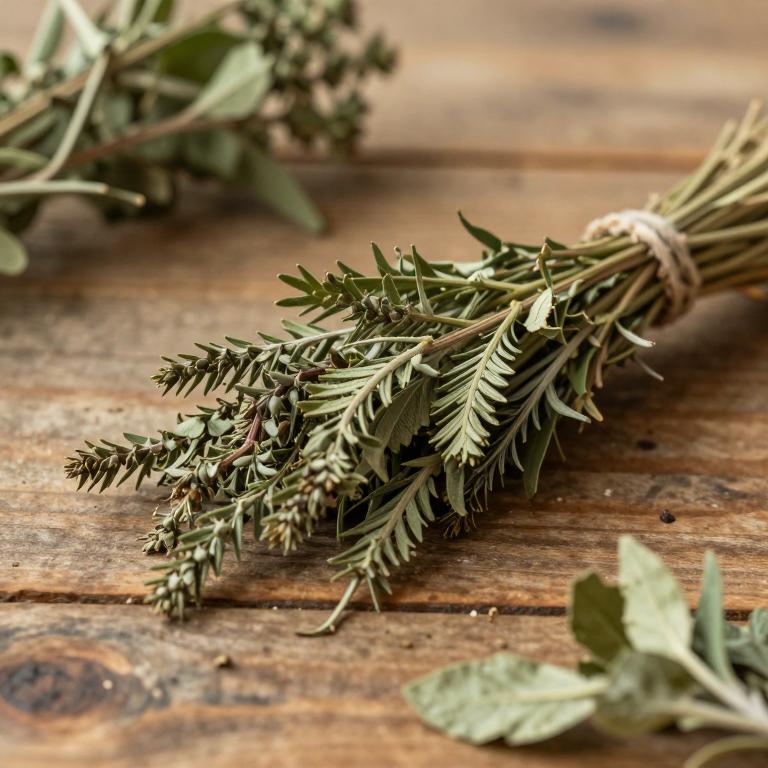
Scutellaria orientalis pinnatifida, scientifically known as Scutellaria orientalis subsp. pinnatifida, is a distinctive medicinal herb valued in traditional pharmacopeias. Characterized by its deeply lobed leaves, this subspecies contains bioactive compounds like flavonoids. It is frequently utilized for its anti-inflammatory and antioxidant properties, supporting holistic approaches to wellness.
- Family
- Lamiaceae
- Native range
- Europe
- Parts used
- Not available
- Common names
- Scutellaria Orientalis Pinnatifida
- Scientific synonyms
- Not available
Names and Synonyms
Common Names
- Scutellaria orientalis pinnatifida
Scientific Names
Accepted name
Scutellaria orientalis subsp. pinnatifidaRegional and Traditional Names
Spanish:
- Scutellaria orientalis pinnatifida
French:
- Scutellaria orientalis pinnatifida
Sources: Wikidata
Taxonomical Classification
This plant belongs to the kingdom Plantae and the phylum Streptophyta, falling under the class Equisetopsida and subclass Magnoliidae. Within the order Lamiales and family Lamiaceae, it is classified under the genus Scutellaria. Specifically, it is identified as the subspecies pinnatifida of the species Scutellaria orientalis.
| Rank | Classification |
|---|---|
| Kingdom | Plantae |
| Phylum | Streptophyta |
| Class | Equisetopsida |
| Subclass | Magnoliidae |
| Order | Lamiales |
| Family | Lamiaceae |
| Genus | Scutellaria |
Sources: The World Checklist of Vascular Plants (WCVP)
Distribution
This plant exhibits a specific geographical range that spans across both Southeastern Europe and Western Asia. Within the Balkan region, it can be found inhabiting various landscapes in Albania, Bulgaria, and Greece. Its distribution also extends into the northwestern part of the Balkan Peninsula. Beyond the European continent, the species reaches into Western Asia, specifically within the territory of Iran. Consequently, its habitat represents a diverse collection of territories across these two distinct regions.
| Region | Area |
|---|---|
| Southeastern Europe | Albania |
| Southeastern Europe | Bulgaria |
| Southeastern Europe | Greece |
| Southeastern Europe | NW. Balkan Pen. |
| Western Asia | Iran |
| Western Asia | Türkiye |
Sources: The World Checklist of Vascular Plants (WCVP)
Chemicals
Scutellaria orientalis subsp. pinnatifida has 7 reported phytochemicals identified across 0 scientific publications and several other databases. The most consistently reported chemicals include Darendoside A, Darendoside B, Deacyl martynoside, Leucosceptoside A, Martynoside.
| Chemical | Supporting sources | Consensus |
|---|---|---|
| Darendoside A | 1 supporting sources | ★☆☆☆☆ |
| Darendoside B | 1 supporting sources | ★☆☆☆☆ |
| Deacyl martynoside | 1 supporting sources | ★☆☆☆☆ |
| Leucosceptoside A | 1 supporting sources | ★☆☆☆☆ |
| Martynoside | 1 supporting sources | ★☆☆☆☆ |
| Syringin | 1 supporting sources | ★☆☆☆☆ |
| Verbascoside | 1 supporting sources | ★☆☆☆☆ |
Darendoside A
- Phytochemistry
Darendoside B
- Phytochemistry
Deacyl martynoside
- Phytochemistry
Leucosceptoside A
- Phytochemistry
Martynoside
- Phytochemistry
Syringin
- Phytochemistry
Verbascoside
- Phytochemistry
Preparations
Scutellaria orientalis subsp. pinnatifida has 1 reported preparations identified across 0 scientific publications and several other databases. The most consistently reported preparations include methanolic extract.
| Preparation | Supporting sources | Consensus |
|---|---|---|
| Methanolic extract | 1 supporting sources | ★☆☆☆☆ |
Methanolic extract
- Phytochemistry