Scutellaria havanensis
Scutellaria havanensis · Accepted scientific name
Scientific literature: Very Sparse (6 studies) · ★☆☆☆☆
Scutellaria havanensis, scientifically known as Scutellaria havanensis, is a remarkable medicinal herb native to Cuba. Belonging to the mint family, this plant is prized in traditional herbalism for its potential therapeutic properties. Researchers continue to explore its bioactive compounds, investigating its role in supporting wellness and holistic healing.
- Family
- Lamiaceae
- Native range
- Northern America
- Parts used
- Not available
- Common names
- Not available
- Scientific synonyms
- Thymus Veronicifolius · Scutellaria Rupicola · 4 more
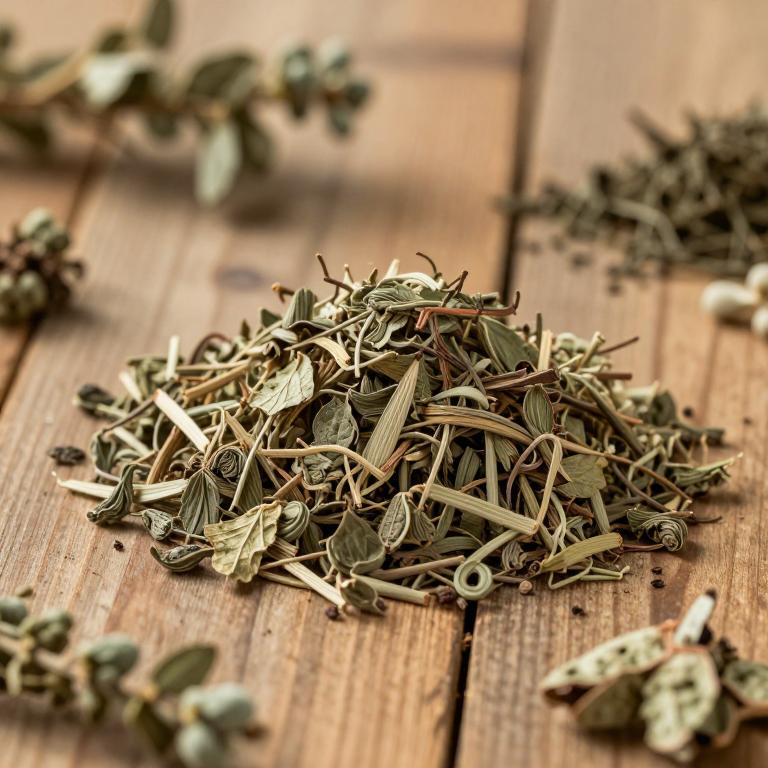
Names and Synonyms
Scientific Names
Accepted name
Scutellaria havanensisSynonyms
- Thymus veronicifolius
- Scutellaria rupicola
- Scutellaria longiflora
- Melissa veronicifolia
- Scutellaria cubensis
- Scutellaria havanensis var. portoricensis
Sources: Wikidata, Catalogue of Life
Taxonomical Classification
This plant belongs to the kingdom Plantae and the phylum Streptophyta, falling under the class Equisetopsida and subclass Magnoliidae. Within the order Lamiales and the family Lamiaceae, it is classified under the genus Scutellaria. Therefore, its complete taxonomic hierarchy identifies it as Scutellaria havanensis.
| Rank | Classification |
|---|---|
| Kingdom | Plantae |
| Phylum | Streptophyta |
| Class | Equisetopsida |
| Subclass | Magnoliidae |
| Order | Lamiales |
| Family | Lamiaceae |
| Genus | Scutellaria |
Sources: The World Checklist of Vascular Plants (WCVP)
Distribution
This plant is primarily distributed across several distinct regions in the southeastern United States and the Caribbean. In the United States, its presence is specifically noted within the state of Florida. Its range extends into Mexico, where it can be found throughout the Northeast and the Gulf regions. The Caribbean also serves as a key habitat, with the species occurring in the Bahamas. Additionally, the plant is established within the island nation of Cuba.
| Region | Area |
|---|---|
| Southeastern U.S.A. | Florida |
| Mexico | Mexico Northeast |
| Mexico | Mexico Gulf |
| Caribbean | Bahamas |
| Caribbean | Cuba |
| Caribbean | Dominican Republic |
| Caribbean | Haiti |
| Caribbean | Jamaica |
| Caribbean | Leeward Is. |
| Caribbean | Puerto Rico |
Sources: The World Checklist of Vascular Plants (WCVP)
Botanical Identification
Life history
The life history of Scutellaria havanensis is characterized by its classification as a perennial plant, allowing it to persist through multiple growing seasons. Structurally, it exhibits a life form defined as a hemicryptophyte, meaning its perennable buds are located at or just below the soil surface, protected by leaf litter or soil during unfavorable conditions. This hemicryptophytic growth habit facilitates its survival and regeneration across successive years within its natural habitat.
- Life form :
- hemicryptophyte
- Lifecycle :
- perennial
Morphology
The morphology of Scutellaria havanensis is characterized by its growth form as a non-woody herb, specifically categorized as a forb. It functions as an independent organism, lacking any parasitic tendencies, and is primarily a terrestrial species rather than being aquatic, semiaquatic, or an epiphyte. In terms of its structural habit, the plant is self-supporting, meaning it does not exhibit the characteristics of a liana, vine, or any other form of obligatory or facultative climber.
- Aquatic :
- terrestrial
- Climber :
- self-supporting
- Epiphyte :
- terrestrial
- Growth form :
- herb
- Growth form :
- forb
- Parasite :
- independent
- Woodiness :
- non-woody
Sources: Global Inventory of Floras and Traits (GIFT)
Chemicals
Scutellaria havanensis has 1 reported phytochemicals identified across 0 scientific publications and several other databases. The most consistently reported chemicals include Flavonoid.
| Chemical | Supporting sources | Consensus |
|---|---|---|
| Flavonoid | 1 supporting sources | ★☆☆☆☆ |
Flavonoid
- Molecules (Basel, Switzerland)
Activities
Scutellaria havanensis has 3 reported activities identified across 0 scientific publications and several other databases. The most consistently reported activities include Antiplasmodial, Antiprotozoal, Cytotoxic.
| Activity | Supporting sources | Consensus |
|---|---|---|
| Antiplasmodial | 1 supporting sources | ★☆☆☆☆ |
| Antiprotozoal | 1 supporting sources | ★☆☆☆☆ |
| Cytotoxic | 1 supporting sources | ★☆☆☆☆ |
Antiplasmodial
- Pharmaceutical biology
Antiprotozoal
- Pharmaceutical biology
Cytotoxic
- Pharmaceutical biology
Conditions
Scutellaria havanensis has 2 reported investigations on conditions identified across 0 scientific publications and several other databases. The most consistently reported conditions include Plasmodium berghei, Trichomonas vaginalis.
| Condition | Supporting sources | Consensus |
|---|---|---|
| Plasmodium berghei | 1 supporting sources | ★☆☆☆☆ |
| Trichomonas vaginalis | 1 supporting sources | ★☆☆☆☆ |
Plasmodium berghei
- Pharmaceutical biology
Trichomonas vaginalis
- Pharmaceutical biology
Preparations
Scutellaria havanensis has 3 reported preparations identified across 0 scientific publications and several other databases. The most consistently reported preparations include air-dried leaf extract, fresh leaf extracts, methanolic leaf extracts.
| Preparation | Supporting sources | Consensus |
|---|---|---|
| Air-dried leaf extract | 1 supporting sources | ★☆☆☆☆ |
| Fresh leaf extracts | 1 supporting sources | ★☆☆☆☆ |
| Methanolic leaf extracts | 1 supporting sources | ★☆☆☆☆ |
Air-dried leaf extract
- Molecules (Basel, Switzerland)
Fresh leaf extracts
- Molecules (Basel, Switzerland)
Methanolic leaf extracts
- Molecules (Basel, Switzerland)