Scorzoneroides hispidula
Scorzoneroides hispidula · Accepted scientific name
Scientific literature: Very Sparse (8 studies) · ★☆☆☆☆
Scorzoneroides hispidula, scientifically known as Scorzoneroides hispidula, is a remarkable medicinal plant valued for its unique therapeutic properties. Often found in specific ecological niches, this species contains bioactive compounds utilized in traditional healing practices to address various ailments, offering significant potential for modern pharmacological research and natural wellness.
- Family
- Asteraceae
- Native range
- Europe
- Parts used
- Not available
- Common names
- Not available
- Scientific synonyms
- Oporinia Hispidula · Scorzonera Hispidula · 21 more
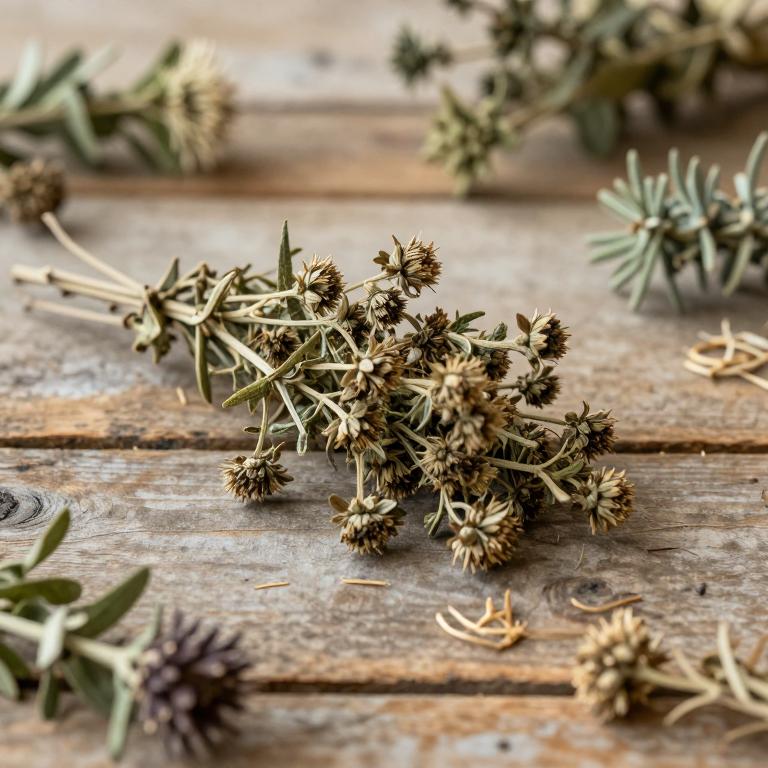
Names and Synonyms
Scientific Names
Accepted name
Scorzoneroides hispidulaSynonyms
- Oporinia hispidula
- Scorzonera hispidula
- Thrincia orientalis
- Seriola hyoseroides
- Picris taraxaci
- Kalbfussia orientalis
- Leontodon ehrenbergii
- Apargia annua
- Leontodon annuus
- Hemilepis ehrenbergii
- Crepis hispidula
- Deloderium taraxacifolium
- Hieracium leontodontis
- Kalbfussia hispidula
- Leontodon clavatus
- Leontodon creticus
- Leontodon hispidulus
- Leontodon nivalis
- Leontodon taraxaci
- Leontodon taraxacifolius
- Millina hispidula
- Millina hyoseroides
- Millina persica
Sources: Wikidata
Taxonomical Classification
This plant, Scorzoneroides hispidula, belongs to the kingdom Plantae and the phylum Streptophyta. Within the class Equisetopsida and subclass Magnoliidae, it is classified under the order Asterales. Ultimately, it is a member of the family Asteraceae and falls under the genus Scorzoneroides.
| Rank | Classification |
|---|---|
| Kingdom | Plantae |
| Phylum | Streptophyta |
| Class | Equisetopsida |
| Subclass | Magnoliidae |
| Order | Asterales |
| Family | Asteraceae |
| Genus | Scorzoneroides |
Sources: The World Checklist of Vascular Plants (WCVP)
Distribution
This plant exhibits a wide geographical distribution spanning across three different continents. Within Southwestern Europe, its presence is documented in Spain. The species also extends into Northern Africa, specifically inhabiting the regions of Libya and Morocco. Moving into Western Asia, the plant can be found growing in Iran. Finally, its range continues through Iraq, completing its distribution across these diverse territories.
| Region | Area |
|---|---|
| Southwestern Europe | Spain |
| Northern Africa | Libya |
| Northern Africa | Morocco |
| Western Asia | Iran |
| Western Asia | Iraq |
| Western Asia | Türkiye |
Sources: The World Checklist of Vascular Plants (WCVP)
Botanical Identification
Life history
The life history of Scorzoneroides hispidula is characterized by an annual lifecycle, completing its entire developmental process from germination to seed production within a single growing season. In terms of its structural growth habit and survival strategy, the species is classified as a hemicryptophyte, a life form where the perennating buds are located at the soil surface, protected by the remains of previous seasons' foliage or organic debris. This specific developmental pattern ensures that the plant can effectively manage its seasonal transitions while maintaining its physiological presence within its ecological niche.
- Life form :
- hemicryptophyte
- Lifecycle :
- annual
Morphology
The morphology of Scorzoneroides hispidula is characterized by a growth form classified as an herb, exhibiting a non-woody structure throughout its development. In terms of its habit, the plant functions as a self-supporting climber, capable of maintaining its own posture without the need for obligatory or facultative climbing assistance. Its ecological positioning is versatile, spanning a range of habitats that include aquatic, semiaquatic, and terrestrial environments. Furthermore, the species is biologically independent, functioning as a non-parasitic organism that does not rely on a host for survival.
- Aquatic :
- terrestrial
- Climber :
- self-supporting
- Growth form :
- herb
- Parasite :
- independent
- Woodiness :
- non-woody
Sources: Global Inventory of Floras and Traits (GIFT)
Chemicals
Scorzoneroides hispidula has 4 reported phytochemicals identified across 0 scientific publications and several other databases. The most consistently reported chemicals include CHLOROGENIC ACID, RUTIN, kaempferol, quercetin.
| Chemical | Supporting sources | Consensus |
|---|---|---|
| CHLOROGENIC ACID | 1 supporting sources | ★☆☆☆☆ |
| RUTIN | 1 supporting sources | ★☆☆☆☆ |
| kaempferol | 1 supporting sources | ★☆☆☆☆ |
| quercetin | 1 supporting sources | ★☆☆☆☆ |
CHLOROGENIC ACID
- Scientific reports
RUTIN
- Scientific reports
kaempferol
- Scientific reports
quercetin
- Scientific reports
Activities
Scorzoneroides hispidula has 3 reported activities identified across 0 scientific publications and several other databases. The most consistently reported activities include Anticancer, Antioxidant, Cytotoxic.
| Activity | Supporting sources | Consensus |
|---|---|---|
| Anticancer | 1 supporting sources | ★☆☆☆☆ |
| Antioxidant | 1 supporting sources | ★☆☆☆☆ |
| Cytotoxic | 1 supporting sources | ★☆☆☆☆ |
Anticancer
- Scientific reports
Antioxidant
- Scientific reports
Cytotoxic
- Scientific reports
Preparations
Scorzoneroides hispidula has 3 reported preparations identified across 0 scientific publications and several other databases. The most consistently reported preparations include 95% ethanolic extract, aerial parts, optimized extract.
| Preparation | Supporting sources | Consensus |
|---|---|---|
| 95% ethanolic extract | 1 supporting sources | ★☆☆☆☆ |
| Aerial parts | 1 supporting sources | ★☆☆☆☆ |
| Optimized extract | 1 supporting sources | ★☆☆☆☆ |
95% ethanolic extract
- Scientific reports
Aerial parts
- Scientific reports
Optimized extract
- Scientific reports