Scorodocarpus borneensis
Scorodocarpus borneensis · Accepted scientific name
Scientific literature: Very Sparse (4 studies) · ★☆☆☆☆
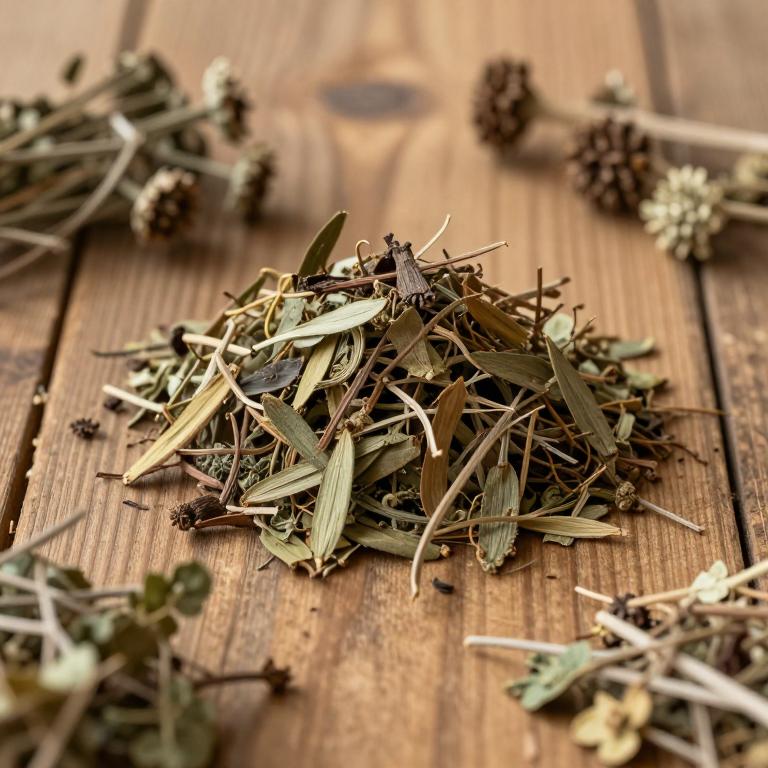
, scientifically known as Scorodocarpus borneensis, is a rare medicinal plant native to the rainforests of Borneo. Valued in traditional ethnobotany, this species is recognized for its unique phytochemical properties. Researchers are currently exploring its bioactive compounds to uncover potential therapeutic applications in modern pharmacology and natural medicine.
- Family
- Olacaceae
- Native range
- Asia-Tropical
- Parts used
- Seed
- Common names
- Not available
- Scientific synonyms
- Ximenia Borneensis
Names and Synonyms
Scientific Names
Accepted name
Scorodocarpus borneensisSynonyms
- Ximenia borneensis
Regional and Traditional Names
Spanish:
- Scorodocarpus
French:
- Ximenia borneensis
- Scorodocarpus bornensis
Sources: Wikidata, Catalogue of Life
Taxonomical Classification
This plant belongs to the kingdom Plantae within the phylum Streptophyta and the class Equisetopsida. It is further classified under the subclass Magnoliidae and the order Santalales. Finally, it resides in the family Olacaceae under the genus Scorodocarpus.
| Rank | Classification |
|---|---|
| Kingdom | Plantae |
| Phylum | Streptophyta |
| Class | Equisetopsida |
| Subclass | Magnoliidae |
| Order | Santalales |
| Family | Olacaceae |
| Genus | Scorodocarpus |
Sources: The World Checklist of Vascular Plants (WCVP)
Distribution
This plant exhibits a wide geographical distribution across several key regions of Southeast Asia. Within the Indo-China region, its presence has been documented in Thailand. It is also widely spread throughout the Malesia zone, particularly across the island of Borneo. Furthermore, the species can be found inhabiting the landscapes of Malaya. Finally, its range extends to include the island of Sumatera within the Malesian territory.
| Region | Area |
|---|---|
| Indo-China | Thailand |
| Malesia | Borneo |
| Malesia | Malaya |
| Malesia | Sumatera |
Sources: The World Checklist of Vascular Plants (WCVP)
Botanical Identification
Life history
The life history of Scorodocarpus borneensis is characterized by its nature as a perennial organism, allowing it to persist in its environment over many years rather than completing its cycle within a single growing season. Throughout its lifespan, the plant maintains an evergreen habit, ensuring that it retains its foliage consistently rather than undergoing a seasonal shedding of leaves.
- Deciduousness :
- evergreen
- Lifecycle :
- perennial
Morphology
The morphology of Scorodocarpus borneensis is characterized by a robust, woody growth form, specifically classified as a tree. This plant reaches a significant stature with a mean plant height of approximately 37.5 m. Although it exhibits characteristics associated with climbing habits, such as being a self-supporting liana or vine, its primary structural identity is that of a large woody tree. Furthermore, it is a terrestrial organism, lacking any epiphytic tendencies, and maintains its life cycle entirely on the ground rather than as a holoepiphyte, hemiepiphyte, or facultative epiphyte.
- Climber :
- self-supporting
- Epiphyte :
- terrestrial
- Growth form :
- tree
- Plant height mean:
- 37.5 m
- Woodiness :
- woody
Physiology
The physiology of Scorodocarpus borneensis is characterized by a specific metabolic framework designed for growth within its native tropical ecosystems. The plant utilizes a C3 photosynthetic pathway, meaning it fixes carbon dioxide through the Calvin cycle using the enzyme RuBisCO, which is typical for most woody tropical species. Additionally, regarding its nutrient acquisition processes, Scorodocarpus borneensis is not a nitrogen fixer, relying instead on the uptake of available nitrates and ammonium from the soil rather than establishing symbiotic relationships with nitrogen-fixing bacteria to convert atmospheric nitrogen.
- Nitrogen fixer :
- no
- Photosynthetic pathway :
- C3
Sources: Global Inventory of Floras and Traits (GIFT)
Plant Parts
Scorodocarpus borneensis has 1 reported plant parts identified across 1 scientific publications and several other databases that are studied for medicinal purposes. The most consistently reported plant part include seed.
| Plant part | Supporting sources | Consensus |
|---|---|---|
| Seed | 1 supporting sources | ★☆☆☆☆ |
Seed
- Molecules (Basel, Switzerland)
Activities
Scorodocarpus borneensis has 1 reported activities identified across 1 scientific publications and several other databases. The most consistently reported activities include Cytotoxic.
| Activity | Supporting sources | Consensus |
|---|---|---|
| Cytotoxic | 1 supporting sources | ★☆☆☆☆ |
Cytotoxic
- Molecules (Basel, Switzerland)
Conditions
Scorodocarpus borneensis has 2 reported investigations on conditions identified across 1 scientific publications and several other databases. The most consistently reported conditions include bacteria, fungi.
| Condition | Supporting sources | Consensus |
|---|---|---|
| Bacteria | 1 supporting sources | ★☆☆☆☆ |
| Fungi | 1 supporting sources | ★☆☆☆☆ |
Bacteria
- Molecules (Basel, Switzerland)
Fungi
- Molecules (Basel, Switzerland)